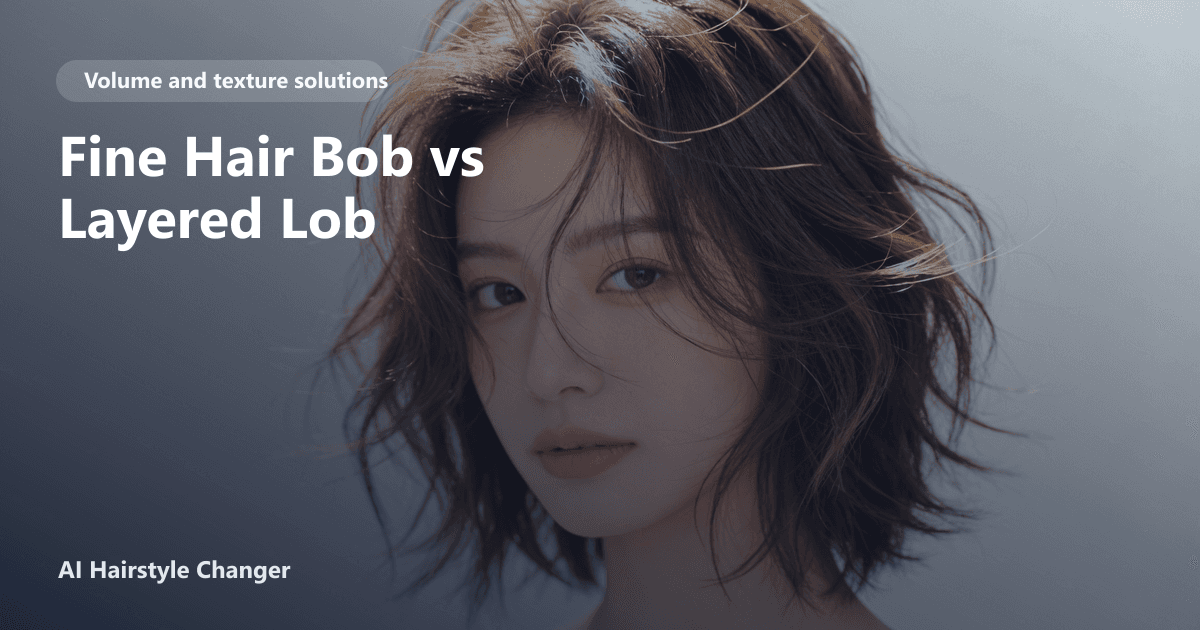
Choosing between a fine hair bob and a layered lob can feel like a major fork in the road - especially if your strands are thin, fine, or prone to falling flat. Both styles are salon favorites for adding movement and shape to delicate hair, but the difference in length, layers, and maintenance can change everything about your daily routine and overall look. If you're debating which cut will actually deliver volume, suit your face, and fit your lifestyle, this guide breaks down the real pros, cons, and variations of each - plus how to test-drive both with AI Hairstyle Changer before you book that appointment.
The Decision: Bob or Lob for Fine Hair?
You want a style that makes your hair look fuller, not flatter. The classic bob and the modern layered lob are both go-tos for fine or thin hair, but they solve different problems. The bob is all about sharp lines and maximum lift at the ends, while the layered lob brings softness and movement with extra length. The right choice depends on your face shape, hair density, styling habits, and how much time you want to spend on upkeep.
Classic Fine Hair Bob: The Volume Shortcut
The chin-length or jawline bob is a time-tested solution for fine hair. By cutting hair to a single, blunt length, you create the illusion of density and bounce. Here's what to consider:
- Who it suits: Best for straight or slightly wavy hair with minimal natural volume. Works well if you're looking for a dramatic change or want to highlight your jawline.
- What to ask for: A blunt cut at or just below the chin, with minimal layering. Subtle undercutting at the nape can help remove bulk and keep the ends crisp.
- Volume placement: Most fullness is at the ends, which helps hair look thicker. Blow-drying with a round brush or using a volumizing mousse can boost body.
- Upkeep: Bobs need trims every 6 - 8 weeks to keep the shape sharp. Styling is quick, but you'll need to avoid heavy conditioners or oils that can weigh down fine hair.
- What to avoid: Over-layering, which can make fine hair look stringy. Super-short bobs may not suit longer faces.
For more inspiration, see Best Haircuts for Thin Hair and discover other bob variations that work for delicate strands.
Layered Lob: Movement Without Sacrificing Length
The layered lob (long bob) typically sits between the collarbone and shoulders, with soft layers that add swing and airiness. It's a favorite for those who want volume but aren't ready to go short.
- Who it suits: Great for fine to medium hair that needs movement. Flattering for most face shapes, especially round or square.
- What to ask for: A collarbone-grazing cut with long, face-framing layers. Point-cutting or razor techniques can soften the edges and prevent a heavy look.
- Volume placement: Layers can be customized to add lift at the crown or around the face. Ask for invisible or blended layers to avoid a choppy effect.
- Upkeep: Lobs are forgiving as they grow out. Layered cuts may need more styling to keep volume at the roots, especially if your hair is very fine.
- What to avoid: Too many short layers, which can thin out the ends. Over-texturizing can make hair appear wispy.
Explore more volumizing options in Volumizing Haircuts for Thin Hair.
Real-World Variations: 4 Directions for Fine Hair
1. Blunt Bob with Micro-Fringe
A sharp, chin-length bob paired with a short, wispy fringe gives instant edge and fullness. The micro-fringe draws attention to the eyes and works well if you want a low-commitment bang. Avoid if your hairline is very thin at the front.
2. Textured Lob with Curtain Bangs
Adding curtain bangs to a layered lob can frame the face and create the illusion of more volume around the cheeks. This style is ideal for those who want softness without losing length. Ask for blended, long layers and feathered bangs for a modern finish.
3. Graduated Bob for Fine Hair
A slightly stacked or graduated bob creates a rounded shape at the back, maximizing lift and body. This is perfect if you want a bob with a bit more movement and don't mind regular trims to maintain the angle.
4. Collarbone Lob with Invisible Layers
Invisible layers are subtle, internal layers that don't break up the perimeter line. This technique keeps the ends looking full while allowing for gentle movement. Ideal if you prefer a lob but want to avoid a choppy or overly layered look.
How to Talk to Your Stylist: Key Questions and Phrases
Walking into the salon with a clear vision is half the battle. Here are practical tips for communicating your goals:
- Bring reference photos - especially ones that match your hair texture and density.
- Use phrases like "I want fullness at the ends" or "Can we keep the perimeter blunt but add soft, internal layers?"
- Be honest about your styling routine. If you don't want to blow-dry daily, mention it.
- Ask how the cut will grow out. Some bobs lose shape quickly, while lobs tend to be lower maintenance.
- Discuss fringe options. A side-swept bang can add interest without sacrificing volume.
If you're unsure, AI Hairstyle Changer lets you upload your selfie and preview both a bob and a lob in seconds. This makes it easier to show your stylist exactly what you want - and what you don't.
Maintenance: What Each Cut Demands
- Bobs require regular trims to keep the line crisp and avoid awkward flips at the ends. Styling is usually fast, but you'll need to use lightweight products to prevent limpness.
- Lobs are more forgiving as they grow, but layered versions may need extra styling to maintain lift. Dry shampoo and root sprays are your friends.
- Both styles benefit from volumizing shampoos and occasional texturizing sprays. Avoid heavy serums or oils, which can drag fine hair down.
- If you want the lowest-maintenance option, consider a blunt lob with minimal layers. See Low-Maintenance Haircuts for Fine Hair for more ideas.
When Each Style Fails - and What to Do Instead
- Bob pitfalls: If your hair is very thin at the temples or nape, a blunt bob can reveal scalp or look sparse. In this case, a lob with soft layers might camouflage thin spots better.
- Lob pitfalls: Too many layers or over-texturizing can make fine hair look even thinner. If your stylist suggests lots of layering, ask for invisible layers instead.
- Face shape mismatch: Super-short bobs can elongate long faces, while heavy lobs can widen round faces. Adjust length and layering to balance your features.
- Styling fatigue: If you rarely style your hair, avoid cuts that rely on daily blowouts. Ask for a shape that air-dries well.
AI Hairstyle Changer can help you visualize these pitfalls before you commit, saving you from post-cut regret.
Try-On Tech: See Yourself in Both Styles
One of the biggest challenges with fine or thin hair is imagining how a new cut will actually look on you. AI Hairstyle Changer solves this by letting you test-drive a bob, lob, or any layered variation using your own photo. Instantly see:
- How a blunt bob frames your face compared to a layered lob
- The effect of curtain bangs or micro-fringes
- Volume placement and how layers interact with your natural texture
- Multiple length and layering options side by side
This makes it easier to build a shortlist of reference images for your stylist - and to avoid choosing a style that looks amazing on someone else but falls flat on you.
FAQ
Is a bob or lob better for very fine, thin hair?
A blunt bob often creates the most density at the ends, making hair look thicker. However, if your hair is thin at the roots or you prefer more styling versatility, a layered lob with invisible layers can add movement without sacrificing fullness. Testing both with AI Hairstyle Changer can help you decide which flatters your face and hair type.
How often do I need to trim these cuts?
Bobs need trims every 6 - 8 weeks to maintain their shape. Lobs, especially those with soft layers, can go 8 - 12 weeks between cuts, making them a bit lower maintenance.
Can I add bangs to either style if I have fine hair?
Yes - fringes like curtain bangs or micro-fringes can add interest and volume around the face. Just avoid heavy, blunt bangs if your hair is very fine at the front, as they can look sparse.
What products help boost volume in fine or thin hair?
Use a volumizing shampoo, lightweight conditioner, and root-lifting spray or mousse. Dry shampoo can add texture and body between washes. Avoid heavy oils or silicones that can weigh hair down.
Takeaway: Try Before You Cut
Choosing between a fine hair bob and a layered lob is about more than just length - it's about finding a style that flatters your face, fits your routine, and makes the most of your hair's natural texture. With AI Hairstyle Changer, you can preview both options on your own photo, compare side by side, and walk into your next appointment with total confidence. Ready to see your future cut? Head to AI Hairstyle Try-On: Online Free Test Cuts Before Booking and find your best look today.