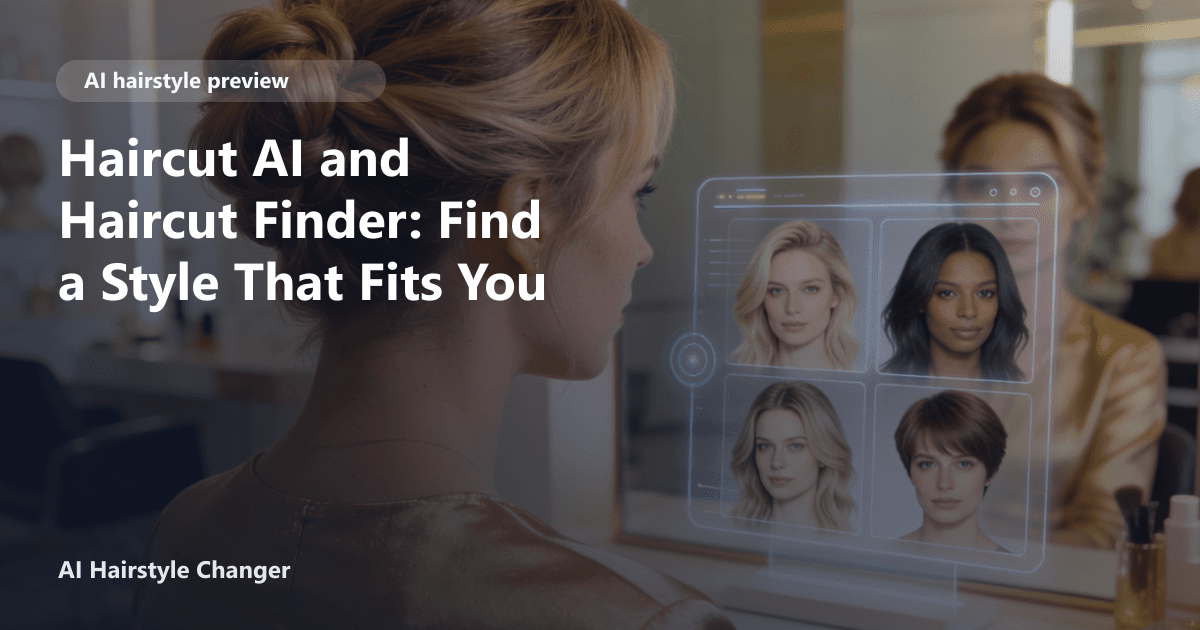
What a haircut finder should actually do
A useful haircut finder should do more than show inspiration photos. It should help you judge whether a cut matches your face shape, density, texture, and styling tolerance before you ask for it in real life.
Haircut AI finder
Turn a vague haircut idea into a tighter shortlist by comparing shape, texture, and maintenance on your own photo before you book.
A useful haircut finder should do more than show inspiration photos. It should help you judge whether a cut matches your face shape, density, texture, and styling tolerance before you ask for it in real life.
Start broad with length and shape, then refine by texture and maintenance. This keeps the process focused on the haircut variables that change the outcome instead of chasing every trend at once.
The more specific your references are, the easier it is for a stylist or barber to respond with practical feedback. A tighter shortlist leads to a better consultation and fewer surprises after the cut.
If the blocker is face shape, open Face Shape Detector: Find Your Face Shape From a Photo. If you already know the style family, move into Hairstyle Try-On Online Free: Test Cuts Before Booking.
No. It is a planning tool. The value is in helping you compare likely directions on your own features so the real consultation starts from something clearer.
Usually not. One clear, front-facing selfie is enough to compare overall silhouette, length placement, and fringe direction.
Yes. The same logic applies whether you are booking a salon or a barbershop. A better reference makes it easier to discuss taper, fringe, length, and maintenance.
Start with the big shape decisions: overall length, where the width sits, and how much texture or structure you want. Then refine the shortlist around upkeep and styling effort.