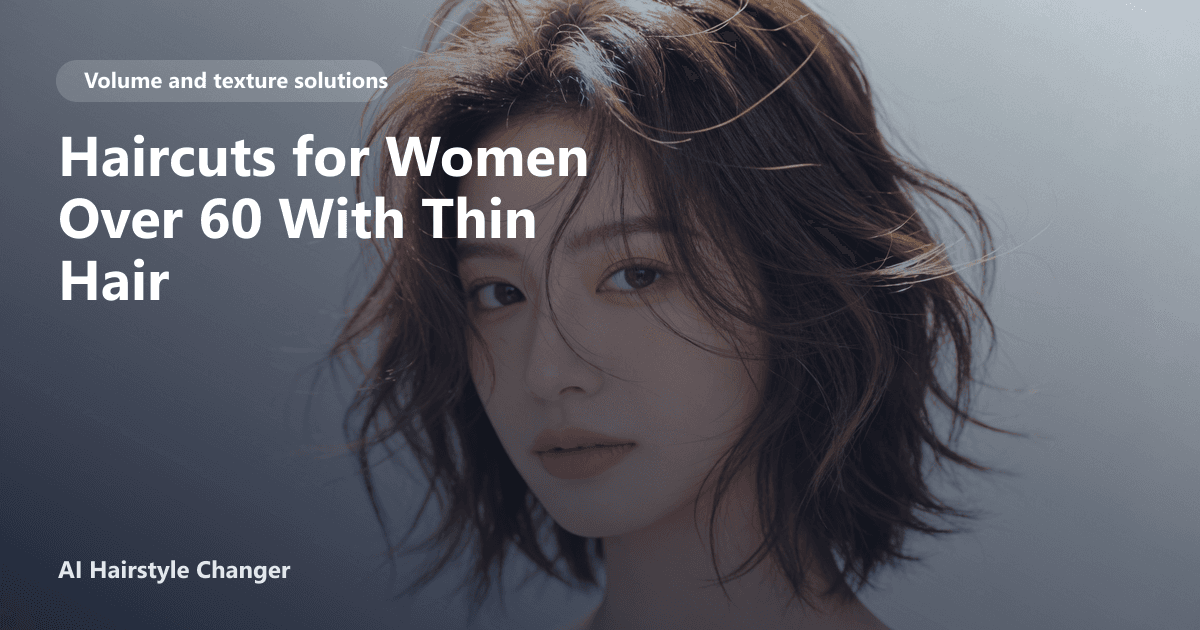
You're staring at your part line in the mirror, noticing it's wider than last year. The ponytail feels thinner. You want a haircut that makes your hair look fuller, not one that exposes more scalp or adds ten years to your face. Picking the right style after 60 means working with new texture realities - finer strands, less density, and hair that doesn't hold volume like it used to.
Why Thin Hair After 60 Needs a Different Strategy
Hormonal shifts change hair diameter and growth cycles. What worked at 50 - shoulder-length layers, maybe a blunt bob - can fall flat now. The goal isn't just "volume." It's strategic placement of weight, creating movement that distracts from sparse areas, and choosing lengths that don't pull the whole silhouette downward.
Scalp visibility becomes the primary enemy. A cut that's too heavy on top separates and shows skin. One that's too layered can look stringy. You need a middle ground: enough structure to lift the roots, enough texture to blur thin spots.
If you're still exploring general principles, our guide on best haircuts for thin hair covers the foundational rules that apply at any age.
Five Haircuts That Actually Work for Women Over 60 With Thin Hair
1. The Textured Pixie With Soft Fringe
Who it suits: Women with strong cheekbones and defined jawlines. If you wear glasses, this frames your face without competing.
What to ask for: "A pixie with point cutting throughout, leaving softness at the hairline. Keep the crown slightly longer for lift, and texturize the nape so it doesn't look bulky."
Maintenance: Every 4-5 weeks. wash-and-go friendly. Use a pea-sized amount of lightweight paste on damp hair, scrunch at the roots.
When it fails: If you have a very long neck or prominent ears you're self-conscious about. Also avoid if your hairline has receded significantly at the temples - soft bangs help, but a bare hairline plus short cut can feel too exposed.
2. The Layered Bob (Chin to Collbone Length)
Who it suits: Almost everyone. This is the workhorse of thin-hair cuts for older women. It works with round, square, or oval faces.
What to ask for: "A bob that hits between my chin and collarbone, with invisible layers starting at the occipital bone. No blunt lines - point cut the ends so they blend."
Maintenance: Trim every 6 weeks. Blow-dry with a round brush for volume, or air-dry with a root-lift spray.
When it fails: If your hair is extremely sparse on the sides, the bob's outline can look see-through. Ask your stylist to keep the perimeter slightly shorter in front to create a denser edge.
3. The Short Shag With Wispy Bangs
Who it suits: Women who want a modern, slightly edgy look. Great if you have a high forehead or thinning at the crown.
What to ask for: "A shag that's shortest at the crown, with razored layers throughout and wispy bangs that hit just below the eyebrows. Keep the sides touching my jawline."
Maintenance: Higher maintenance. Needs texturizing every 5 weeks. Use a diffuser and salt spray for piece-y definition.
When it fails: If you have a very round face, the shag's width can add bulk. Also avoid if you prefer sleek styles - this cut demands texture to work.
4. Shoulder-Length With Face-Framing Layers
Who it suits: Women who aren't ready to go short. This keeps length while removing weight that drags hair down.
What to ask for: "Keep the length at my shoulders, but add long layers starting at my chin. Thin out the ends so they don't look wispy. Face-framing pieces should start at the cheekbone."
Maintenance: Trim every 7-8 weeks. Requires blow-drying the layers outward with a round brush.
When it fails: If your hair is thin and fine (not just low density), the ends will look stringy no matter what. This cut needs some natural texture to hold the style.
5. The Cropped Bob With Deep Side Part
Who it suits: Women with symmetrical features who want instant volume. The side part creates immediate lift at the root.
What to ask for: "A bob that's cropped at the nape, with a deep side part and graduation at the back. Keep one side tucked behind the ear, the other forward."
Maintenance: Every 5 weeks. Use a volumizing mousse at the roots before blow-drying the parted side upward.
When it fails: If you have a strong jawline or square face, the symmetry can feel boxy. Ask for asymmetrical length to soften it.
What to Avoid and Why
One-length long hair pulls everything down, making the scalp more visible at the part and crown. The weight stretches each strand, reducing any natural wave that could add body.
Blunt cuts on thin hair create a hard line that's easy to see through. Without layers to create internal movement, the silhouette looks like a thin sheet.
Over-layering is the classic mistake. Too many short layers create a "Christmas tree" effect - volume at the crown that collapses into stringy ends. The bottom third of your hair needs enough weight to look substantial.
Styling Tricks That Actually Add Volume
Root lift is non-negotiable. Apply a root spray or mousse to damp hair, then blow-dry with your head flipped upside down. Focus the dryer at the roots, not the ends.
Color placement matters more than cut sometimes. Ask for babylights or root shadowing. Lighter pieces at the top create the illusion of thickness. Avoid all-over dark color - it makes scalp contrast more obvious.
Round brushes are your friend. A 2-inch ceramic brush, used on 80% dry hair, can add bend and lift that lasts. Roll sections at the crown upward and let them cool before releasing.
For more styling-specific cuts, see our breakdown of volumizing haircuts for thin hair.
How to Test-Drive a Cut Before Your Appointment
This is where most women over 60 get stuck. You can't visualize how a pixie or shag will look on your actual face with your specific thinning pattern. Photos of models don't help - they have different bone structure and hair density.
Upload a selfie to AI Hairstyle Changer and see each of these five cuts rendered on your photo. The tool accounts for your face shape, current hairline, and how thinning appears at your crown. You can shortlist two or three favorites, then show your stylist the exact image. No more trying to describe "soft layers" with hand gestures.
If you're worried about maintenance, you can also preview low-maintenance haircuts for fine hair to find styles that fit your daily routine.
FAQ
Will a short haircut make me look older?
Not if it's textured and has softness at the hairline. The aging effect comes from blunt, helmet-like cuts or styles that are too severe. A pixie or bob with point-cut ends and wispy fringe frames the face and draws attention to your features, not your hair's density.
How often should I trim thin hair to keep it looking full?
Every 4-6 weeks. Thin hair shows split ends immediately, and those frayed ends make the whole head look sparse. Regular trims maintain the shape that creates volume. If you're growing it out, push to 7 weeks max.
Can I still wear my hair long after 60 if it's thin?
Only if you have some natural wave or texture. Straight, thin, long hair will look wispy and expose the scalp at the part. If you must keep length, stay at collarbone or above, and commit to layers that start no higher than your chin.
What's the difference between thin hair and fine hair?
Fine hair refers to the diameter of each strand. Thin hair refers to the number of strands per square inch. You can have fine hair that's dense (lots of thin strands) or thick hair that's thin (fewer thick strands). Most women over 60 have both fine and thin hair, which means you need cuts that add both body and coverage.
Takeaway
The right haircut for thin hair after 60 isn't about hiding - it's about reframing. Choose a style that creates movement, lifts at the root, and works with your face shape. Test each option on your own photo using AI Hairstyle Changer, then walk into your appointment with a clear visual reference. Your stylist will appreciate the specificity, and you'll leave with a cut that looks intentional, not desperate.
Ready to see these styles on yourself? Visit Hairstyle Try on Online Free Test Cuts before Booking to start previewing haircuts tailored to women over 60 with thinning hair.