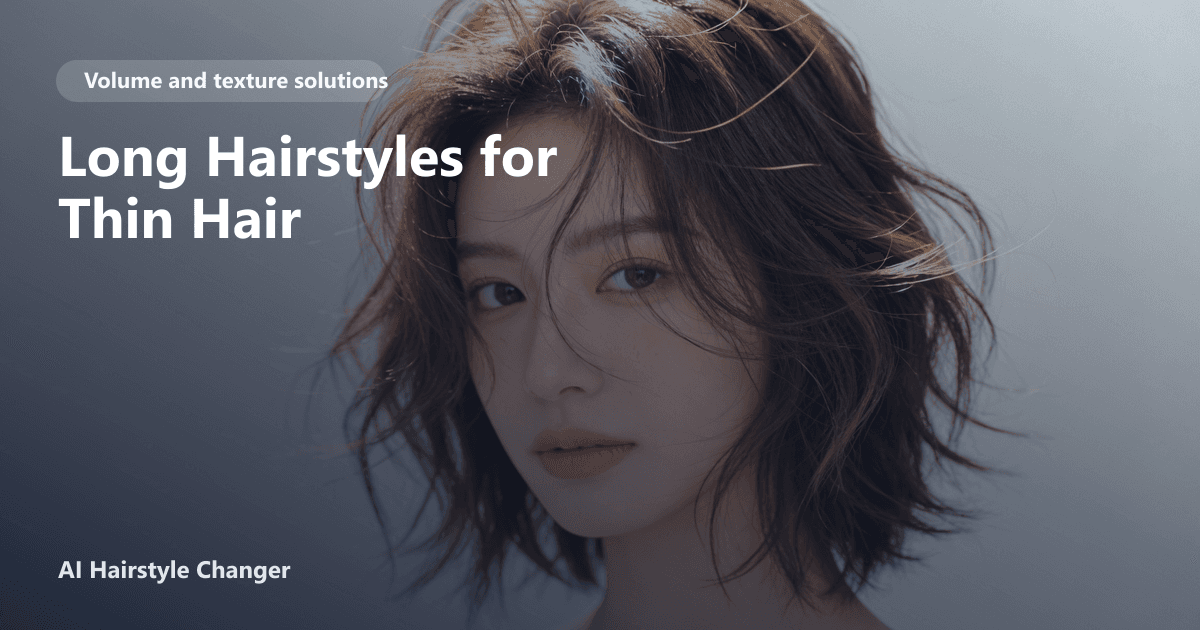
Choosing a long hairstyle with thin or fine hair can feel like walking a tightrope. You want the elegance and versatility of length, but every inch risks making your hair look even flatter. The last thing you want is to leave the salon with limp, lifeless ends that won't hold a style. Before you commit to a cut, understanding which long hairstyles actually work for thin hair - and which to avoid - can save you from months of regret.
Thanks to tools like AI Hairstyle Changer, you no longer have to guess. You can upload a selfie, try on trending long hairstyles virtually, and see how different cuts, layers, and fringes change your look in real time. Here's how to approach long hairstyles for thin hair with strategy and confidence.
Why Long Hair Is Tricky for Thin Hair
Thin and fine hair tends to lack volume and density. When grown long, it can appear stringy or flat, especially without strategic cutting and styling. The weight of long hair can pull down the roots, making the scalp more visible and the ends look sparse. But with the right approach - layering, smart shaping, and targeted volume - you can enjoy length without sacrificing fullness.
Common challenges with long thin hair include:
- Ends that look wispy or uneven
- Difficulty holding curls or waves
- Lack of movement and body
- Scalp visibility at the crown or part
The goal is to add texture and shape without thinning out the ends or losing precious density. That's where the right cut and a virtual try-on can make all the difference.
Face-Framing Layers: The Go-To for Volume and Shape
Face-framing layers are a classic technique for making long thin hair look fuller. By cutting shorter pieces around the face and blending them into longer lengths, you create the illusion of thicker hair and add movement where it matters most.
Who it suits: Nearly everyone, especially those with fine hair looking for a soft, flattering effect. If you have a round or square face, ask your stylist to start the shortest layer at chin level or just below.
What to ask for:
- Long layers starting at the cheekbones or jawline
- Minimal thinning at the ends
- Soft, blended transitions between lengths
Maintenance: Face-framing layers are relatively low-maintenance. You'll need trims every 8-12 weeks to keep the shape fresh. Use a lightweight volumizing mousse to boost lift at the roots.
When it fails: Avoid overly choppy or disconnected layers, which can make thin hair look even sparser. Too many short layers will reduce overall fullness.
If you want to visualize how face-framing layers would look on your own hair, try them on virtually with AI Hairstyle Changer before your next appointment.
Invisible Layers: Subtle Volume Without Sacrificing Length
Invisible layers are a modern approach to adding body to long thin hair. These are delicate, internal layers cut within the hair's interior, creating movement and volume without obvious steps or harsh lines.
Who it suits: Anyone who wants the illusion of thicker, fuller hair without losing length. Great for straight or slightly wavy textures.
What to ask for:
- Internal layering for movement
- No blunt ends - ask for softly feathered tips
- Keep the perimeter full and unthinned
Maintenance: Invisible layers grow out gracefully and don't require frequent trims. Styling is easy: blow-dry with a round brush or use a curling iron for subtle waves.
When it fails: If your hair is extremely fine, avoid too many internal layers, as this can make the ends appear see-through.
For more ideas on subtle, volumizing cuts, check out Volumizing Haircuts for Thin Hair.
Long Curtain Bangs: Softness and Lift at the Front
Curtain bangs are a game-changer for thin hair, especially when paired with long lengths. They add interest and fullness around the face, drawing attention upward and giving the illusion of more volume at the crown.
Who it suits: Most face shapes, particularly oval and heart. Curtain bangs work well with both straight and wavy hair.
What to ask for:
- Bangs parted in the middle, blending into face-framing layers
- Length starting at the cheekbones or just below
- Soft, wispy texture - not too blunt
Maintenance: Curtain bangs need regular trims every 6-8 weeks to maintain their shape. They're easy to style with a round brush or flat iron.
When it fails: Avoid heavy, blunt bangs, which can draw attention to thinness at the front. Curtain bangs should be airy and blended, not blocky.
Curious how curtain bangs would look on your face? AI Hairstyle Changer lets you preview this style instantly.
Soft Waves and Texture: Styling Tricks for Fuller-Looking Length
Even the best long haircut for thin hair can fall flat without the right styling. Soft waves and subtle texture are key for making hair appear fuller and more dynamic.
Styling tips:
- Use a curling iron or wand to create loose, beachy waves
- Apply a lightweight texturizing spray or mousse for volume
- Avoid heavy oils or creams that can weigh hair down
- Flip your part occasionally to boost root lift
If you're unsure which texture suits you, try uploading a selfie to AI Hairstyle Changer and previewing both straight and wavy looks before you style.
Blunt Ends vs. Wispy Ends: What Works for Thin Hair?
The perimeter of your haircut - the bottom edge - makes a huge difference in how full your hair looks. For thin or fine hair, a blunt cut at the ends can create the illusion of density, while overly wispy or feathered ends can make hair look sparse.
Blunt ends:
- Give the appearance of thicker, healthier hair
- Work best with straight or slightly wavy textures
- Pair well with subtle internal layers for movement
Wispy ends:
- Can look elegant if done subtly, but risk making hair look stringy
- Only recommended if your hair has some natural wave or curl
Discuss with your stylist whether a blunt or softly feathered perimeter will complement your hair type and styling habits. For more inspiration, see Best Haircuts for Thin Hair.
Long Shags: Effortless Volume with Edge
The modern shag is an excellent option for those with thin hair who want maximum movement and a little rock-and-roll flair. The cut features lots of graduated layers, usually starting at the crown and working down, creating volume at the roots and texture through the lengths.
Who it suits: Best for those willing to style their hair with some texture. Works well with natural waves but can be adapted for straight hair with the right products.
What to ask for:
- Long, blended layers throughout
- Shorter layers at the crown for lift
- Face-framing pieces and optional curtain bangs
Maintenance: Shags need regular trims to keep the layers defined. Styling with a texturizing spray or sea salt mist enhances the look.
When it fails: If your hair is extremely fine and straight, too many layers can make the ends look thin. Ask for a conservative shag with longer layers if you're unsure.
For a lower-commitment version, try a virtual shag cut with AI Hairstyle Changer before booking a salon appointment.
What to Avoid: Common Mistakes with Long Thin Hair
Not all long hairstyles are created equal for thin hair. Here's what to steer clear of:
- Excessive thinning or razoring, which can make ends look scraggly
- Heavy, blunt bangs that highlight a sparse hairline
- Too many short layers, which reduce overall fullness
- Overuse of heavy styling products that weigh hair down
Instead, focus on cuts that build subtle volume, maintain perimeter density, and add interest around the face. For those seeking easy upkeep, see Low-Maintenance Haircuts for Fine Hair.
FAQ
How can I make my long thin hair look thicker?
The key is strategic layering, blunt ends, and lightweight volumizing products. Face-framing layers and curtain bangs add fullness at the front, while invisible layers give movement without losing density. Styling with soft waves also helps.
Are there long hairstyles for thin hair that require minimal styling?
Yes. Blunt, one-length cuts with subtle face-framing are easy to maintain and style. Invisible layers grow out well and don't need constant trims. If you want more ideas, check out Low-Maintenance Haircuts for Fine Hair.
Can I see how a long hairstyle will look before cutting my hair?
Absolutely. AI Hairstyle Changer lets you upload a selfie and try on a range of long hairstyles virtually. You can experiment with different layer placements, bangs, and textures to find your best look before heading to the salon.
What should I tell my stylist if I want a long hairstyle for thin hair?
Be specific: mention your desire for fullness, ask for face-framing or invisible layers, and request a blunt or softly feathered perimeter. Bring reference photos and discuss maintenance. Trying styles virtually with AI Hairstyle Changer can help you show exactly what you want.
Takeaway: Try Before You Commit
Long hairstyles for thin hair are all about balance - adding movement and volume without losing precious density. Whether you're drawn to face-framing layers, curtain bangs, invisible layers, or a modern shag, the right cut is within reach. Before you make the leap, use AI Hairstyle Changer to preview your new look and walk into your next appointment with confidence.