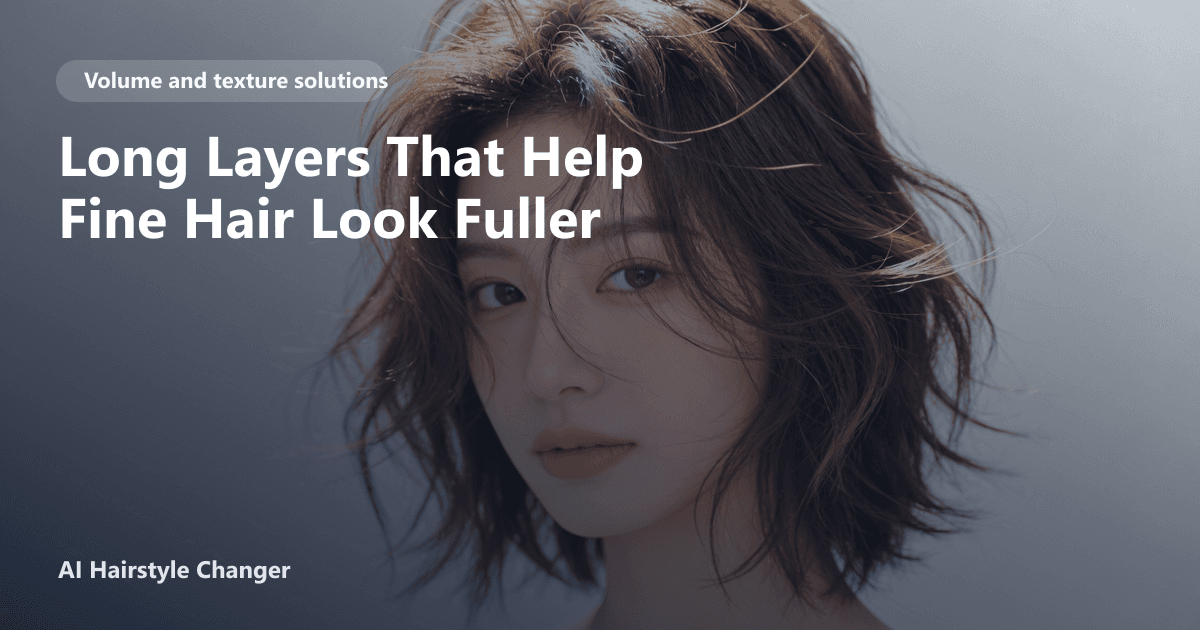
If you've ever left the salon wishing your fine hair looked fuller, you're not alone. The quest for volume is a challenge for anyone with thin or fine hair, especially when you want to keep your length. Long layers are a proven solution - but only when tailored to your hair type, face shape, and styling habits. The right cut can create the illusion of density and movement, while the wrong one can leave hair looking limp or stringy. Here's how to choose long layers that truly work for fine hair, plus how to preview the look with AI Hairstyle Changer before you commit.
Why Long Layers Are a Game-Changer for Fine Hair
Fine hair tends to fall flat when cut blunt or left all one length. Long layers, when done right, introduce movement and volume without sacrificing the length you love. By removing just enough weight and shaping the cut, layers can make hair appear thicker around the crown and through the ends. This approach isn't about dramatic choppiness - it's about subtle, strategic shaping.
But not every layered cut is created equal. The key is customizing the length, placement, and blending of layers to avoid a wispy or uneven result. The right long layers can:
- Add fullness and bounce to limp, fine hair
- Prevent hair from clumping together or looking stringy
- Make styling easier, with less need for heavy products
- Frame the face for a softer, more balanced look
Classic Long Layers: The Timeless Volume Boost
The classic long layered cut features soft, graduated layers starting below the chin and cascading through the lengths. This style works especially well for those with fine hair that's straight or slightly wavy. The layers are blended so they don't stand out as distinct sections, but instead create a smooth, voluminous effect.
Who it suits:
- Fine, straight, or subtly wavy hair
- Anyone wanting to keep hair below the shoulders
- Those looking for a versatile style that's easy to dress up or down
Salon conversation tips:
- Ask for long, blended layers that start below the chin
- Emphasize that you want fullness, not thinness at the ends
- Request minimal thinning or razoring, which can make fine hair look sparse
Maintenance:
- Trim every 10 - 12 weeks to keep layers fresh
- Use a volumizing mousse or spray at the roots
If you're unsure how much layering is right for you, upload your photo to AI Hairstyle Changer. You can preview subtle versus more pronounced layers and see exactly how they'll affect your length and fullness.
Face-Framing Layers: Softening and Lifting
Face-framing layers are a subtle way to add shape and movement to fine hair without sacrificing bulk. These layers typically start around the cheekbones or jawline and blend into the rest of your hair. They draw the eye upward, adding a gentle lift and making hair appear fuller near the face.
Who it suits:
- Fine hair that tends to fall flat at the front
- Those looking to highlight cheekbones or soften a strong jaw
- Anyone wanting a low-commitment update to their usual cut
Salon conversation tips:
- Specify where you want the shortest layer to hit (cheekbones, jaw, or collarbone)
- Ask for soft, feathered ends rather than sharp angles
- Mention if you wear a middle or side part, as this affects layer placement
Maintenance:
- Trim face-framing pieces every 8 - 10 weeks to keep them crisp
- Blow-dry with a round brush for extra lift
Previewing face-framing layers with AI Hairstyle Changer can help you decide how dramatic or subtle you'd like the effect, and which length best flatters your features.
Invisible Layers: Subtle Fullness Without Obvious Choppiness
Invisible layers are a modern technique that adds volume and movement without any obvious step or shelf. For fine hair, this method involves cutting internal layers that lift the hair from within, so the surface remains smooth and thick-looking. The result is fullness that looks completely natural - no harsh lines or telltale signs you've had a layered cut.
Who it suits:
- Fine, straight, or slightly wavy hair
- Anyone wanting a low-maintenance, natural look
- Those wary of layers that might look too choppy or thin
Salon conversation tips:
- Ask for internal or "invisible" layering to create subtle lift
- Specify that you want to maintain a thick, blunt edge at the bottom
- Avoid aggressive texturizing or razoring
Maintenance:
- Minimal - these layers grow out gracefully
- Occasional trims every 12 weeks
AI Hairstyle Changer lets you compare invisible layers to more traditional layered cuts, so you can see which approach gives you the fullness you want without sacrificing your preferred silhouette.
Curtain Bangs with Long Layers: Fullness at the Front
Adding curtain bangs to long layers is a trending way to bring fullness and dimension to fine hair. Curtain bangs are parted down the middle and feathered out to blend into the rest of your layers, creating a soft, face-framing effect. This style draws attention to your eyes and cheekbones, while the long layers add movement throughout the length.
Who it suits:
- Fine hair that needs extra volume around the face
- Those wanting a retro-inspired but modern look
- Anyone looking to disguise a high forehead or elongate a round face
Salon conversation tips:
- Ask for curtain bangs that blend seamlessly into your long layers
- Specify how far back you want the bangs to start (usually from the arch of the brow)
- Discuss styling options - curtain bangs work best when blow-dried with a round brush
Maintenance:
- Bangs may need trimming every 4 - 6 weeks
- Use a lightweight styling cream to keep them in place
Not sure if curtain bangs will suit you? Try them on virtually with AI Hairstyle Changer before making the chop.
Layer Placement: Where to Add Volume for Fine Hair
Where layers are placed can make or break the illusion of fullness. For fine hair, volume is best concentrated around the crown and upper mid-lengths, rather than at the very ends. Over-layering the bottom can make hair look thin or wispy, while strategic layering higher up creates lift and body.
Tips for salon conversations:
- Ask your stylist to focus layers above the shoulders and through the crown
- Request minimal layering at the ends to maintain thickness
- If you want more body, mention that you style your hair with a blow dryer or hot rollers
For more inspiration on volume-boosting cuts, browse Volumizing Haircuts for Thin Hair and use AI Hairstyle Changer to test different layer placements before you book your appointment.
When Long Layers Don't Work for Fine Hair
While long layers can be transformative, they're not ideal for every fine-haired client. If your hair is extremely thin or prone to breakage, even subtle layers might make the ends look sparse. In these cases, a blunt cut or a shorter, structured style may be a better bet for maximizing fullness.
Signs long layers might not be right:
- Your ends split easily or look see-through
- Hair breaks off at the shoulders
- You want a style that requires zero styling effort
Explore alternative options on Best Haircuts for Thin Hair or Low-Maintenance Haircuts for Fine Hair if you're concerned about keeping your hair looking thick and healthy.
FAQ
How do I ask my stylist for long layers that add fullness?
Bring reference photos and specify that you want blended, face-framing layers starting below the chin, with minimal thinning at the ends. Mention your goal is to make your fine hair look fuller, not thinner.
Will layers make my fine hair look thinner?
Not if they're placed and blended correctly. Over-layering or aggressive texturizing can thin out the ends, but strategic long layers add volume and movement. Previewing styles with AI Hairstyle Changer can help you find the right balance.
Can I try long layers virtually before cutting my hair?
Yes. AI Hairstyle Changer lets you upload your selfie and test different layered styles, from classic to invisible layers and curtain bangs. You can see how each option looks with your face shape and hair texture.
How often should I trim long layers in fine hair?
Every 8 - 12 weeks is ideal to keep layers looking fresh and prevent split ends. Face-framing pieces or bangs may need more frequent trims.
Takeaway: Try On Long Layers Before You Commit
Long layers are a versatile, volume-boosting solution for fine hair - but the details matter. From classic blends to invisible layers and curtain bangs, the right cut can make your hair look fuller and more dynamic. Use AI Hairstyle Changer to preview your favorite styles, compare subtle versus bold layers, and head to your next salon appointment with confidence. Ready to see your perfect layered look? Start your virtual try-on at Hairstyle Try-On Online: Free Test Cuts Before Booking.