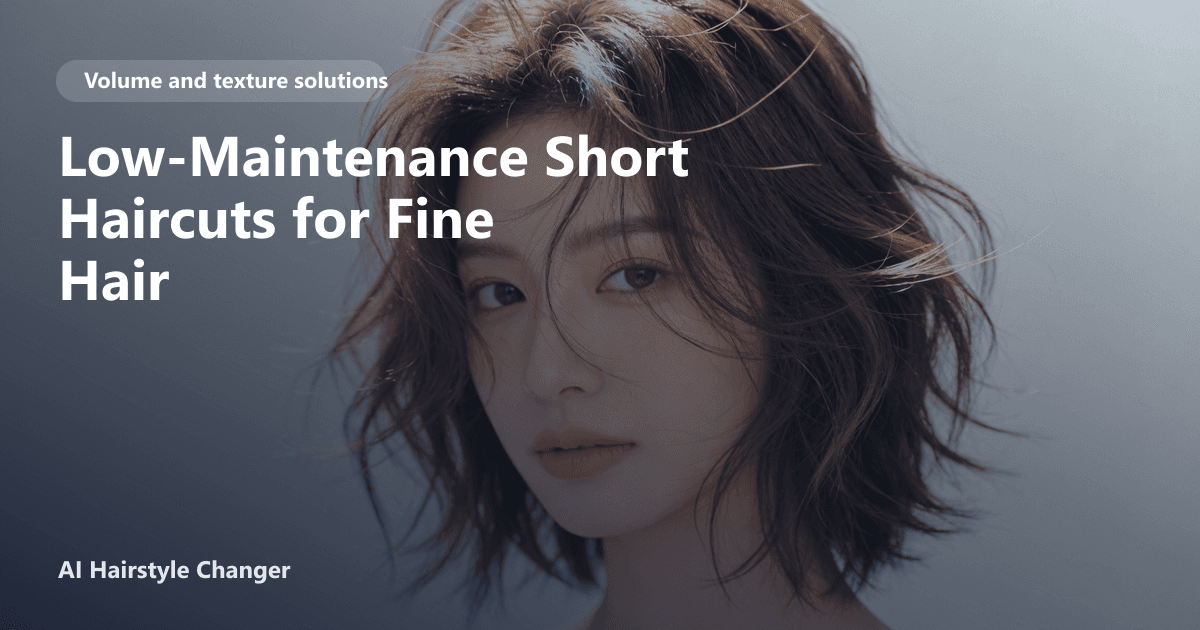
Choosing a new short haircut for fine hair is a big decision. If you've ever left the salon with a style that fell flat, required too much styling, or simply didn't suit your hair's natural texture, you know the frustration. The right low-maintenance short haircut can make fine hair look fuller, save you time, and boost your confidence - but the wrong one can mean months of bad hair days. Before you commit to the scissors, it's smart to see how different cuts will actually look on you. That's where using a virtual try-on tool like AI Hairstyle Changer can take the guesswork out of your next appointment.
Why Short Haircuts Work for Fine Hair
Fine hair often lacks volume, flattens easily, and can reveal scalp if not cut thoughtfully. Shorter lengths reduce weight, making it easier to create lift and texture. The right cut can add movement and shape, helping hair look fuller and more styled with minimal effort. But not every short haircut is created equal - some styles require daily blowouts or constant trims, while others are designed for easy air-drying and quick touch-ups.
The Textured Bob: Effortless Volume and Shape
A textured bob is a go-to for fine hair because it's both stylish and practical. This cut usually sits between the chin and collarbone, with soft layers and subtle texturizing to maximize body. Ask your stylist for:
- Length at or just below the chin for a fuller silhouette
- Point-cut or razor-cut ends for movement (avoid heavy blunt lines)
- Light layering throughout to prevent flatness
- Optional side-swept fringe to frame the face and add interest
Maintenance is simple: air-dry with a volumizing mousse or use a round brush for added lift. The textured bob grows out gracefully and doesn't demand constant salon visits. For more inspiration, see our Best Haircuts for Thin Hair guide.
The Modern Pixie: Low Effort, High Impact
Pixie cuts are a classic choice for fine hair, especially if you want a dramatic change with minimal upkeep. Today's pixies are softer and more versatile than ever. Consider:
- Tapered sides and nape for a clean shape
- Longer layers on top for volume and styling flexibility
- Wispy or side-swept bangs to avoid harsh lines
A pixie works best if you're comfortable with regular trims every 4 - 6 weeks to keep the shape sharp. Styling is quick - just a dab of texturizing cream or a light pomade creates lift and separation. If you're unsure how short to go, try on several pixie variations with AI Hairstyle Changer to see which length and fringe direction suit your face and lifestyle.
The Graduated or Stacked Bob: Built-in Lift
For those seeking even more volume, the graduated bob (sometimes called a stacked bob) is engineered to give fine hair a boost. This cut features:
- Shorter layers stacked at the back
- Slightly longer pieces toward the front
- Subtle graduation for a rounded, full shape
The stacked back creates instant lift, while the longer front keeps the look modern and versatile. This style is ideal if your hair tends to fall flat at the crown. Blow-drying with a round brush enhances the effect, but the cut's structure does most of the work. To see how different graduation angles look on your own face, use AI Hairstyle Changer's preview tool before committing in the salon.
The Soft Shag: Texture Without Fuss
Shag haircuts are back in a big way, and a short, soft shag can give fine hair plenty of movement with almost zero effort. Key features include:
- Layers of varying lengths throughout
- Feathered or curtain bangs for face-framing softness
- Choppy ends for a lived-in, tousled finish
The shag is forgiving as it grows and works well with natural texture. Styling is as simple as scrunching in a bit of lightweight mousse or sea salt spray. Avoid heavy creams or oils that can weigh down fine strands. If you're curious about how much layering works for your hair density, AI Hairstyle Changer can help you visualize subtle versus bold shag shapes.
What to Ask Your Stylist (and What to Avoid)
Going into your appointment prepared can make all the difference. Here's what to discuss:
- Your daily styling routine and how much time you want to spend
- Whether you prefer air-drying or heat styling
- How much layering you're comfortable with
- The direction and thickness of any fringe or bangs
Avoid:
- Blunt, heavy lines that can emphasize thinness
- Too much thinning or razor cutting, which can make ends wispy
- Styles that require constant heat styling if you want low maintenance
Bring reference photos and, if possible, use AI Hairstyle Changer to create a shortlist of your favorite looks on your own face. This makes communication with your stylist easier and helps prevent misunderstandings.
How to Maintain Volume and Shape Between Cuts
Fine hair can lose its shape quickly, but a few habits keep your short cut looking fresh:
- Schedule trims every 6 - 8 weeks for bobs, 4 - 6 weeks for pixies
- Use lightweight volumizing products (mousse, root spray)
- Sleep on a silk pillowcase to reduce flattening
- Avoid heavy conditioners near the roots
For even more tips, check out our Volumizing Haircuts for Thin Hair article.
Who Should Avoid Short Cuts for Fine Hair?
While short haircuts offer many benefits, they're not for everyone. You might want to reconsider if:
- You prefer to wear your hair up most days
- You dislike regular trims
- Your hair is extremely fine and sparse at the crown (ask your stylist about strategic layering)
If you're unsure, trying different short cuts virtually can help you see what works before making a big change.
Using AI Hairstyle Changer to Preview Your Next Cut
Deciding on a new haircut is easier when you can see the results in advance. AI Hairstyle Changer lets you upload your selfie and preview dozens of low-maintenance short haircuts for fine hair. You can experiment with:
- Different bob and pixie variations
- Layering intensity
- Fringe and bang styles
- Volume placement and part direction
Shortlist your favorites and bring the images to your salon appointment for a more confident, regret-free experience. For more low-effort options, see our Low-Maintenance Haircuts for Fine Hair hub.
FAQ
How do I know which short haircut will suit my fine hair?
The best way is to consider your face shape, styling routine, and how much volume you want. Virtual try-on tools like AI Hairstyle Changer let you preview different styles on your own image, making it easier to see what flatters your features and fits your lifestyle.
Will cutting my fine hair short make it look thicker?
Often, yes. Shorter cuts remove weight and allow for more volume at the roots. Styles with layering, texture, and strategic graduation can create the illusion of fuller, denser hair. Avoid overly blunt or heavily thinned ends, which can have the opposite effect.
How do I keep my short fine hair from looking flat?
Choose a cut with built-in texture and layers, use lightweight volumizing products, and avoid heavy conditioners near the roots. Blow-drying with a round brush or using a root-lifting spray can also help. Regular trims keep the shape crisp and prevent limpness.
Can I try different short haircuts before my appointment?
Absolutely. AI Hairstyle Changer lets you preview a wide range of short haircuts for fine hair using your own selfie. This makes it easy to compare styles, experiment with fringe and layering, and bring your favorites to your stylist.
Take the Guesswork Out of Your Next Cut
Low-maintenance short haircuts for fine hair can transform your look and simplify your routine - but only if you choose the right style for your texture and lifestyle. With AI Hairstyle Changer, you can try on bobs, pixies, shags, and more before you book, ensuring you walk into your appointment with confidence. Ready to see your next look? Head to Hairstyle Try-On Online: Free Test Cuts Before Booking and start exploring today.