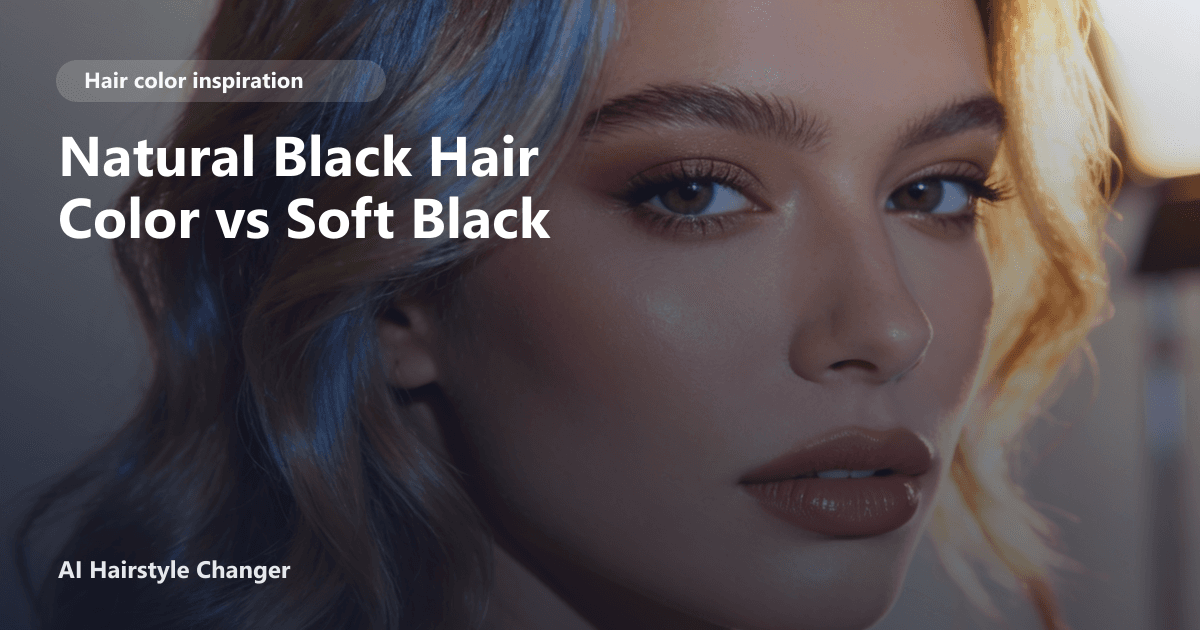
Natural Black Hair Color vs Soft Black is usually a contrast problem, not a trend problem. The better choice depends on undertone, starting base, upkeep tolerance, and whether you want the result to read softer, brighter, richer, or more obvious in daylight.
AI Hairstyle Changer is useful here because color decisions change more than the hair itself. The shade can sharpen your contrast, soften your features, brighten the skin, or make the whole look feel heavier than you intended. Previewing it on a selfie before the appointment keeps the decision grounded.
The real difference between Natural Black Hair Color and Soft Black
Natural Black Hair Color and Soft Black can sit close on a salon chart and still create very different results once they hit your own hair. Compare undertone first, then compare how much contrast each shade adds around the face.
- Natural Black Hair Color: usually feels better when you want a balanced or more controlled finish.
- Soft Black: usually works when you want a balanced direction or more visible payoff in daylight.
- Check which version looks cleaner against your brows, eyes, and natural root depth before you decide.
- Preview both in similar lighting so the comparison is fair.
Who it usually suits best
The strongest match usually comes from aligning undertone, depth, and maintenance tolerance instead of copying the exact same shade name from someone with a different natural base.
For natural black hair color vs soft black, a balanced read is often the difference between a shade that looks intentional and one that feels slightly off. It is worth checking the result in daylight, indoor light, and without heavy makeup before you decide.
Which shade tends to suit more people
The shade that fits your skin tone, natural base, and maintenance tolerance will usually age better than the one that only looks stronger on a swatch.
- Bring a selfie or preview that shows the exact depth you want.
- Decide whether you want face-framing brightness, all-over color, or hidden dimension.
- Ask how visible the regrowth line will be after four to eight weeks.
- Ask what product keeps the tone polished between salon visits.
Maintenance: which one grows out with less stress
Natural Black Hair Color and Soft Black rarely fade the same way. Compare brass control, gloss frequency, and how obvious the root line becomes after a few weeks before choosing the winner.
Turn the winning preview into a salon brief
The preview becomes useful when you can explain why it works. Write down the depth, undertone, placement, and maintenance cadence that made one version stronger than the others so the salon conversation starts with specifics instead of adjectives.
- Save one daylight screenshot and one indoor-light screenshot of the winning shade.
- Note whether the root should stay deeper or match the mid-lengths.
- Decide whether the brightness belongs around the face, through the ends, or across the full head.
- Bring the version that still looks believable when your makeup and lighting are less ideal.
Check the shade in daylight and indoor light
Hair color decisions fall apart when the preview only looks good under one lighting condition. The most wearable option should still hold up in daylight, indoor light, and the lower-contrast situations where tone problems usually become obvious.
This matters even more if your natural brows, root depth, or eye color create contrast that can either support the shade or make it feel too flat. Use those anchors when you compare the options.
- Keep one comparison with your face fully visible, not cropped tightly around the hair.
- Look for the version that keeps the skin lively without making the hair read brassy, muddy, or too heavy.
- If two shades feel close, keep the one that still looks believable in weaker light.
How to preview the shade before you dye
A virtual preview is useful because hair color is not only about the formula. It is about how the shade changes your contrast level, whether it brightens the eye area, and whether the result still feels believable on your own hair and skin. Use Virtual Hair Color Try On: See New Hair Colors Instantly to compare a few realistic directions before you spend money at the salon.
- Compare two or three nearby shades on the same source photo.
- Check the result with your brows, natural root depth, and eye color in view.
- Save the version that still looks believable when the lighting is less flattering.
What people get wrong with color comparisons
Do not compare shades under different lighting or on very different base colors. A fair natural black hair color vs soft black decision needs the same selfie, similar exposure, and realistic expectations about the lift your current hair can handle.
FAQ
How do I choose between Natural Black Hair Color and Soft Black?
Compare undertone, contrast, and grow-out. The better shade is the one that looks believable on your complexion and still feels wearable after the first few washes.
Which option is usually lower maintenance?
The lower-maintenance option is usually the one closer to your natural base with a softer root transition and less toner dependence.
Can I preview both shades before I dye my hair?
Yes. Virtual Hair Color Try On: See New Hair Colors Instantly is useful for comparing nearby tones on one selfie before you commit to either direction.
Why do two similar shades look so different on real people?
Lighting, natural base depth, existing warmth, and skin undertone all change the result. That is why close shades need a side-by-side preview before the salon visit.
The safest color move is the one you can explain clearly before the appointment. Use Virtual Hair Color Try On: See New Hair Colors Instantly to compare realistic options, then bring the strongest preview into the salon so the color plan starts from something concrete.