If you have a round face and thin hair, you know the struggle: every salon visit feels like a gamble. You want a style that flatters your face shape, adds volume, and doesn't require endless styling. But how do you pick a haircut that won't fall flat or accentuate fullness in all the wrong places?
AI Hairstyle Changer lets you preview dozens of real hairstyle options on your own photo, so you can see exactly how a cut will look before you commit. No more guesswork, no more regrets - just real confidence for your next appointment.
Why Thin Hair and Round Faces Need Special Strategy
Thin or fine hair often lacks body, making it challenging to create the illusion of shape and volume. For round faces, the goal is to elongate and balance proportions, not add width. The wrong cut can make hair look limp and the face appear even rounder. The right cut, however, can create movement, lift, and a more sculpted silhouette.
The challenge is finding a style that works with your hair's natural texture and density, while also flattering your facial features. AI Hairstyle Changer is designed to help you visualize these subtle differences, so you can make informed choices and show your stylist a look that's proven to work for you.
The Textured Long Bob (Lob): Versatile and Flattering
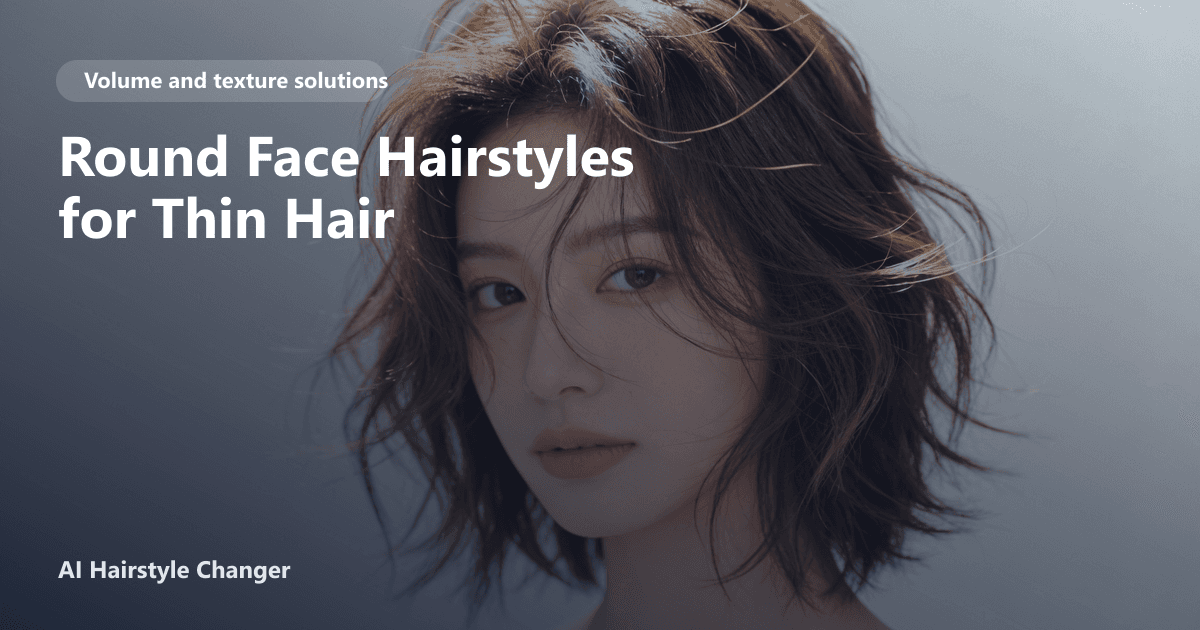
The long bob, or lob, is a top pick for thin hair and round faces. Its length - usually grazing the collarbone - offers enough weight to avoid puffiness at the cheeks, while subtle layering adds movement and volume.
- Who it suits: Most round faces, especially those with fine hair that tends to fall flat.
- What to ask for: A collarbone-length lob with light, textured layers. Request side-swept or curtain bangs to break up the roundness and draw the eye downward.
- Maintenance: Lobs are easy to style with a round brush or a flat iron for waves. Regular trims every 6 - 8 weeks keep the shape fresh. Use lightweight volumizing products to avoid weighing hair down.
- When it fails: Avoid heavy, blunt cuts or one-length styles, which can accentuate fullness and make thin hair look stringy.
Want more ideas for cuts like this? Check out Best Haircuts for Thin Hair.
Wispy Shag: Movement Without Bulk
A modern shag is a game-changer for thin hair and round faces. Its choppy, feathered layers add instant volume and texture, creating the illusion of thicker hair and a more angular face shape.
- Who it suits: Those who want a trendy, low-effort look that still feels polished.
- What to ask for: Ask for a shoulder-length or slightly longer shag with face-framing layers and wispy, eyebrow-grazing bangs. The layers should start around the cheekbones to elongate the face.
- Maintenance: Shags are forgiving between trims and air-dry beautifully. Use a texturizing spray or mousse to emphasize layers. Minimal heat styling is needed.
- When it fails: Over-layering can make very thin hair look sparse. Keep layers soft and avoid thinning shears.
For more volume-boosting ideas, see Volumizing Haircuts for Thin Hair.
Side-Parted Pixie: Short and Strategic
A pixie cut can be a bold, flattering choice for thin hair and round faces - if you get the details right. The key is to avoid a uniform, rounded shape and instead focus on asymmetry and texture.
- Who it suits: Confident clients ready for a dramatic change and easy styling.
- What to ask for: A side-parted pixie with longer layers on top and short, tapered sides. Request volume at the crown and soft, piecey ends.
- Maintenance: Pixies need trims every 4 - 6 weeks to keep their shape. Styling is quick with a dab of volumizing mousse or texturizer.
- When it fails: Avoid blunt, bowl-shaped pixies or heavy bangs, which can exaggerate roundness and flatten thin hair.
If you're after a wash-and-go style, you'll find more options in Low-Maintenance Haircuts for Fine Hair.
Layered Collarbone Cut: Effortless and Elongating
A layered collarbone cut is a safe bet for anyone nervous about going too short. The layers add body and lift, while the length draws the eye downward, subtly elongating the face.
- Who it suits: Those who want a versatile style that works up or down.
- What to ask for: Collarbone-length hair with invisible or blended layers starting just below the chin. Pair with a deep side part or soft curtain bangs.
- Maintenance: Easy to style straight or with loose waves. Use lightweight products to avoid limpness. Trims every 8 - 10 weeks are enough.
- When it fails: Avoid layers that start too high, which can add width at the cheeks. Skip blunt ends, which can look sparse on fine hair.
Curtain Bangs: Soft Framing for Round Faces
Curtain bangs are a subtle way to add shape and dimension - especially flattering for round faces with thin hair. They break up the width of the forehead and draw attention to the eyes.
- Who it suits: Anyone wanting a low-commitment fringe that grows out gracefully.
- What to ask for: Long, face-framing bangs parted in the middle or slightly off-center, blending into the rest of your cut.
- Maintenance: Trim every 4 - 6 weeks to keep the length just below the brows. Blow-dry with a round brush for soft movement.
- When it fails: Avoid thick, blunt bangs, which can shorten the face and weigh down thin hair.
What to Avoid: Common Pitfalls for Thin Hair on Round Faces
Not every trend works for every hair type or face shape. Here's what to skip if you want your cut to flatter and last:
- Blunt bobs at chin length: These can widen the face and make thin hair look flat.
- Heavy, straight-across bangs: They shorten the face and remove precious volume.
- Over-layering: Too many layers can make thin hair look stringy and unmanageable.
- Uniform length: Avoid styles with no layers, which can cling to the head and highlight thinness.
Instead, opt for styles that add movement, shape, and strategic volume - always tailored to your unique hair density and face shape.
How to Use AI Hairstyle Changer for Round Face, Thin Hair
Choosing a new haircut is stressful when you're worried about thin hair and face shape. AI Hairstyle Changer takes the uncertainty out of the process:
1. Upload your selfie to see real-time previews of dozens of cuts designed for thin hair and round faces. 2. Shortlist your favorites and compare side-by-side, so you can bring clear reference photos to your stylist. 3. Test fringe, layers, and length to see how small changes affect your overall look. 4. Save your top picks for your next salon visit, reducing the risk of haircut regret.
This try-on experience is especially helpful if you're deciding between subtle variations - like a lob with or without curtain bangs, or a shag with different layer placements.
FAQ
What haircut makes a round face look less round with thin hair?
Cuts that add length and volume at the crown - like a textured lob, layered collarbone cut, or modern shag - help elongate round faces. Avoid chin-length bobs and heavy bangs, which can add width.
Can I pull off bangs with thin hair and a round face?
Yes, but opt for wispy or curtain bangs instead of blunt, thick fringes. Curtain bangs create a soft frame and blend into layers, while wispy bangs add texture without weighing hair down.
How do I add volume to thin hair without teasing or heavy products?
Strategic layers, a side part, and lightweight volumizers work best. Air-drying with a texturizing spray or using a round brush at the roots can boost lift. Try styles from Volumizing Haircuts for Thin Hair for more inspiration.
Should I go short or keep my hair longer?
Both can work if the cut is tailored. Short styles like side-parted pixies add height, while longer lobs or collarbone cuts elongate the face. The key is avoiding blunt, chin-length cuts that widen the face.
Takeaway: Try Before You Cut
Choosing the right haircut for a round face and thin hair doesn't have to be a guessing game. With AI Hairstyle Changer, you can preview real styles on your own face, compare options, and walk into your next appointment with confidence. Ready to find your best look? Head to Hairstyle Try-On Online: Free Test Cuts Before Booking and see what's possible - before you make it permanent.