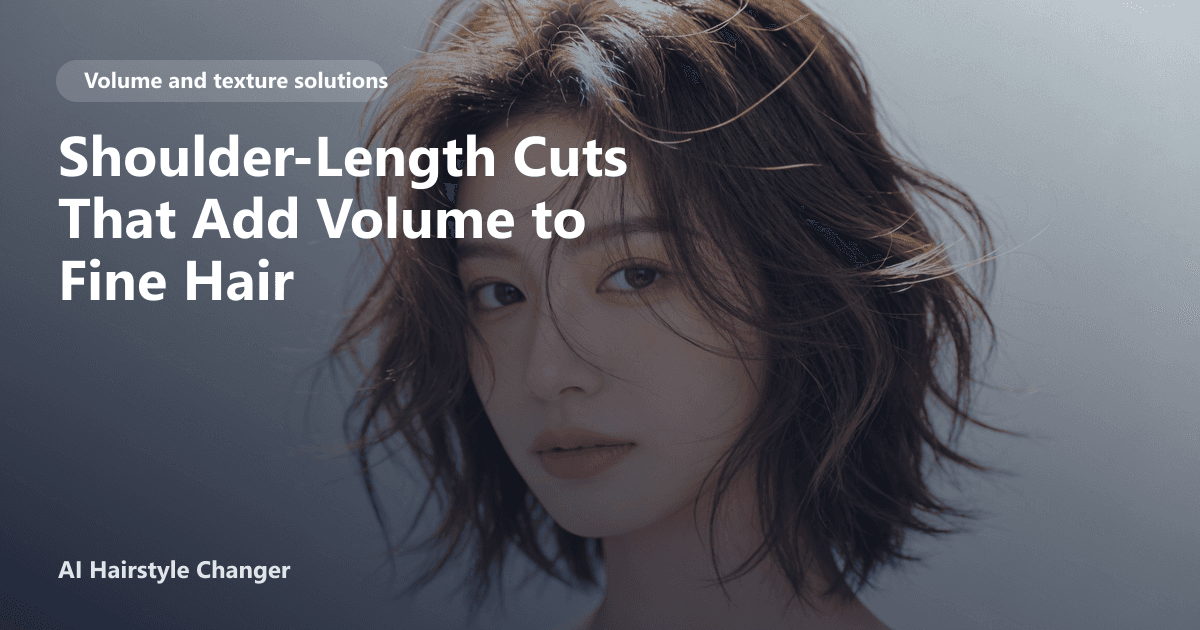
If you have fine or thin hair, you know the struggle: you want a fresh, shoulder-length cut, but you worry it'll fall flat, look limp, or make your hair appear even thinner. The wrong chop can leave you fighting daily with products and hot tools, while the right one can make your hair look fuller, bouncier, and more confident - sometimes instantly. The challenge? Finding a cut that suits your face, fits your lifestyle, and actually delivers on volume.
Before you book your next salon appointment, it pays to get specific about what works for fine hair at shoulder length. Here's how to choose a style that adds body, movement, and staying power, plus how to preview your favorite looks using AI Hairstyle Changer so you walk into the salon with zero doubts.
Why Shoulder-Length Works for Fine Hair
Shoulder-length is a sweet spot for fine or thin hair. Too short, and you risk losing the weight needed for swing and shape. Too long, and hair can look stringy or weighed down. At shoulder length, you can maximize volume, play with layers, and keep styling manageable.
Medium-length cuts offer enough length for movement and updos, but not so much that your strands fall flat. Many volumizing techniques - like layering, texturizing, and strategic bangs - work especially well at this length. The key is tailoring the cut to your hair's density and your styling habits.
Cut Direction #1: Blunt Shoulder-Length Bob With Subtle Layers
A blunt bob at shoulder length is a classic for fine hair, but there's a twist: subtle, invisible layers. This cut keeps the perimeter strong and full, making your hair appear thicker at the ends instead of wispy. The hidden layers add movement and prevent the style from looking boxy.
Who it suits: Straight or slightly wavy fine hair. Great for oval, heart, or long face shapes.
Salon talk: Ask for a blunt, shoulder-length bob with minimal, internal layers for movement. Emphasize fullness at the ends and avoid heavy thinning shears.
Upkeep: Requires trims every 6-8 weeks to keep the line sharp. Styling is easy - air dry or blowout for extra volume.
When it fails: If your hair is very limp or oily, this cut can get weighed down. Avoid if you want a lot of face-framing movement.
For more inspiration, see Best Haircuts for Thin Hair.
Cut Direction #2: Shoulder-Grazing Long Layers
Long layers at shoulder length can add lift and body without sacrificing length. The trick is to keep layers soft and graduated, starting below the chin. This creates the illusion of more volume while maintaining a cohesive, grown-out look.
Who it suits: Fine hair that's straight, wavy, or even lightly curly. Works on most face shapes, especially round and square.
Salon talk: Request shoulder-length hair with long, blended layers. Avoid choppy or short layers at the crown, which can make hair look thinner.
Upkeep: Layers grow out gracefully, so you can stretch appointments to 10-12 weeks. Use a round brush and volumizing mousse for lift.
When it fails: Too many layers or overly short layers can make hair look sparse. Stick to subtlety for the best results.
Explore more options in Volumizing Haircuts for Thin Hair.
Cut Direction #3: The Textured Lob (Long Bob)
A textured lob is a modern, shoulder-skimming cut that relies on soft, piecey layers and gentle graduation. Texture is added with point-cutting techniques, creating movement and the illusion of density.
Who it suits: Fine hair with some natural wave or texture. Also flattering for those who want a tousled, effortless look.
Salon talk: Ask for a shoulder-length lob with texture added through point-cutting, not thinning shears. Request subtle face-framing layers that start at the cheekbones.
Upkeep: This cut is forgiving - air dries well and looks great with salt spray. Trim every 8-10 weeks to maintain shape.
When it fails: If your hair is very straight and resists texture, you'll need to style with a curling wand or texturizing spray.
Cut Direction #4: Shoulder-Length Cut With Curtain Bangs
Curtain bangs paired with a shoulder-length cut can instantly add fullness around the face and break up a flat silhouette. The bangs draw attention to your eyes and cheekbones, while soft layers around the perimeter boost volume.
Who it suits: Straight or wavy fine hair, especially those wanting to highlight facial features or soften a high forehead.
Salon talk: Request curtain bangs that blend into shoulder-length layers. Make sure the bangs are long enough to tuck behind the ears and not too thick.
Upkeep: Bangs require trims every 4-6 weeks, but the rest of the cut is low-maintenance. Blow-dry bangs with a round brush for bounce.
When it fails: If you have cowlicks or very oily skin, bangs may separate or stick to your forehead. Consider a side-swept bang as an alternative.
Volume-Boosting Add-Ons: Styling and Color
Beyond the cut, the right styling and color can make a big difference for fine hair at shoulder length.
- Blow-drying upside down adds instant lift at the roots.
- Volumizing mousses and sprays help hold shape without weighing hair down.
- Subtle highlights or balayage create dimension, making hair appear thicker.
- Avoid heavy oils or serums that can flatten fine strands.
Ask your stylist about texturizing products and color placement to maximize fullness. For more easy-care ideas, see Low-Maintenance Haircuts for Fine Hair.
How to Preview Cuts With AI Hairstyle Changer
Choosing a new cut is a big decision, especially for fine or thin hair. AI Hairstyle Changer makes it simple to preview shoulder-length styles before you commit. Just upload a selfie and test-drive different cuts, layers, and bangs virtually. You can compare how a blunt bob stacks up against a textured lob, or see if curtain bangs really suit your face shape.
Use the tool to build a shortlist of reference images to show your stylist. This reduces the risk of haircut regret and gives you the confidence to try something new. Many users find that seeing themselves in multiple styles helps them spot the subtle differences that matter most for fine hair.
What to Avoid With Fine Hair at Shoulder Length
Some common mistakes can make fine hair look thinner, even at the ideal length:
- Over-layering: Too many or too-short layers can create a stringy effect.
- Heavy, blunt bangs: Thick bangs can overwhelm fine hair and draw attention away from volume.
- Excessive thinning shears: Over-thinning removes precious density.
- Neglecting trims: Split ends and uneven growth show up fast on fine hair.
Instead, focus on soft, strategic layers and perimeter fullness. Always communicate your hair's density and styling habits with your stylist.
FAQ
How often should I trim shoulder-length fine hair?
For most shoulder-length cuts, a trim every 6-10 weeks keeps the shape fresh and prevents split ends. If you have bangs, they may need trimming every 4-6 weeks.
Can I add volume to fine hair without layers?
A blunt cut at shoulder length can make hair look thicker, but subtle internal layers or texturizing usually help with movement and lift. Discuss options with your stylist based on your hair's natural texture.
Are curtain bangs suitable for thin hair?
Curtain bangs work well for fine hair when they're blended into soft layers and not cut too thick. They add fullness around the face and can be styled for extra volume.
How can I be sure a new cut will suit me?
Trying styles virtually with AI Hairstyle Changer lets you see yourself in different shoulder-length cuts, layers, and bangs. It's a low-risk way to experiment before booking a salon visit.
The Takeaway: Test Before You Cut
Shoulder-length cuts offer some of the best options for adding volume and movement to fine hair - but the right choice depends on your hair's unique texture, your face shape, and your styling routine. With so many subtle variations, it's easy to feel overwhelmed or worry about making a mistake.
AI Hairstyle Changer takes the guesswork out of the process. Upload your photo, preview shoulder-length bobs, lobs, and layered cuts, and walk into your next appointment with total confidence. Ready to see your next look? Try it now at Hairstyle Try-On: Online Free Test Cuts Before Booking.