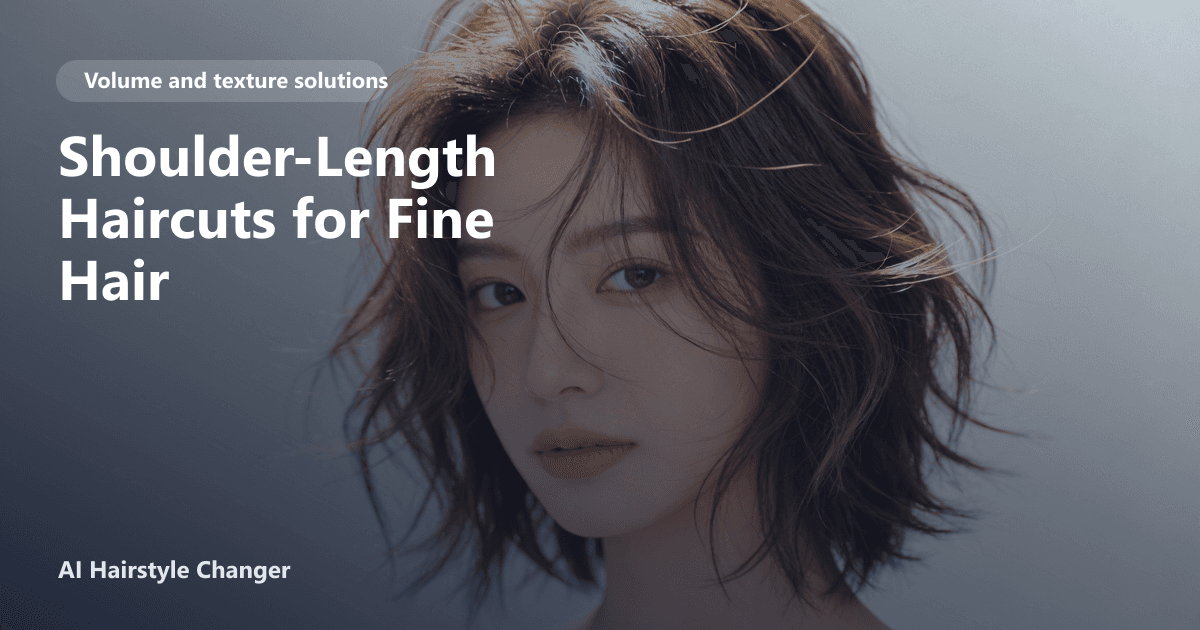
If you have fine or thin hair, choosing a shoulder-length haircut can feel like a high-stakes decision. You want a style that creates volume and movement - without daily struggle or the risk of limp, flat hair. But with so many options and variables, it's easy to worry about making the wrong choice, especially when you can't visualize the result on your own features. That's where the right guidance - and a virtual try-on tool - can make all the difference.
Why Shoulder-Length Works for Fine Hair
Shoulder-length cuts are a sweet spot for fine hair. They're long enough to feel versatile and feminine, but short enough to avoid the weight that drags thin strands down. At this length, it's possible to build volume through strategic layering and shape, giving your hair a fuller look with less effort.
Unlike longer styles, shoulder-length hair doesn't split at the ends as easily and requires less product to hold body. It also adapts well to subtle highlights or root shadowing, which can further enhance the illusion of thickness. Still, not every shoulder-length cut is created equal - some can make fine hair look even thinner if the wrong technique is used.
The Classic Lob: Modern, Manageable, and Volumizing
The long bob, or "lob," is a perennial favorite for fine hair. Its blunt or softly textured ends make the hair appear denser, especially when the cut falls just above or grazing the shoulders.
Who it suits: Almost everyone, but especially those with straight or slightly wavy fine hair. The lob is forgiving, easy to style, and works with or without a fringe.
Salon conversation tips:
- Ask for a blunt or micro-textured finish at the ends, not heavy layering.
- Request subtle internal layers if you want more movement, but avoid over-layering which can thin out the perimeter.
- Discuss parting options: deep side parts add instant lift, while a center part keeps things sleek.
Maintenance: Lobs are low-maintenance but benefit from regular trims every 8-10 weeks to keep the ends looking thick. Styling with a round brush or a quick bend with a flat iron can add day-to-day volume.
When it fails: If the stylist over-layers or thins the ends too much, the cut can look wispy. Always specify that you want fullness at the bottom.
Curious how a lob would look on you? Use AI Hairstyle Changer to preview different lob shapes and partings before your appointment.
Layered Shoulder-Length Cuts: Airy Volume for Fine Hair
Layers can be a game-changer for fine hair, but only when done with intention. The right layering adds movement and lift, while the wrong approach can leave hair looking stringy.
Best for: Fine hair with some natural wave or those seeking extra texture. Layers work especially well if you want a tousled, effortless look.
What to ask for:
- Light, face-framing layers that start below the chin.
- Internal or "invisible" layers for volume without sacrificing density at the ends.
- Avoid short, choppy layers at the crown, which can create flyaways and reduce overall fullness.
Upkeep: Layered cuts may require a bit more styling - think volumizing mousse or a quick blow-dry with a round brush. Regular trims keep layers fresh and prevent split ends.
Potential pitfalls: Too many layers can remove bulk from already-fine hair. Always clarify that you want volume, not thinness.
Want to see which layering technique flatters your face? AI Hairstyle Changer lets you experiment with different layer placements and fringe options.
Curtain Bangs and Face-Framing Layers: Softness and Lift
Curtain bangs and subtle face-framing layers are trending for a reason - they instantly add softness and movement to shoulder-length hair, making fine hair appear thicker around the face.
Who benefits: Anyone looking to balance a high forehead, soften angular features, or add interest without a full fringe.
How to request:
- Ask for curtain bangs that blend into the rest of your layers, starting at cheekbone or jaw level.
- For face-framing, request soft, graduated pieces that don't remove too much bulk.
- Specify that you want the shortest pieces to hit at a flattering point for your face shape.
Styling: Curtain bangs are easy to style with a round brush or air-dried for a relaxed look. They grow out gracefully and can be swept aside if you want a change.
When to avoid: If your hair is very fine and prone to cowlicks, bangs may require extra styling time. Consider trying them virtually before committing.
Test out curtain bangs and face-framing layers with AI Hairstyle Changer before your next cut to avoid surprises.
Blunt Shoulder-Length Cuts: Maximum Density, Minimal Fuss
Blunt cuts are the go-to for making fine hair look thicker. By keeping the perimeter strong and even, this style creates the illusion of weight and density.
Best for: Straight or slightly wavy fine hair. Works well for those who want a polished, modern look without much daily styling.
Salon tips:
- Ask for a one-length, blunt cut at the shoulders or just above.
- Avoid razor-cutting or excessive texturizing, which can weaken the edge.
- Consider pairing with a deep side part or a micro fringe for added interest.
Maintenance: Blunt cuts are easy to style and maintain, but do require trims every 6-8 weeks to keep the line crisp.
Downsides: If your hair is prone to flipping out at the ends, you may need to style with a flat iron or round brush. This cut isn't ideal for those with a lot of natural curl or wave.
For more ideas, check out Best Haircuts for Thin Hair and see how different blunt shapes compare for your hair type.
Adding Volume Without High Maintenance
Not every volumizing haircut for fine hair requires a complicated routine. Some cuts are designed to look fuller with minimal effort.
Options to consider:
- Subtle stacking at the back for a gentle lift.
- Slight undercutting at the nape to remove bulk and allow the top layers to sit fuller.
- Soft, graduated layering that doesn't compromise the thickness at the ends.
Styling tips:
- Use lightweight volumizing products and avoid heavy creams or oils.
- Blow-dry upside down or use a diffuser for extra lift at the roots.
- Embrace natural texture - shoulder-length cuts are forgiving if you skip heat styling.
For more inspiration, visit Volumizing Haircuts for Thin Hair and see which styles work best for your lifestyle.
What to Avoid With Fine Hair at Shoulder Length
Certain techniques and styles can make fine hair look even thinner or harder to manage. Here's what to steer clear of:
- Over-layering, especially at the crown or ends.
- Heavy, thick bangs that overpower your face or require constant styling.
- Excessive thinning with razors or texturizing shears.
- Styles that rely on lots of teasing or product for shape.
Instead, focus on cuts that build shape and density naturally. If you're unsure, use AI Hairstyle Changer to test out different looks and see which ones give you the fullness you want - without surprises at the salon.
Combining Shoulder-Length Cuts With Color
Strategic color placement can enhance the effect of a shoulder-length haircut for fine hair. Subtle highlights, balayage, or root shadowing can create depth and the illusion of volume.
Salon pointers:
- Ask for face-brightening highlights or soft balayage to add dimension.
- Avoid heavy, blocky color which can make fine hair look flat.
- Root shadowing can give the appearance of thicker roots and extend time between touch-ups.
Pairing a fresh cut with a new color? Bring reference photos and use AI Hairstyle Changer to preview combinations before your appointment.
Shoulder-Length Haircuts for Fine Hair: Quick Comparison Table
| Haircut Type | Who It Suits | Volume Level | Styling Effort | Maintenance |
|---|---|---|---|---|
| Lob | Most face shapes | Moderate | Low | 8-10 weeks |
| Layered Shoulder | Wavy/straight fine hair | High | Moderate | 8-10 weeks |
| Curtain Bangs | High foreheads, softening | Moderate | Moderate | 6-8 weeks |
| Blunt Shoulder | Straight, fine hair | High | Low | 6-8 weeks |
FAQ
What is the most flattering shoulder-length haircut for fine hair?
A blunt or softly layered lob is often the most flattering, as it adds fullness at the ends without weighing hair down. For more tailored advice, try different shapes virtually with AI Hairstyle Changer before booking your cut.
How do I ask my stylist for a cut that adds volume to fine hair?
Be specific about wanting fullness at the ends and light, face-framing layers if desired. Avoid requesting heavy layering or thinning, which can reduce density. Bring reference photos or use AI Hairstyle Changer to show your stylist exactly what you want.
Can I combine bangs with shoulder-length hair if my hair is fine?
Yes - curtain bangs or soft, blended fringes work well with fine, shoulder-length hair. Avoid heavy, blunt bangs unless your hair is thick enough to support them. Always preview the look before committing.
Are shoulder-length cuts low-maintenance for fine hair?
Most shoulder-length cuts for fine hair are easy to maintain, especially blunt or lob styles. Layered cuts may need a bit more styling but are still manageable. For more options, see Low-Maintenance Haircuts for Fine Hair.
Take the Guesswork Out of Your Next Cut
Shoulder-length haircuts can transform fine hair, but the right choice depends on your features, lifestyle, and personal style. Don't leave it to chance - use AI Hairstyle Changer to preview the best cuts for fine hair, experiment with layers and bangs, and bring a shortlist of references to your stylist. Ready to see your new look? Try it now at Hairstyle Try-On Online: Free Test Cuts Before Booking.