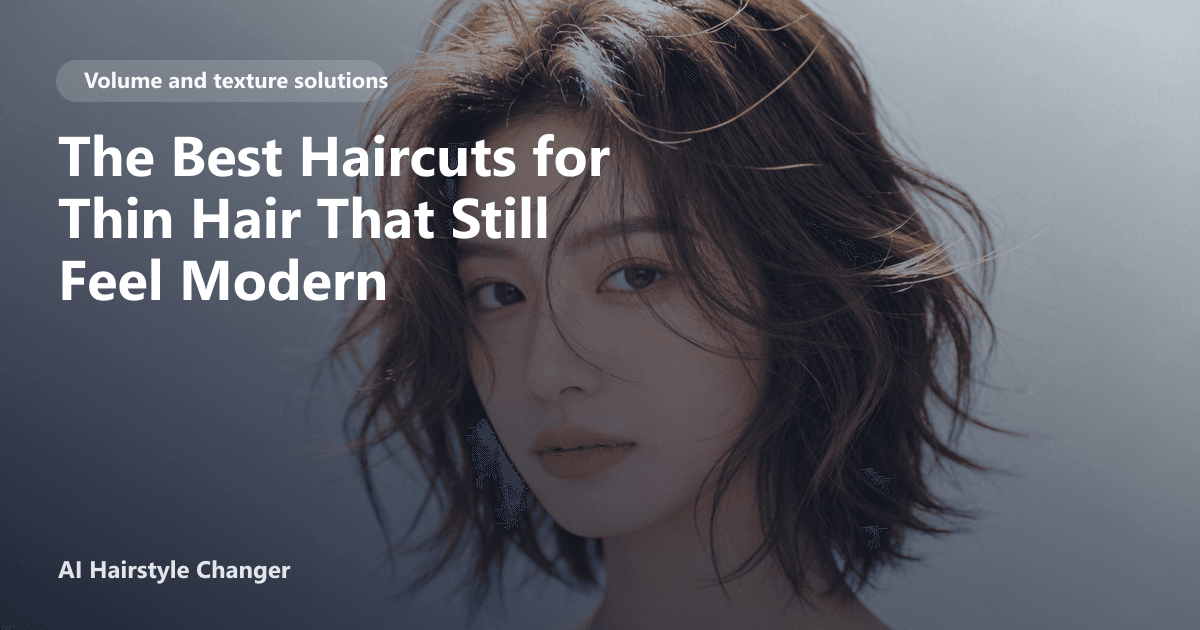
If you have thin or fine hair, you know the anxiety that comes before a haircut appointment. The wrong cut can leave hair looking limp or sparse, while the right one can add movement and the illusion of fullness. But how do you know which modern haircut will actually work for your hair type - and look good on you? The stakes feel high, especially if you've left a salon with haircut regret before.
This guide breaks down the best haircuts for thin hair that feel fresh and modern, with practical details you can use in your next salon conversation. You'll also see how digital tools like AI Hairstyle Changer let you try on styles virtually, so you can walk into your appointment with total confidence.
Why Thin Hair Needs a Different Approach
Thin or fine hair isn't just about density - it's about texture, movement, and how styles hold up over time. The wrong cut can exaggerate flatness, expose the scalp, or require more styling than you're willing to do every morning. The right cut, on the other hand, can create the illusion of volume, frame your face, and feel effortless day-to-day.
Key challenges with thin hair include:
- Lack of volume at the roots
- Difficulty holding curls or waves
- Styles falling flat by midday
- Visible scalp with certain partings
A modern haircut for thin hair should address these issues directly. Think strategic layers, smart length choices, and shapes that work with - not against - your natural texture. If you're not sure what will suit you, a virtual try-on with AI Hairstyle Changer can help you visualize the results before you commit.
The Textured Bob: Volume Without Bulk
A textured bob is a go-to for thin hair because it adds movement and fullness without overwhelming your face. The key is to avoid a blunt, heavy baseline, which can make fine hair look stringy. Instead, ask your stylist for a chin-length or slightly longer bob with soft, point-cut layers or razored ends.
- Who it suits: Most face shapes, especially oval, heart, or square. Works well if your hair is straight or slightly wavy.
- Salon tips: Request invisible or internal layers for lift. Avoid over-layering, which can thin out the ends. A subtle side part or curtain fringe can add softness.
- Maintenance: Bobs are generally easy to style but require trims every 6-8 weeks to keep the shape crisp. Use a lightweight volumizing spray at the roots.
- When it fails: If your hair is extremely fine and sparse, too many layers can make ends look wispy. Keep layers minimal and focus on shape.
Curious how a textured bob would look on you? Upload your selfie to AI Hairstyle Changer and preview this cut in different lengths and partings before your next appointment.
The Long Layered Lob: Length With Lift
If you're not ready to go short, the long layered lob (long bob) is a modern, versatile option. The trick is to keep the length around the collarbone or just above the shoulders, with light layers that start below the chin.
- Who it suits: Great for round or longer face shapes. Ideal if you want to keep some length for updos or ponytails.
- Salon tips: Ask for face-framing layers and subtle graduation at the ends. Avoid heavy, blunt lines. A middle or off-center part can help balance volume.
- Maintenance: Lobs are low-fuss but look best with regular dusting of split ends. Use mousse or a root-lifting spray to enhance volume.
- When it fails: If layers are too short or choppy, hair can look thin at the bottom. Keep layers long and blended.
For more inspiration, check out Best Haircuts for Thin Hair for a range of lob variations and styling ideas.
The Modern Shag: Effortless Texture for Fine Hair
The modern shag has made a comeback for a reason - it's one of the best ways to add volume and personality to thin hair. With choppy layers, a soft fringe, and a tousled finish, the shag creates movement and fullness from roots to ends.
- Who it suits: Best for those willing to embrace a little messiness. Works on straight, wavy, or slightly curly hair. Flattering for oval, heart, and square faces.
- Salon tips: Ask for lots of short to medium layers, focusing on crown and face-framing sections. A curtain or wispy fringe can add softness and volume at the front.
- Maintenance: Shags are surprisingly low-maintenance - just scrunch with a texturizing spray and air dry. Regular trims keep layers fresh.
- When it fails: If your hair is very thin at the ends, too many layers can look sparse. Ask your stylist to keep the perimeter strong.
Want to see how a shag would look with your face shape? Try it virtually with AI Hairstyle Changer and experiment with different fringe styles.
The Blunt Cut: Sleek, Simple, and Surprisingly Volumizing
While layers are often recommended for thin hair, a blunt cut can be just as effective - if not more so - for certain hair types. The sharp, even ends of a blunt cut create the illusion of thicker, fuller hair. The length can vary from chin to collarbone, but the key is to keep the baseline strong and free of thinning.
- Who it suits: Best for straight or slightly wavy hair. Flattering for oval and heart-shaped faces. Works well if your hair is fine but not sparse.
- Salon tips: Ask for a one-length cut with minimal layering. Pair with a deep side part or micro fringe for a modern edge.
- Maintenance: Blunt cuts require precise trims every 6-8 weeks. Use smoothing serums or light oils to keep ends polished.
- When it fails: If your hair is very sparse at the ends, a blunt cut can exaggerate thinness. In that case, add subtle internal layers for lift.
For more on low-fuss options, explore Low-Maintenance Haircuts for Fine Hair.
Curtain Bangs and Strategic Fringes
Fringes can be intimidating for thin hair, but the right style can add instant volume and shape. Curtain bangs - long, parted fringe that frames the face - are especially flattering for fine hair. They draw attention to your eyes and cheekbones while blending seamlessly into layers.
- Who it suits: Almost everyone, but especially those with fine, straight, or wavy hair. Great for softening angular features.
- Salon tips: Ask for long, feathered bangs that start at the cheekbones and blend into your haircut. Avoid heavy, blunt bangs, which can look sparse on thin hair.
- Maintenance: Curtain bangs grow out gracefully and require minimal styling. Use a round brush or flat iron to shape.
- When it fails: If cut too short or thick, bangs can look stringy. Keep them wispy and blended.
Test different fringe styles on your selfie with AI Hairstyle Changer to see which shape complements your features best.
What to Avoid: Common Pitfalls With Thin Hair
- Over-layering: Too many layers can make hair look thinner at the ends.
- Heavy, blunt fringes: These can separate and expose the scalp.
- Excessive thinning: Avoid texturizing shears or razoring on already fine hair.
- Long, unstructured cuts: Very long hair can drag thin strands down, making them appear flat.
Instead, focus on styles that build volume at the crown, add movement, and keep ends looking healthy and full. For more tips, see Volumizing Haircuts for Thin Hair.
FAQ
How do I know if a haircut will actually suit my thin hair?
Seeing a style on someone with a different hair type can be misleading. The best way to know is to use a virtual try-on tool like AI Hairstyle Changer. Upload your selfie, test different lengths, layers, and fringes, and see how they look with your face shape and hair texture before making a decision.
Can I get bangs if I have fine or thin hair?
Yes - curtain bangs, side-swept fringes, and wispy layers work well for thin hair. Avoid heavy, blunt bangs, which can look sparse. Always ask your stylist to keep the fringe light and blended for the most flattering effect.
Are short haircuts always better for thin hair?
Not always. While shorter cuts like bobs and lobs can add volume, longer styles with smart layering can also work - especially if you keep the ends healthy and avoid over-layering. The key is to find a shape that suits your face and lifestyle.
How often should I trim thin or fine hair?
Thin hair benefits from regular trims every 6-8 weeks to prevent split ends and maintain shape. Keeping ends blunt and healthy helps create the illusion of fuller hair.
Takeaway: Try Before You Cut
Choosing the right haircut for thin hair doesn't have to be stressful. Use AI Hairstyle Changer to preview modern, volumizing styles on your own face before your next appointment. Save your favorites, share them with your stylist, and walk into the salon knowing exactly what to ask for. Ready to see your next haircut? Visit Hairstyle Try-On Online: Free Test Cuts Before Booking and start experimenting today.