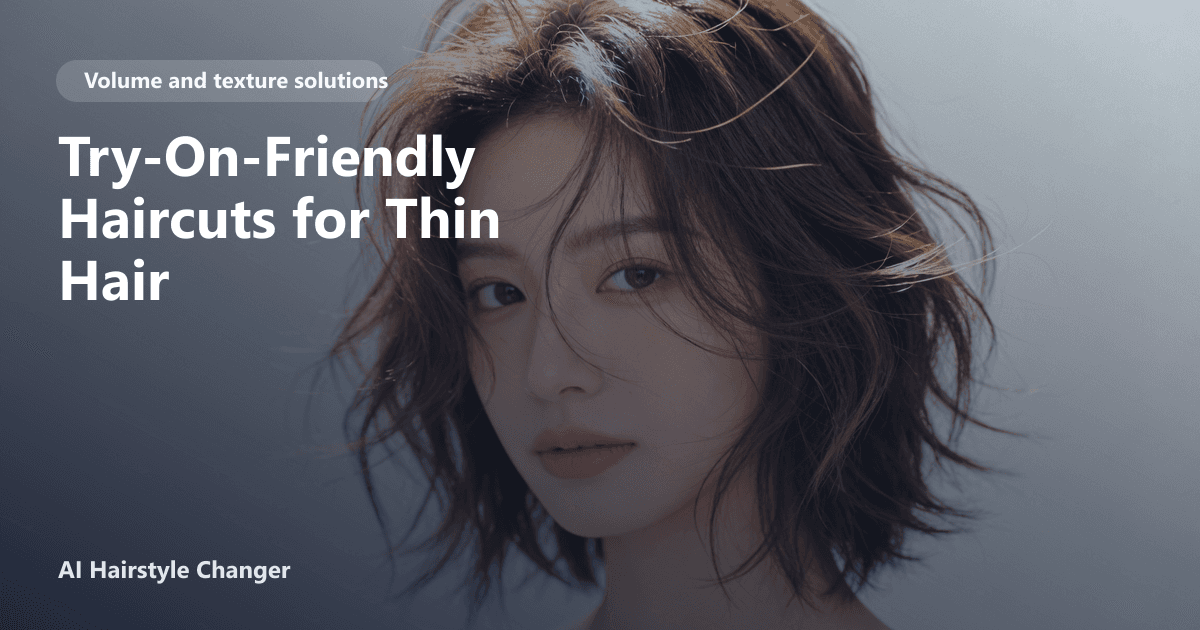
If you have thin or fine hair, choosing a new haircut can feel like walking a tightrope. You want a style that looks fuller and fresh, but it's hard to picture how a new cut will actually work on your unique hair type. The stakes are high: a single snip can mean weeks of limp, flat hair - or the volume boost you've always wanted. Now, with AI-powered hairstyle try-on tools, you can preview real options on your own photo before you ever sit in the salon chair.
Why Thin Hair Needs a Different Approach
Thin hair isn't just about density - it's about how each strand behaves. Fine hair can appear flat, lose shape quickly, and often struggles to hold volume. The wrong haircut can exaggerate these issues, while the right one can create the illusion of thickness and movement. But what works for someone with thick, coarse hair rarely translates directly.
A successful haircut for thin hair should:
- Add volume at strategic points (crown, sides, or ends)
- Avoid heavy blunt lines that weigh hair down
- Use layering and shape to create body without sacrificing length
- Be easy to style and maintain
The challenge? Visualizing these changes before making a commitment. That's where the AI Hairstyle Changer comes in - letting you upload a selfie and preview how different cuts will look on your actual hair texture and face shape.
The Classic Bob: Precision with Purpose
A chin-length or slightly longer bob is a time-tested solution for thin hair. The shape creates a strong outline, making hair look denser at the perimeter. For even more fullness, ask your stylist for:
- Subtle, graduated layers at the back to lift the crown
- A slightly angled cut (longer in front, shorter in back) for movement
- Light texturing at the ends to prevent a heavy, blunt finish
Who it suits: Straight or slightly wavy thin hair, especially if you want a style that's easy to blow-dry for volume.
Maintenance: Bobs require regular trims (every 6-8 weeks) to keep the shape sharp. Styling is simple - a round brush and volumizing mousse can make a big difference.
When it fails: If your hair is extremely fine and flat, a bob cut too blunt can sometimes look stringy. Use the AI Hairstyle Changer to preview both blunt and softly layered versions to see which flatters your density best.
Layered Lobs: Mid-Length with Movement
The lob (long bob) is a favorite for those who want some length without sacrificing fullness. Layers are key, but placement matters. Too many layers can thin out the ends, while too few can leave hair looking heavy and lifeless.
What to ask for:
- Collarbone-grazing length for maximum swing
- Face-framing layers starting at the cheekbones or jawline
- Soft, blended layers throughout the interior - not just the ends
Who it suits: Fine hair that still has some natural body or wave. Great if you want to keep some ponytail length.
Maintenance: Lobs are forgiving if you skip a trim, but regular shaping keeps layers from looking scraggly. Styling with a large curling iron or a blowout can create movement and lift.
When it fails: Over-layering can make thin hair look even thinner. Use a virtual try-on to see how much layering your hair can handle before it starts to look wispy.
Curtain Bangs and Side-Swept Fringes: Instant Volume at the Front
Bangs can be a game-changer for thin hair, especially when cut to maximize fullness around the face. Curtain bangs (long, parted in the middle) or side-swept fringes add softness and volume, drawing attention upward and creating the illusion of thicker hair at the front.
What to ask for:
- Curtain bangs that blend into longer layers
- Side-swept bangs angled from the eyebrow to the cheekbone
- Feathered ends for a light, airy effect
Who it suits: Almost anyone with thin or fine hair, but especially flattering if your hairline is sparse or your forehead is prominent.
Maintenance: Bangs need trims every 4-6 weeks. Styling with a round brush or flat iron helps keep them smooth and full.
When it fails: Very fine, flyaway hair may struggle to hold the shape of bangs. Use the AI Hairstyle Changer to preview different fringe thicknesses and see what works for your hair texture.
Shag-Inspired Cuts: Texture Without Sacrificing Density
The modern shag is making a comeback, and it's surprisingly adaptable for thin hair. The secret is in the layering - shorter pieces at the crown create lift, while longer, choppy ends add movement without looking stringy.
What to ask for:
- Soft, graduated layers starting at the top of the head
- Wispy, piecey ends for a lived-in look
- Minimal thinning at the ends to keep fullness
Who it suits: Thin hair with some natural wave or curl. Works well if you want a low-maintenance, tousled vibe.
Maintenance: Shags are forgiving between trims and easy to style with texturizing spray or mousse. Avoid razoring or over-thinning, which can make ends look sparse.
When it fails: If your hair is extremely fine and straight, too many layers can make it look flat. Preview different shag variations with the AI Hairstyle Changer to find the right balance of texture and fullness.
Pixie Cuts: Short, Bold, and Volumizing
A well-cut pixie can make thin hair look thicker by removing weight and creating lift at the roots. The key is in the details - soft, choppy layers and a bit of length on top give you styling options and volume.
What to ask for:
- Cropped sides and back with longer layers on top
- Textured fringe or side-swept bangs
- Tapered nape to keep the silhouette neat
Who it suits: Confident personalities who want a bold, easy-care look. Great for fine hair that won't hold a longer style.
Maintenance: Pixies need trims every 4-6 weeks to keep their shape. Styling wax or paste can add texture and lift.
When it fails: Not ideal if you want ponytail versatility or have cowlicks that are hard to tame. Try on different pixie variations virtually to see which suits your face and hair growth patterns.
What to Avoid: Pitfalls for Thin and Fine Hair
Some popular cuts and styling techniques can backfire on thin hair:
- Heavy, blunt cuts below the shoulders (they drag hair down)
- Over-thinning or razor-cutting (makes ends look wispy)
- Too many short layers (can create a mullet effect)
- Extensions or clip-ins that add weight without support
Instead, focus on cuts that build shape and volume, and always preview the look before making a decision. The AI Hairstyle Changer lets you test-drive multiple styles in minutes, so you can avoid common pitfalls and walk into your appointment with a clear plan.
How to Use AI Hairstyle Changer for Thin Hair Decisions
Trying to describe your dream haircut to a stylist can be stressful - especially if you're not sure how it will work with your hair type. The AI Hairstyle Changer bridges this gap by letting you:
- Upload a selfie and see dozens of haircut options on your own face
- Compare layered, blunt, or textured cuts side-by-side
- Shortlist favorites to show your stylist for clear communication
- Preview fringe, length, and layering before you commit
This try-on experience is especially useful for thin or fine hair, where subtle changes in layering or length make a huge difference. You can even test out styles featured in guides like Best Haircuts for Thin Hair, Volumizing Haircuts for Thin Hair, or Low-Maintenance Haircuts for Fine Hair to see which ones flatter your unique texture.
Bringing Your Try-On Results to the Salon
Once you've found a shortlist of cuts you love using the AI Hairstyle Changer, bring your top picks to your salon appointment. Here's how to make the most of your preview:
- Show your stylist the images and discuss what you like about each
- Talk about your daily styling routine and how much time you want to spend
- Ask about maintenance, trims, and styling products for your chosen look
- Be honest about what hasn't worked for you in the past
A clear visual reference, combined with your stylist's expertise, makes it much easier to get a cut that works for your hair type and lifestyle.
FAQ
What haircut makes thin hair look fuller?
Layered bobs, lobs with face-framing layers, and modern shags all add volume and movement. Avoid heavy, blunt cuts below the shoulders, which can make thin hair look flatter.
Can I try on bangs before committing to them?
Yes. The AI Hairstyle Changer lets you preview curtain bangs, side-swept fringes, or blunt bangs on your own photo. This helps you see which style flatters your face and hair texture before making the cut.
How often should I trim thin or fine hair?
Most thin or fine haircuts look best with trims every 6-8 weeks. This keeps the shape fresh and prevents ends from looking wispy or uneven.
Are there low-maintenance haircuts for thin hair?
Absolutely. Short bobs, soft lobs, and shag-inspired cuts can all be styled quickly and require minimal upkeep. For more options, check Low-Maintenance Haircuts for Fine Hair.
Takeaway: Preview, Decide, and Love Your Next Cut
Choosing a haircut for thin or fine hair doesn't have to be a gamble. With the AI Hairstyle Changer, you can see real results on your own features, compare styles, and walk into your appointment with confidence. Ready to find your next look? Test-drive haircuts now at Hairstyle Try-On Online Free: Test Cuts Before Booking.