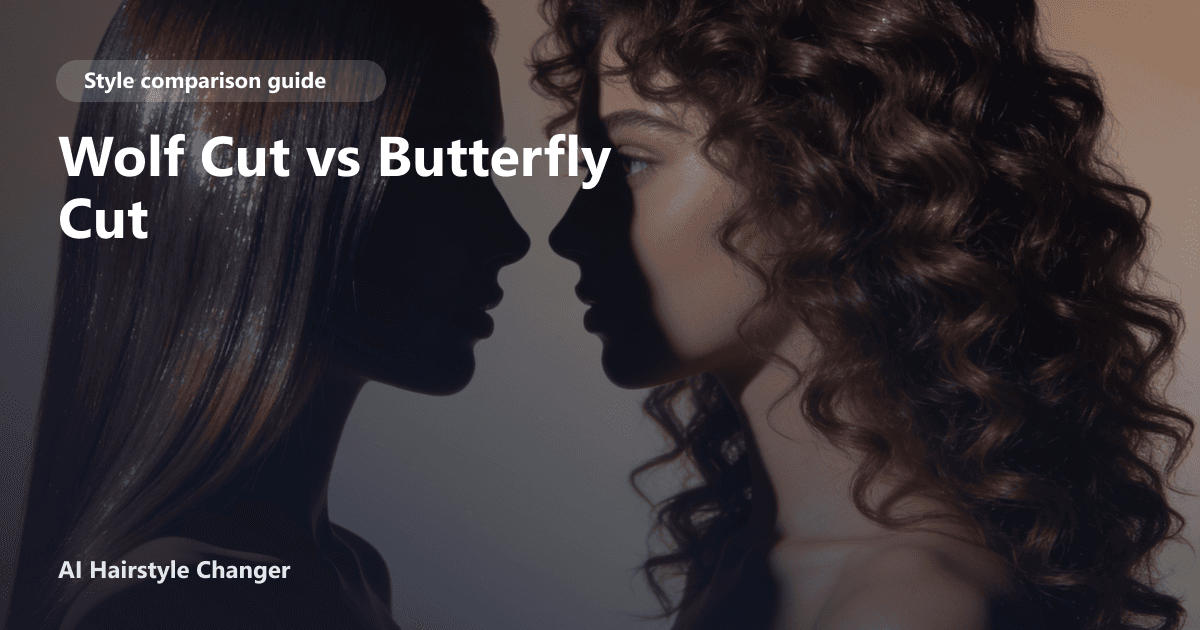
If you're torn between the wolf cut and the butterfly cut before your next salon visit, you're not alone. Both styles have exploded in popularity, but their differences are more than just viral trends. The right choice can flatter your face shape, fit your lifestyle, and help you avoid the regret that comes from a risky chop. Here's how to compare these two layered looks, what to ask for at the salon, and why testing them virtually first saves time and stress.
Wolf Cut vs Butterfly Cut: The Core Differences
Both the wolf cut and butterfly cut are layered, movement-heavy styles, but their shapes and energy are distinct:
- Wolf Cut: A hybrid of shag and mullet, the wolf cut is choppy, with short layers on top and longer, wispy ends. It's edgy, with a lived-in, tousled vibe.
- Butterfly Cut: Inspired by '90s blowouts, the butterfly cut uses long, face-framing layers and curtain bangs to create the illusion of volume and length. The shortest layers often fall around the chin, with longer pieces cascading below the shoulders.
The wolf cut is more rebellious and textured, while the butterfly cut is softer, bouncier, and easier to style into classic or glam shapes.
Who Suits a Wolf Cut?
The wolf cut flatters those who want a bold, undone look with plenty of texture. It works especially well for:
- Oval and heart-shaped faces: The volume at the crown and wispy ends balance proportions.
- Medium to thick hair: The choppy layers add movement and prevent heaviness.
- Wavy or straight hair: Natural waves enhance the messy effect, but even straight hair can be styled for volume.
What to ask for:
- Short, choppy layers starting at or above the cheekbones
- Longer, razored ends that graze the collarbone or below
- Optional curtain or bottleneck bangs
- Thinned-out ends for movement
Upkeep:
- Requires regular trims every 6-8 weeks to keep layers fresh
- Styling with a texturizing spray or mousse is key
- Can be high-maintenance if your hair is very fine or flat
When it fails:
- Very fine or thin hair may look stringy
- Round faces may find it widens the cheeks unless layers are carefully placed
For more on the wolf cut's roots, see Wolf Cut vs Shag.
Who Suits a Butterfly Cut?
The butterfly cut is ideal for anyone craving movement without sacrificing length. It's a go-to for:
- Round and square faces: The face-framing layers slim and elongate
- Long or medium hair: The cut needs length for the signature cascading effect
- Straight, wavy, or loosely curled hair: The layers fall best with some natural bend
What to ask for:
- Long, blended layers starting at the chin and below
- Shorter face-framing pieces, often paired with curtain bangs
- Volume at the crown without losing length at the back
Upkeep:
- Lower maintenance than the wolf cut - trims every 10-12 weeks
- Easy to style with a round brush or blow dryer
- Can be pulled back into a ponytail while still showing off layers
When it fails:
- Very short hair can't achieve the signature shape
- Very thick, heavy hair may need extra thinning for bounce
Real-World Variations: 4 Ways to Personalize
Both cuts can be tailored to your hair type and face shape. Here are four concrete directions to consider:
1. Wolf Cut with Bottleneck Bangs: Adds softness to the edgy layers and flatters wider foreheads. 2. Butterfly Cut with Curtain Bangs: Classic, face-framing, and easy to grow out if you're unsure about fringe. 3. Wolf Cut for Curly Hair: Ask for longer, graduated layers to avoid triangle shape; emphasize volume at the crown. 4. Butterfly Cut with Extra Long Layers: Great for those who want movement but minimal loss of length - layers start at the collarbone instead of the chin.
Discuss these options with your stylist and bring reference photos. With AI Hairstyle Changer, you can try all four looks on your own selfie, helping you narrow down the best match before you commit.
Face Shape and Hair Texture: What to Consider
- Oval faces can pull off both styles, but the wolf cut's volume on top is especially flattering.
- Round faces benefit from the elongating effect of butterfly cut layers.
- Square faces look great with butterfly cut's soft, blended layers, which soften the jawline.
- Heart-shaped faces can rock the wolf cut, especially with bangs to balance a wider forehead.
- Fine hair: The butterfly cut's longer layers keep density, while the wolf cut may need careful texturizing to avoid limpness.
- Thick or coarse hair: Both styles work, but the wolf cut can remove bulk while the butterfly cut may need extra thinning.
For more on matching layers and lengths to your features, check out Bob vs Lob: Which Length Works Better for Your Face Shape?.
Styling and Maintenance: What You Need to Know
Wolf Cut:
- Best styled with texturizing sprays, salt sprays, or mousse for messy volume
- Air-drying works for wavy hair; straight hair may need a curling wand for definition
- Regular trims to keep the choppy effect sharp
Butterfly Cut:
- Blow-drying with a round brush or using large rollers gives the signature bounce
- Can be air-dried for a softer, more natural look
- Less frequent trims needed, but regular dusting of ends keeps layers healthy
Salon tips:
- Bring clear reference photos, especially if you want a specific bang style or layer length
- Be honest about your daily styling routine; the wolf cut needs more hands-on styling than the butterfly cut
When to Choose Each Cut - and When to Avoid
Choose a wolf cut if:
- You want a dramatic change and love textured, undone styles
- You're comfortable with regular styling and trims
- You want to remove bulk from thick hair
Avoid the wolf cut if:
- You have very fine or thinning hair
- You don't want to style your hair daily
Choose a butterfly cut if:
- You want to keep your length but add movement
- You prefer a softer, more classic look
- You want a style that's easy to grow out
Avoid the butterfly cut if:
- Your hair is very short or extremely thick and resistant to layering
For another layered style showdown, see Long Bob With Curtain Bangs vs Blunt Bob.
Virtual Try-On: How AI Hairstyle Changer Helps
Photos and inspiration can only go so far. With AI Hairstyle Changer, you can upload your selfie and see how both the wolf cut and butterfly cut look on your actual features. This helps you:
- Compare side-by-side before your appointment
- Shortlist your favorite variations and bring them to your stylist
- Avoid the disappointment of a cut that doesn't suit your face or hair type
- Experiment with fringe, length, and layering without any risk
Trying before you cut is the best way to make an informed, confident choice - especially with styles as different as these.
FAQ
How do I explain the wolf cut or butterfly cut to my stylist?
Bring reference photos and describe the layer placement you want. For the wolf cut, mention choppy, short layers and a messy, lived-in finish. For the butterfly cut, ask for long, blended layers with face-framing pieces starting at the chin or collarbone.
Can I combine elements of both cuts?
Yes, some stylists blend the wolf cut's choppy texture with the butterfly cut's face-framing layers. This hybrid approach works best on medium to long hair and can be visualized using AI Hairstyle Changer before you commit.
Which cut grows out more gracefully?
The butterfly cut is easier to grow out, as the long layers blend seamlessly and can be trimmed less frequently. The wolf cut may need more maintenance to avoid awkward in-between lengths.
Are these styles suitable for curly hair?
Both cuts can work for curls, but require adjustments. Ask for longer layers and avoid overly short top layers to prevent unwanted volume or shape. Bring photos of curly versions of each cut to your appointment.
Takeaway: Test Before You Cut
Choosing between the wolf cut and butterfly cut comes down to your style, hair type, and maintenance preferences. Don't leave it to chance - use AI Hairstyle Changer to try on both looks virtually, shortlist your favorites, and head to your salon with confidence.