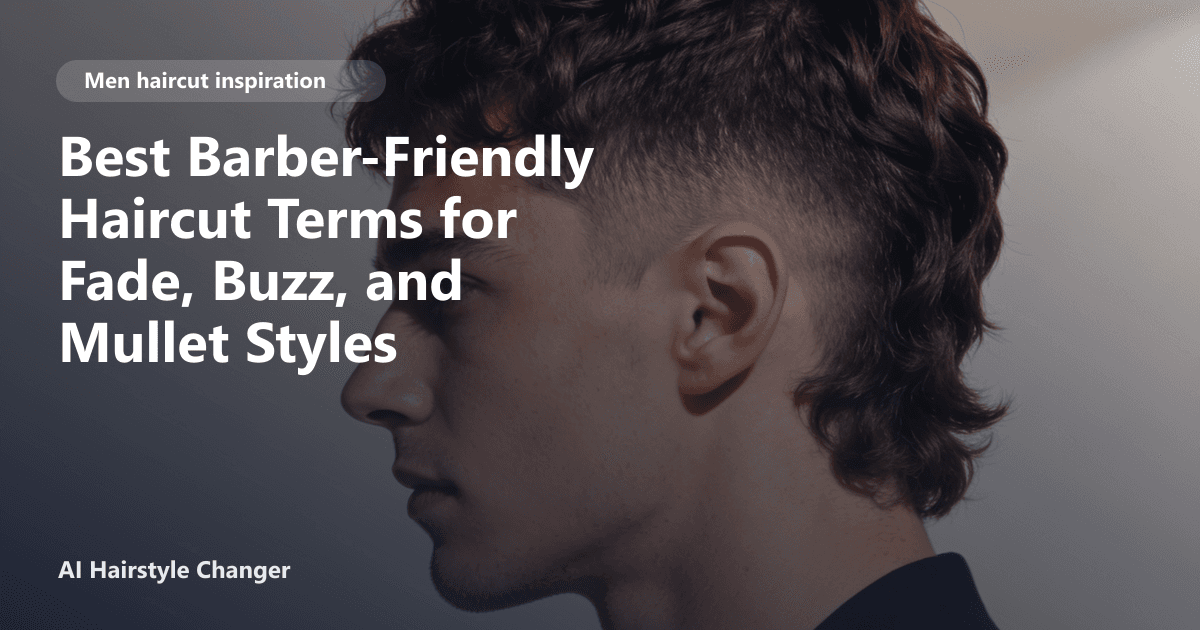
Every guy knows the anxiety before a haircut appointment: you want a fresh look, but the wrong cut can linger for months. Maybe you've scrolled through endless Instagram feeds, saved screenshots, or tried explaining a 'low fade with a textured crop' to your barber - only to leave with something that doesn't quite match your vision. The real challenge? Knowing the right haircut terms and showing exactly what you want. If you're debating between a fade, buzz, undercut, or even a mullet, understanding barber-friendly language is key to getting the result you want.
AI Hairstyle Changer makes this process easier by letting you preview these styles on your own face before you commit. Here's how to confidently talk to your barber, avoid miscommunication, and use tech to bring your haircut ideas to life.
Why Haircut Terms Matter More Than Ever
Barbers hear dozens of requests every day - 'taper fade,' 'skin fade,' 'buzz with a lineup,' or 'modern mullet.' But one person's idea of a 'fade' can be very different from another's. Misunderstandings are common, especially with trending styles and regional differences. Bringing clear terms and reference photos helps your barber deliver exactly what you want.
Using AI Hairstyle Changer, you can shortlist specific looks, test them on your own selfie, and walk into the shop with a visual reference that speaks the same language as your barber.
Fades: Know Your Levels and Lines
Fades are among the most requested men's haircuts, but the term covers a huge range of styles. Here's how to break down your options:
- Low Fade: Starts just above the ears and drops lower at the back. Great for a subtle, professional look. Works well for both straight and curly hair. For more on this, see Low Taper Fade for Straight Hair: Best Variations and Styling and Low Taper Fade for Curly Hair: What to Ask Your Barber.
- Mid Fade: Begins around the temple, offering a balanced transition. This is a safe choice if you want noticeable contrast without going too bold.
- High Fade: Starts at or above the temples, with a dramatic drop to the skin. Perfect for sharper, more athletic looks, but can expose scalp or cowlicks if you have thin hair.
- Skin Fade (Bald Fade): The fade goes all the way down to the skin at the shortest point. Pairs well with textured crops, pompadours, or even mullets for an edgy finish.
What to ask your barber: Specify the fade level (low, mid, high), how tight you want the blend, and what length or texture you want left on top. Mention if you want a drop fade (the fade line curves down behind the ear) or a straight fade (the fade line stays level). Bring a reference photo or try on variations with AI Hairstyle Changer to visualize the difference.
When fades fail: If you have scars or strong cowlicks near the fade line, discuss these with your barber. High fades can make thin spots more visible. Maintenance is high - expect touch-ups every 2-3 weeks.
Buzz Cuts: Lengths, Face Shapes, and Maintenance
Buzz cuts seem simple, but there's more to them than 'just a number two.' The length, shape, and detailing all matter.
- Induction Cut (Number 0 or 1): The shortest buzz, almost military-style. Low maintenance, but exposes scalp and head shape.
- Crew Cut (Number 2-4): Slightly longer on top, faded or tapered at the sides. Offers a bit of texture and shape.
- Buzz with Lineup: Clean, sharp edges at the forehead and temples. Adds structure and a modern finish.
- Textured Buzz: Slightly longer on top with subtle layering for dimension. Good for wavy or curly hair.
What to ask your barber: Specify the guard number for the top and sides, whether you want a fade or taper, and if you want a lineup or natural hairline. For more on face shapes and buzz variations, see the Buzz Cut Guide: Lengths, Face Shapes, and Variations.
When buzz cuts fail: If you have bumps, scars, or uneven head shape, ultra-short buzzes can highlight these. Buzz cuts also grow out quickly, so expect to trim every 2-4 weeks. AI Hairstyle Changer can help you preview different buzz lengths and see how they suit your face before you commit.
Undercuts: Classic, Disconnected, and Modern Takes
The undercut is a versatile style that separates the longer top from very short or faded sides. This contrast can be subtle or dramatic, depending on your preference.
- Classic Undercut: Sides and back are clipped short (sometimes down to a 1 or 2 guard), with a clear disconnect from the longer top. Style the top slicked back, messy, or with a side part.
- Disconnected Undercut: The difference between the top and sides is more pronounced, with little to no blending. This bold style works well for straight or wavy hair.
- Undercut Fade: Blends the undercut into a fade for a softer transition. Easier to grow out and less maintenance than a sharp disconnect.
- Textured Undercut: Adds layers and movement to the top, making it less severe and more wearable for everyday looks.
What to ask your barber: Define the length you want on top (in inches or guard number), how short to go on the sides, and if you want a hard part or natural transition. Mention if you prefer a classic, disconnected, or faded undercut. AI Hairstyle Changer lets you experiment with different undercut variations and see which matches your hair type and face shape.
When undercuts fail: If your hair is very fine or thinning, a disconnected undercut can look too harsh. High-contrast undercuts also require regular trims to keep the shape sharp.
Mullets: Modern, Shaggy, and Fade Hybrids
The mullet has made a major comeback, now with modern twists that suit a range of personalities and hair types.
- Modern Mullet: Short at the front and sides, longer at the back, often paired with a fade or textured fringe. Works well for straight, wavy, or curly hair.
- Shaggy Mullet: Adds lots of layers and texture, creating movement and a more relaxed vibe. Great for medium to longer hair lengths.
- Mullet Fade: Combines a fade at the sides with longer back length. Edgy and contemporary, this style is popular in both streetwear and creative circles.
- Curly Mullet: Emphasizes natural curl and volume at the back, with shorter sides for contrast. For more curly hair inspiration, visit Hairstyles for Curly Hair Men: Best Cuts by Length.
What to ask your barber: Specify the length you want at the back (in inches), how high or low you want the fade or taper, and if you want layers or blunt edges. Mention if you want a fringe or textured front. Bring a reference image or use AI Hairstyle Changer to see how a mullet will look on your own head shape.
When mullets fail: If you have very fine hair, a mullet can look wispy. If you work in a conservative environment, a dramatic mullet may not fit the dress code. Maintenance involves regular trims at the sides and shaping the back every 4-6 weeks.
How to Communicate Your Ideal Cut: Key Terms and Tips
Walking into a barbershop with the right words makes all the difference. Here's a quick reference table for the most common terms and how to use them:
| Term | What It Means | What to Specify |
|---|---|---|
| Fade | Gradual blend from short to longer | Level (low, mid, high), finish |
| Buzz | Clipper cut, same length all over | Guard number, lineup, fade |
| Undercut | Short sides, long top, clear disconnect | Top length, side length, blend |
| Mullet | Short front/sides, long back | Back length, fade, layers |
Pro tip: Always bring a visual reference. AI Hairstyle Changer lets you try on and save multiple looks, so you can show your barber exactly what you want - no guesswork.
When to Choose (or Avoid) Each Style
Every cut has its strengths and tradeoffs. Here's how to decide:
- Fade: Best for guys who want a clean, modern look with some versatility on top. Avoid if you dislike frequent touch-ups.
- Buzz: Ideal for low-maintenance lifestyles and bold, masculine style. Avoid if you're self-conscious about scalp shape or scars.
- Undercut: Great for high-contrast, stylish looks that can be slicked back or tousled. Avoid if you want a softer, blended appearance.
- Mullet: Perfect for those who want to stand out and embrace retro or creative trends. Avoid if you need to keep things conservative.
For more style ideas based on hair type and length, check the Mens Hair Styles Guide: Best Hairstyles by Hair Type and Length.
FAQ
What should I bring to my barber appointment?
Bring clear reference photos (physical or digital), know the haircut terms you want, and be ready to describe your preferred lengths and finish. Using AI Hairstyle Changer to preview and save your favorite looks can help bridge the gap between your vision and your barber's understanding.
How often should I maintain a fade, buzz, or undercut?
Fades and buzz cuts need touch-ups every 2-3 weeks to stay sharp. Undercuts and mullets can go 4-6 weeks between trims, but the sides and back may need more frequent shaping depending on your style.
Can I try on different haircuts before I commit?
Yes! AI Hairstyle Changer lets you upload a selfie and preview a wide range of fades, buzz cuts, undercuts, and mullets. This helps you shortlist the best options and avoid haircut regret.
Which style works best for my hair type?
It depends on your hair's texture, density, and growth pattern. For curly hair, layered fades and mullets can work well. Straight hair suits almost any fade or undercut. For more tailored advice, explore Hairstyles for Curly Hair Men: Best Cuts by Length.
Takeaway: Preview and Pick with Confidence
Choosing a new haircut doesn't have to be a gamble. By learning the right terms and using AI Hairstyle Changer to preview styles, you can walk into your next appointment with confidence and clarity. Ready to find a style that fits you? Visit Haircut AI and Haircut Finder Find a Style That Fits You and start your transformation today.