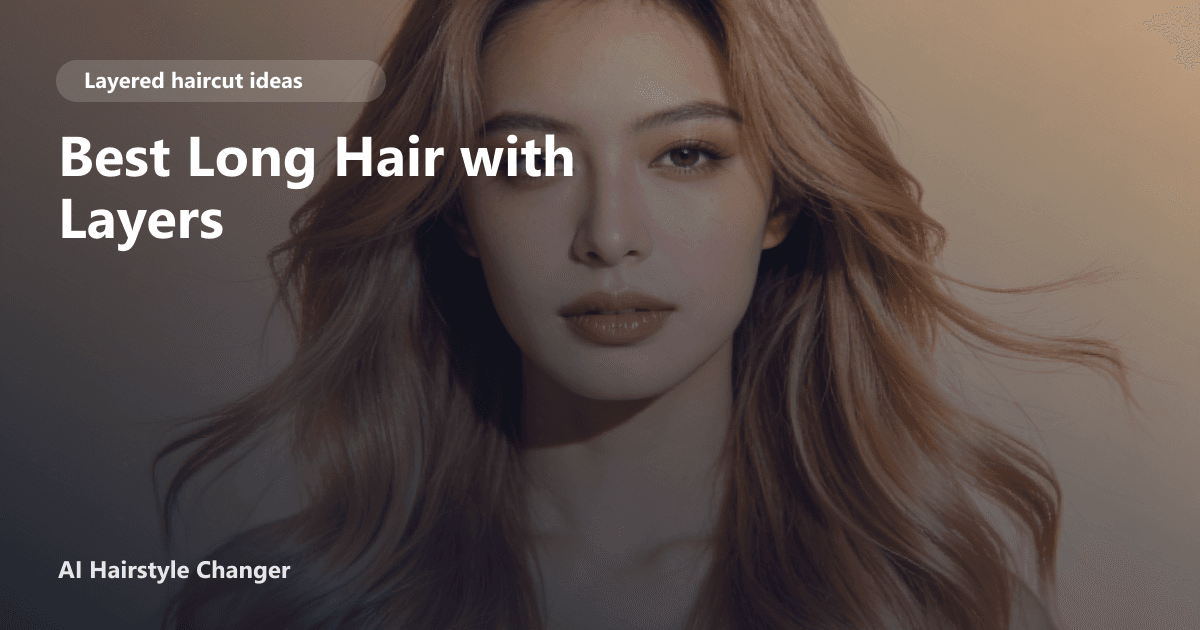
You're standing in front of the mirror with hair that hits mid-back or lower, and it just hangs there. No shape, no movement, maybe a slight triangle effect at the ends. You know layers could fix it, but you've also seen layers go wrong - stringy pieces, unexpected volume loss, or a cut that forces you into daily styling. The question isn't whether to layer your long hair, but which layering strategy actually delivers the shape you want without the regret.
Why Long Hair Needs Strategic Layers
One-length long hair carries weight. That weight pulls everything down, which can flatten roots, drag down waves, and make ends look sparse. Layers redistribute that weight. They create lift at the crown, separation through the mid-lengths, and a lighter finish at the bottom. But the type of layers matters more than the fact of having them.
The wrong layering pattern can thin out fine hair, explode thick hair into a pyramid, or create disconnected pieces that stick out. The right pattern works with your natural texture, face shape, and how much effort you actually want to put into styling.
Face-Forward Layer Types That Actually Work
Long Layers Starting at the Chin
These are your baseline for movement without losing length. The shortest pieces begin around chin level and cascade down, creating subtle shape while keeping the bulk of your hair intact. This works for almost everyone except those with very fine, slippery hair that falls flat easily.
Who it suits: Oval, round, and heart-shaped faces. Medium to thick hair densities.
What to ask for: "Long layers starting at my chin, keeping as much length as possible. I want movement, not volume at the top."
Maintenance: Trim every 10-12 weeks. Air-dries well with minimal product.
Face-Framing Layers (The Money Pieces)
These shorter, angled pieces around the front create definition and draw attention to your features. They can start as high as cheekbone level or as low as collarbone, depending on how dramatic you want the effect.
Who it suits: Square or wide jawlines (softer pieces soften angles), long faces (shorter pieces add width), anyone wanting to highlight eyes or cheekbones.
What to ask for: "Face-framing layers that start at [point to where you want them]. I want them to blend, not look like separate bangs."
Maintenance: Needs trimming every 6-8 weeks to maintain shape. Can look grown out quickly.
Invisible Layers for Fine Hair
This technique involves cutting layers so subtle they're nearly impossible to detect, but they remove just enough weight to prevent that flat, helmet effect. The stylist slides scissors along the hair shaft rather than cutting straight across.
Who it suits: Fine, straight hair that gets stringy with traditional layering.
What to ask for: "Invisible layers - very subtle, just to remove weight without making it look thinner."
Maintenance: Grows out seamlessly. Trim every 12-14 weeks.
U-Shaped vs. V-Cut Layers
The perimeter shape affects how layers fall. A U-shape creates a soft, rounded bottom with layers that cascade evenly. A V-cut creates a more dramatic, pointed shape with the longest pieces at the center back.
| Feature | U-Shaped Layers | V-Cut Layers |
|---|---|---|
| Bottom shape | Soft, rounded | Sharp, pointed |
| Layer visibility | More blended | More dramatic |
| Best for | Thick, wavy hair | Straight, dense hair |
| Styling ease | Forgiving | Shows mistakes easily |
| Face shape match | Round, square | Oval, heart |
Who it suits: U-shape works for most textures and face shapes. V-cut demands thick, straight hair and confidence in styling.
What to ask for: "I want a U-shaped perimeter with long layers" or "A V-cut with layers that follow the shape."
Maintenance: V-cuts need precise trims every 8 weeks to maintain the point. U-shapes are more forgiving.
The Best Long Layered Styles by Hair Texture
Straight Hair: Blunt Base + Long Layers
Keep the bottom edge heavy and blunt, then add long layers starting at the chin. This creates movement while maintaining that sleek, dense look straight hair does best. Avoid too many short layers - they'll stick out.
Styling tradeoff: You'll need a round brush or flat iron to make the layers cohesive. Air-drying can look piece-y.
Wavy Hair: Layered Shag Hybrid
Waves thrive on layers. Ask for a long shag variation: lots of layers through the mid-lengths, wispy ends, and texture at the crown. This enhances your natural pattern instead of fighting it.
Styling tradeoff: Less product needed, but you'll want a diffuser and salt spray for definition. Over-layering can cause frizz.
Curly Hair: Internal Layers (The Deva Approach)
Layers should be cut dry, curl by curl, to remove bulk without disrupting the curl pattern. The longest layers sit at the bottom, with shorter internal layers creating shape. Never let a stylist cut curly hair wet and layered - it springs up unevenly.
Styling tradeoff: wash-and-go friendly, but requires curl-specific products. Wrong layering creates the dreaded triangle.
Coily Hair: Layered Shape Without Bulk
For type 4 textures, layers create a rounded shape and prevent the pyramid effect. The key is cutting hair in its natural state and avoiding layers that are too short, which can cause shrinkage chaos.
Styling tradeoff: Defines shape beautifully but needs moisture. Over-layering makes ends wispy and prone to breakage.
For a complete breakdown of how layering changes by length, see our Layered Haircuts Guide: Best Layered Styles by Length, Hair Type, and Face Shape.
What to Ask Your Stylist (and What They'll Ask You)
Bringing inspiration photos is standard advice, but most people bring photos of hair that doesn't match their texture or density. Instead, generate multiple versions of yourself with different layered styles using an AI hairstyle tool. When you show your stylist a photo of you with the cut, the conversation changes from "I want this" to "How do we make this work with my hair?"
Specific language that gets results:
- "I want to keep [point to exactly where] length."
- "Layers should start [point to chin, collarbone, etc.], not higher."
- "I want to see movement, not volume."
- "Please don't thin it out with thinning shears - use layering techniques instead."
Questions your stylist should ask:
- How do you part your hair? (Changes where layers fall)
- How much time do you spend styling? (Determines layer complexity)
- Do you tuck your hair behind your ears? (Affects face-framing pieces)
- Are you growing out bangs or face-framing pieces? (Impacts blend)
If they don't ask these, volunteer the answers. It prevents miscommunication.
Maintenance Reality Check
Trim Schedule: Long layers need maintenance every 8-12 weeks. Face-framing pieces need attention every 6-8 weeks. Invisible layers can stretch to 12-14 weeks.
Styling Time: Expect to add 5-10 minutes for directing layers with a brush or iron. Wavy and curly textures often save time because layers enhance natural pattern.
Product Needs:
- Root lift spray for fine hair (prevents flat crown)
- Lightweight oil for ends (prevents stringy look)
- Texture spray for waves (defines layers)
- Curl cream for curly textures (maintains pattern)
When It Fails:
- Too many short layers create a mullet effect
- Layers starting too high remove too much weight, causing flat roots
- Over-thinning makes ends see-through
- Wrong layering pattern for your texture creates daily styling battles
If you find yourself constantly pulling your layered hair into a ponytail because you can't style it, the layering pattern is wrong for your routine. Consider transitioning to a different length - our guides on Best Layered Haircuts for Medium Hair and Layered Shoulder-Length Hair: Best Cuts That Keep Movement can help you find a more manageable shape.
FAQ
Will layers make my long hair look thinner?
It depends on the technique. Invisible layers remove almost no visible bulk and can actually make fine hair look fuller by creating movement. Traditional layering can thin appearances if overdone. For thick hair, strategic layers reduce bulk without sacrificing density. Always specify you want to maintain visual thickness.
How do I keep layers from looking stringy?
Stringiness comes from over-layering fine hair or under-moisturizing any hair type. Use a lightweight oil on just the ends, avoid over-washing, and ask your stylist to point-cut the ends (cuts at an angle) rather than cutting straight across. This creates a softer, thicker-looking finish.
Can I add layers without losing length?
Yes. Specify "long layers starting at [chin/collarbone]" and "keep the perimeter blunt." The stylist removes weight from within the hair, not from the bottom edge. You might lose 1/4 inch from the longest pieces for shaping, but you won't lose inches of length.
What's the difference between layers and a shag?
A shag is a specific layered haircut with heavy layering throughout, lots of texture, and often includes bangs. Layers are a technique used in many haircuts, including shags. Think of it this way: all shags have layers, but not all layered cuts are shags. For long hair, a "long shag" means more aggressive layering than standard long layers.
Takeaway: See It Before You Commit
The gap between the layered haircut you imagine and the one you get closes when you can see it on yourself first. Upload your photo to an AI hairstyle changer, test how U-shaped layers versus face-framing pieces actually look with your features, and generate a shortlist of three specific styles to show your stylist. You'll walk into the appointment with confidence instead of hope - and walk out with layers that work for your hair, not against it. Ready to try? Start with a free hairstyle try-on at Hairstyle Try on Online Free Test Cuts before Booking.