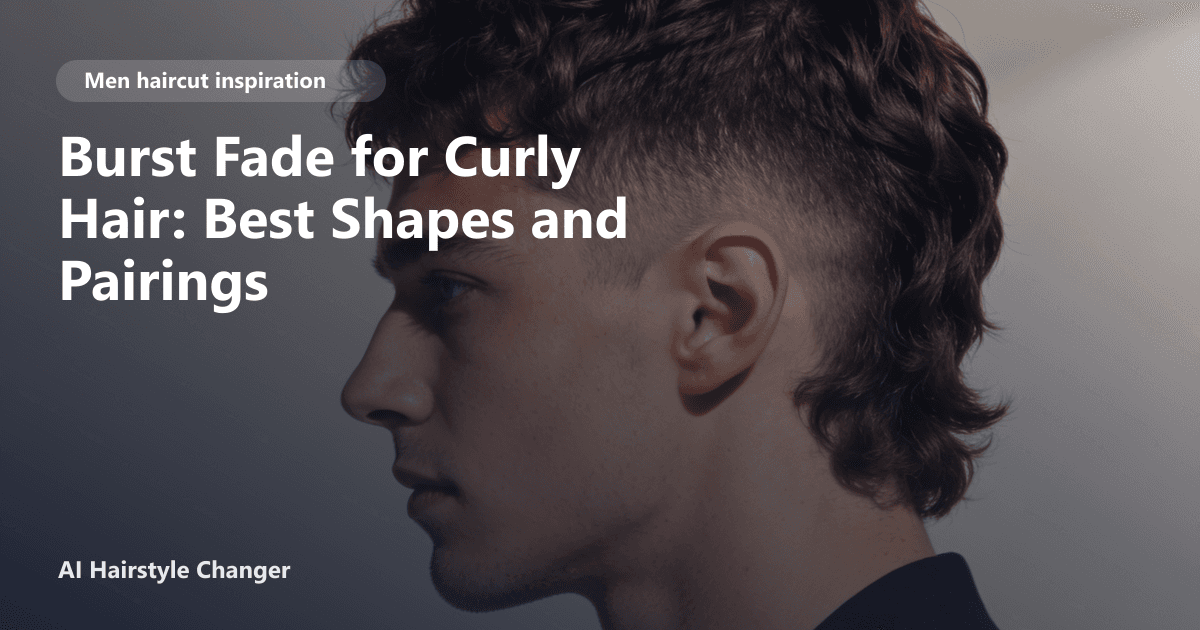
Thinking about a burst fade for your curly hair, but not sure which shape or pairing will actually work for you? The wrong fade can make curls look puffy, uneven, or lose their definition. The right one, though, can highlight your texture and frame your face perfectly. Here's how to make a confident choice, avoid post-cut regret, and even preview your style before sitting in the barber's chair.
What Makes a Burst Fade Different for Curly Hair?
A burst fade curves around the ear in a semicircle, tapering the hair down to the skin while leaving length at the back and top. For curly hair, this creates a striking contrast: the fade keeps the sides neat, while the curls on top and behind the ear remain full and defined.
But curly hair brings unique challenges. Too much taken off the sides can make the top look mushroomy. Too little, and the fade loses its pop. The key is balance - choosing the right burst shape and length for your curl type and face shape.
Classic Burst Fade: Clean and Versatile
The classic burst fade works for most curl types, from loose waves to tight coils. It's a smooth, even semicircle around the ear, fading to skin or a very short stubble. The top is left 2 to 4 inches long, giving curls room to spring and shape naturally.
Who it suits:
- Oval, round, and heart-shaped faces
- Medium to tight curls (3A - 4A)
- Anyone wanting a low-maintenance, modern look
What to tell your barber:
- "Keep the fade tight around the ear, but leave the top 2 - 3 inches."
- "Blend the fade into my natural curl pattern."
- "No harsh lines at the temple."
Upkeep:
- Regular trims every 2 - 3 weeks to keep the fade sharp
- Moisturize curls to avoid frizz at the transition
If you want to see how this classic shape complements your curls, AI Hairstyle Changer lets you preview the look with your own photo - no guesswork required.
Burst Fade with Curly Mullet: Bold and Trendy
Pairing a burst fade with a curly mullet is a statement move. The sides are faded tightly, while the curls are left long at the back and top. This shape exaggerates the contrast, giving a retro vibe with a modern edge.
Who it suits:
- Square or longer faces
- Type 3B - 4A curls with volume
- Anyone ready for a standout, edgy cut
Salon tips:
- "Fade the sides in a burst, but leave the back long - at least 3 - 5 inches."
- "Layer the back for movement, but avoid thinning shears that can frizz curls."
- "Keep the neckline soft, not squared."
Maintenance:
- More styling required - use curl cream or mousse to define the back
- Trim the fade every 2 - 3 weeks, with a longer cut at the back every 6 - 8 weeks
Curious how a curly mullet might look on you? Use AI Hairstyle Changer to try on this bold pairing before making the leap.
Burst Fade with Undercut: High Contrast, Low Fuss
A burst fade can be combined with an undercut for maximum contrast. Here, the fade is sharp and high around the ear, but the top is disconnected - left significantly longer and not blended into the sides. This works best for men who want to keep their curls full on top but minimize bulk at the sides.
Best for:
- Round or oval faces
- Type 3A - 3C curls
- Guys who want a wash-and-go style with edge
What to request:
- "High burst fade with an undercut - disconnect the top from the sides."
- "Leave the top 3 - 5 inches, no blending into the fade."
- "Tidy up the nape, but keep it natural."
Tradeoffs:
- The disconnection can be stark - some find it too dramatic for conservative settings
- Requires regular fades to keep the contrast crisp
For more on undercuts and how they compare to fades, check out the Mens Hair Styles Guide: Best Hairstyles by Hair Type and Length.
Burst Fade with Fringe: Softening the Edges
Adding a fringe (bangs) to a burst fade can soften the look and flatter certain face shapes. The fade still curves around the ear, but the front is left longer and styled forward or to the side.
Ideal for:
- Heart-shaped or angular faces
- Looser curls (2C - 3B)
- Guys who want to balance a prominent forehead
Barber notes:
- "Keep a burst fade around the ear, but leave a longer fringe at the front."
- "Shape the fringe to follow my natural curl direction."
- "Blend the fringe into the top, not the sides."
Styling:
- Use a light curl cream to define the fringe without weighing it down
- Diffuse dry for volume at the roots
Looking for more curly hair inspiration? See Hairstyles for Curly Hair Men: Best Cuts by Length for additional options.
Burst Fade vs. Other Fades: What to Choose?
Not sure if the burst fade is right for you? Compare it to:
- Low Taper Fade: More subtle, less contrast. Great for conservative styles. For curly hair, see Low Taper Fade for Curly Hair: What to Ask Your Barber.
- Buzz Cut Fade: Super low maintenance, but loses curl definition. See the Buzz Cut Guide: Lengths, Face Shapes, and Variations.
- Undercut: Higher contrast, but less blending. Works for strong curl patterns.
The burst fade is ideal if you want to highlight your curls without committing to a full mullet or undercut.
How to Talk to Your Barber About Burst Fades
A successful burst fade starts with a clear conversation. Here's what to cover:
- Show reference photos: Bring screenshots or use AI Hairstyle Changer to create a personalized reference.
- Specify fade height: Low, mid, or high burst - each changes the overall effect.
- Discuss curl length: How much do you want to keep on top and at the back?
- Blending: Ask for a smooth transition, especially if your curls are tight.
- Maintenance: Confirm how often you'll need touch-ups to keep the fade sharp.
A good barber will also consider your hair's density, growth pattern, and how much time you want to spend styling.
Maintenance and Styling Tips for Curly Burst Fades
- Moisturize daily: Curly hair fades look best when hydrated. Use leave-in conditioner or curl cream.
- Define curls: After washing, scrunch in product and air dry or diffuse.
- Fade upkeep: Schedule trims every 2 - 3 weeks for a crisp look.
- Avoid harsh brushes: Use wide-tooth combs or your fingers to detangle.
- Sleep protection: Wear a satin bonnet or use a silk pillowcase to reduce frizz and preserve your fade.
Preview Your Burst Fade Before You Commit
It's tough to picture how a burst fade will look on your unique curls and face shape. That's where AI Hairstyle Changer comes in. Upload a selfie, select from burst fade variations, and see the results instantly. You can save your favorites to show your barber, compare different lengths, or even experiment with bolder pairings like the curly mullet or undercut. It's the easiest way to avoid haircut regret and make a confident decision.
FAQ
How long should my curls be for a burst fade?
Ideally, keep at least 2 - 3 inches on top for defined curls. For mullet pairings, the back should be 3 - 5 inches. If your curls are shorter, a burst fade can still work but will look more like a curly crop.
Can I get a burst fade if my hair is very tight or coily?
Yes, but ask your barber for a gradual blend to avoid abrupt volume changes. Tight coils (type 4) look best with a mid or low burst fade, leaving enough length on top and at the back to show off your texture.
How often do I need to maintain a burst fade?
To keep the fade sharp, plan on a trim every 2 - 3 weeks. The longer back or top can go 6 - 8 weeks between cuts, depending on your style and how fast your hair grows.
What's the difference between a burst fade and a low taper fade for curly hair?
A burst fade curves around the ear and keeps more length at the back, while a low taper fade is more subtle and follows the natural hairline. For a detailed comparison, see Low Taper Fade for Curly Hair: What to Ask Your Barber.
Takeaway: Try Before You Cut
A burst fade can transform curly hair, but the right shape and pairing make all the difference. Use AI Hairstyle Changer to preview your options and bring a personalized reference to your next appointment. Ready to explore more styles? Head to Haircut AI and Haircut Finder: Find a Style That Fits You and discover your next look.