If you're considering a burst fade for straight hair, you're probably weighing two things: will it look sharp on you, and will it grow out without awkward phases? The burst fade's signature curve around the ear and temple makes it one of the most versatile fades for straight hair - but the details matter. A clean version can mean less upkeep and a smoother transition between cuts. Here's how to choose a burst fade that fits your lifestyle, face shape, and maintenance goals, plus how to preview your look with AI Hairstyle Changer before you hit the barber's chair.
What Makes a Burst Fade Work on Straight Hair?
Burst fades get their name from the way the fade "bursts" out in a semicircle around the ear, leaving the back and nape longer. On straight hair, this creates a crisp, graphic contrast - especially if you keep the top longer or add texture. The challenge is getting the fade to blend smoothly, since straight hair can show harsh lines or uneven growth more than curly types.
Key advantages for straight hair:
- Clean, defined edges that highlight bone structure
- Easy to style with minimal product
- Grows out with less bulk around the ears than a drop or skin fade
But not every burst fade is low-maintenance. The wrong length or blending can mean more frequent trims or awkward grow-out. That's why it pays to think through the details before your cut.
Clean Burst Fade Variations That Grow Out Well
There's no one-size-fits-all burst fade for straight hair. Here are four proven directions, each with its own strengths:
1. Classic Burst Fade with Medium Top
This is the safest bet if you want a fade that looks sharp but won't require a biweekly touch-up. Ask your barber for:
- Sides faded with a #1 or #2 guard, curving tightly around the ear
- Top left 2-3 inches long, scissor-cut for light layering
- No hard lines or shaved designs - keep the transition soft
Why it grows out well: As the fade softens, the longer top and nape blend naturally, avoiding harsh steps. Styling is simple: a bit of matte paste or light clay keeps things controlled without looking stiff.
2. Low Burst Fade with Tapered Nape
Prefer something subtle? A low burst fade sits lower on the temple and tapers gently into the neckline. This is ideal if you want a conservative look for work or school.
Salon details:
- Sides start with a #2 or #3 guard, faded just above the ear
- Nape and sideburns are tapered, not squared off
- Top can be short (1-2 inches) or medium, depending on preference
This version grows out with minimal maintenance - no sharp shelf as the fade softens, and the neckline stays neat for weeks. For more on low fades, see Low Taper Fade for Straight Hair: Best Variations and Styling.
3. Textured Burst Fade with Fringe
If you want movement and a modern edge, try pairing a burst fade with a textured fringe. This works especially well if you have fine, straight hair that tends to fall flat.
What to ask for:
- Burst fade with a #1 guard, blended up to a choppy, layered fringe
- Top is point-cut for texture, with fringe angled slightly forward
- Optional: subtle undercut at the temple for extra contrast
This cut grows out into a messy crop, so you can go longer between trims. Use sea salt spray or light mousse for volume. Avoid heavy gels that flatten the texture.
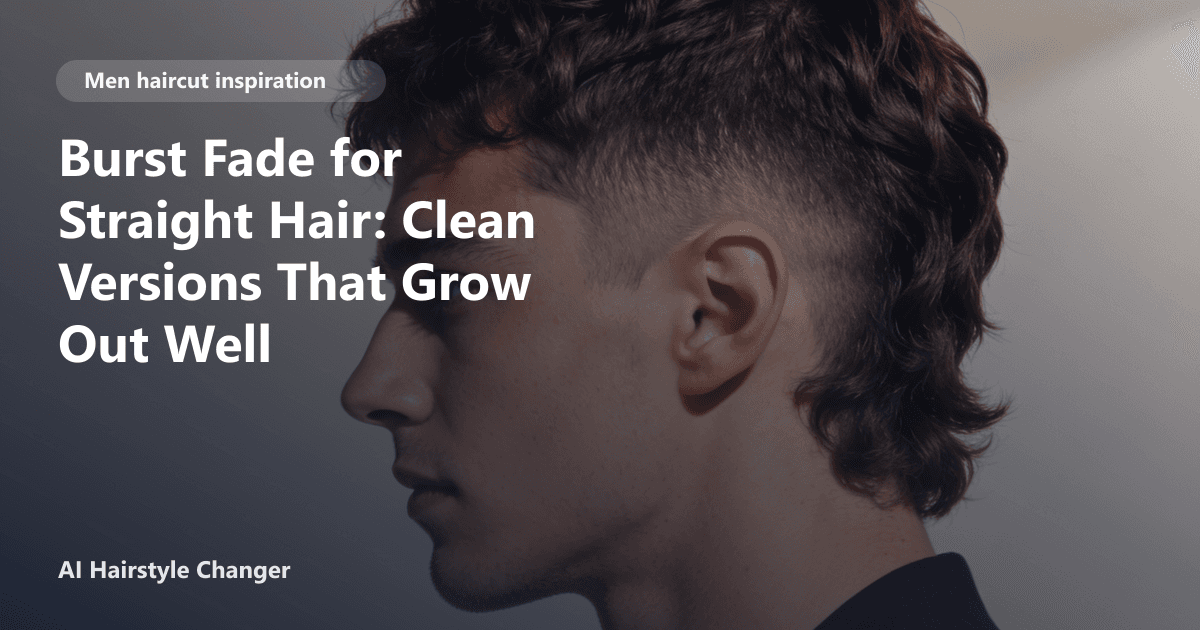
4. Burst Fade Mullet
For those who want to push the envelope, the burst fade mullet is back in style. It's bold but surprisingly wearable on straight hair, especially if you keep the back controlled.
Salon breakdown:
- Sides faded tight with a #0.5 or #1 guard, curving around the ear
- Top left 2-4 inches, with the back slightly longer (but not shaggy)
- Edges are blended, not disconnected, for a modern finish
This version grows out into a classic layered cut, avoiding the "rat tail" look. Maintenance is mostly about keeping the sides clean - let the back soften for a laid-back vibe. For more inspiration, check out the Mens Hair Styles Guide: Best Hairstyles by Hair Type and Length.
What to Tell Your Barber for a Clean, Lasting Burst Fade
Getting a burst fade that grows out well is all about the consultation. Here's what to cover in your next appointment:
- Show a reference photo: Use AI Hairstyle Changer to try on different burst fades and save your favorites. Bringing a clear image helps your barber understand exactly what you want.
- Specify fade height and length: Decide if you want a low, mid, or high burst fade. Mention the guard number (e.g., #1 for tight, #2 for softer fade) and how much length you want left on top.
- Discuss blending and neckline: For a smoother grow-out, ask for a tapered neckline and soft edges instead of sharp lines.
- Be honest about maintenance: If you don't want to visit the barber every two weeks, let them know. They can adjust the fade and top length for a longer-lasting look.
Maintenance: How to Keep Your Burst Fade Sharp (or Let It Grow Gracefully)
A burst fade for straight hair can be surprisingly low-maintenance - if you get the details right. Here's how to keep it looking its best:
- At-home upkeep: Use a trimmer to touch up the neckline and around the ears between cuts. A small dab of matte product keeps the top styled without buildup.
- Salon visits: Plan on a full refresh every 3-5 weeks for a sharp fade. If you prefer a softer look as it grows, stretch to 6 weeks and focus on blending the sides.
- Styling tips: Straight hair shows lines easily, so avoid heavy pomades or waxes. Instead, use lightweight creams or sprays to add volume and separation.
- Growing it out: As the fade softens, you can transition into a classic crop or even a longer undercut. The burst fade's curved shape means the grow-out phase looks intentional, not messy.
Want a lower-commitment fade? See Buzz Cut Guide: Lengths, Face Shapes, and Variations for options that require even less maintenance.
When a Burst Fade Might Not Be Your Best Bet
While burst fades are versatile, they don't suit every scenario. Here's when you might want to consider alternatives:
- Very fine or thinning hair: A tight fade can make thin areas more noticeable. Opt for a softer taper or more length on the sides.
- Cowlicks or strong growth patterns: If your hair sticks up at the crown or temples, a burst fade can highlight these areas. Ask your barber to adjust the fade line or add texture to the top.
- Strict dress codes: Some workplaces prefer conservative cuts. A low burst fade or classic taper may be a safer choice.
If you're unsure, use AI Hairstyle Changer to preview both burst fades and other styles like undercuts or low tapers. You can compare how each version frames your face - and avoid surprises after your appointment.
How AI Hairstyle Changer Helps You Find the Right Burst Fade
Trying on a new fade style can be a leap - especially if you've never worn a burst fade before. AI Hairstyle Changer lets you upload a selfie and see how different burst fade variations look on your own features. You can test:
- Fade height (low, mid, high)
- Top length and texture
- Fringe direction
- Mullet or classic versions
Once you've found your favorites, save them as reference photos for your barber. This makes it easier to communicate exactly what you want, reducing the risk of haircut regret. You can also compare burst fades to other styles, like buzz cuts or undercuts, to see which fits your face shape and maintenance routine best.
Exploring Other Fade and Short Haircut Options
Burst fades aren't the only clean, low-maintenance options for straight hair. If you want to keep your options open, check out these resources:
- Low Taper Fade for Straight Hair: Best Variations and Styling
- Buzz Cut Guide: Lengths, Face Shapes, and Variations
- Mens Hair Styles Guide: Best Hairstyles by Hair Type and Length
If you have curly or wavy hair, see Hairstyles for Curly Hair Men: Best Cuts by Length or Low Taper Fade for Curly Hair: What to Ask Your Barber for tailored advice.
FAQ
How often should I get a burst fade touched up?
Most burst fades look sharp for 3-5 weeks, depending on how fast your hair grows and how tight the fade is. If you prefer a softer, grown-out look, you can stretch to 6 weeks between trims.
Will a burst fade work if I have very straight, fine hair?
Yes, but ask your barber to avoid taking the fade too high or tight. Leaving a bit more length on the sides and adding texture to the top helps create volume and avoid a flat look.
Can I combine a burst fade with a mullet or undercut?
Absolutely. The burst fade mullet is a trending style, and you can also blend a burst fade into an undercut for extra contrast. Use AI Hairstyle Changer to preview these combinations before deciding.
What's the best way to style a burst fade for straight hair?
Use lightweight products like sea salt spray or matte paste to add movement and separation. Avoid heavy gels, which can make straight hair look greasy or weighed down.
Takeaway: Preview, Decide, and Book With Confidence
A burst fade for straight hair is a sharp, modern choice - especially if you pick a version that grows out gracefully. Before your next cut, try on different burst fade styles with AI Hairstyle Changer, save your favorites, and walk into your appointment knowing exactly what you want. Ready to explore even more options? Head to Haircut AI and Haircut Finder: Find a Style That Fits You and discover your next look.