Introduction
Face-framing layers for long hair consistently rank among the most requested salon styles, and for good reason. These strategic cuts add movement, soften facial features, and breathe life into lengthy locks without sacrificing precious length. Whether you're scrolling inspiration photos before your next appointment or trying to explain exactly what you want to your stylist, understanding the nuances of face-framing layers helps you make confident decisions and avoid haircut regret.
Unlike all-over layering that removes bulk throughout your hair, face-framing layers concentrate the detail around your front hairline and sides. This targeted approach creates a customized shape that draws attention to your best features while keeping the majority of your hair long and flowing. The result? A style that feels fresh and current without requiring a dramatic length change.
What Are Face-Framing Layers?
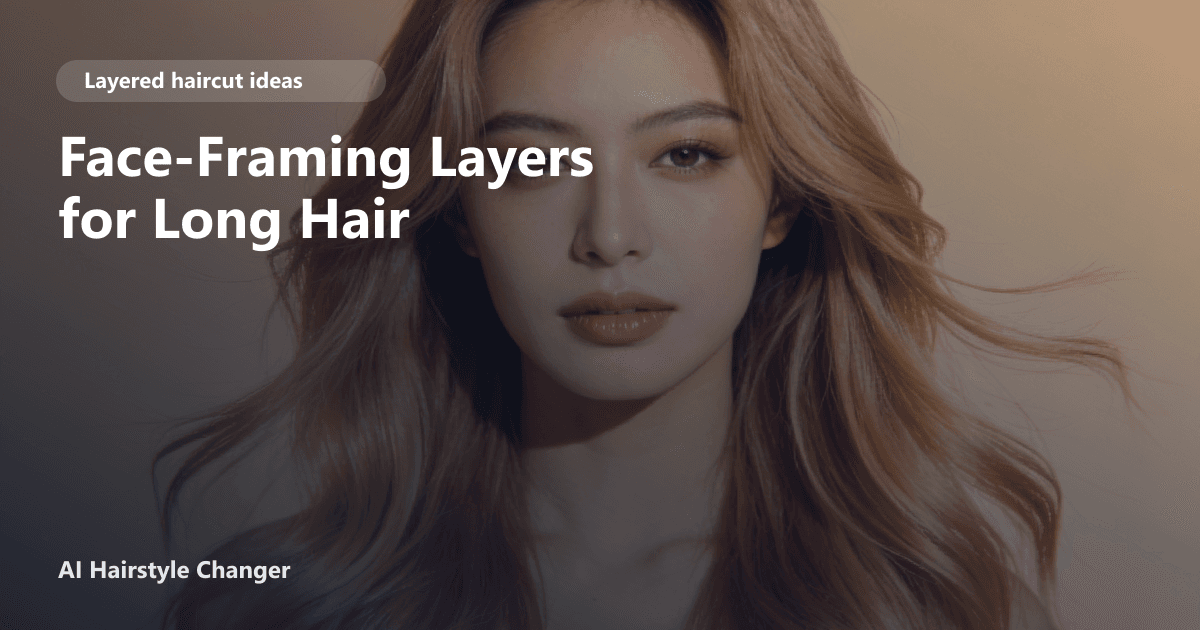
Face-framing layers are precisely cut sections of hair that begin around the chin or cheekbone and gradually blend into longer lengths. These layers create a "frame" around your face, adding dimension and movement to the front sections while leaving the back and bulk of your hair relatively untouched.
The technique involves cutting diagonal sections at varying elevations, typically starting shorter near the face and angling downward toward the back. Your stylist determines the exact starting point based on your face shape, hair texture, and desired effect. The layers can be subtle and wispy for a soft look, or more defined and chunky for bold statement framing.
Key characteristics include:
- Strategic placement around the front hairline and sides
- Graduated lengths that blend seamlessly into longer hair
- Customizable starting points (chin, cheekbone, or jaw-length)
- Preservation of overall hair length in the back
- Versatile styling options from sleek to voluminous
Why Face-Framing Layers Work for Long Hair
Long hair benefits uniquely from face-framing layers because the contrast between the detailed front and solid back creates visual interest. Without layers, very long hair can appear heavy, flat, or shapeless, especially around the face. Adding these strategic pieces breaks up the weight, introduces movement, and gives you styling flexibility without committing to a shorter overall length.
Benefits for Different Face Shapes
Oval faces: Nearly any face-framing layer style works. Try layers starting at cheekbone level to highlight symmetry.
Round faces: Longer layers that begin below the chin help elongate the face. Avoid layers that puff out at cheek level, which can add width.
Square faces: Soft, wispy layers starting near the jawline help soften strong angles. Face-framing pieces with subtle texture work best.
Heart-shaped faces: Layers that start at chin level balance a wider forehead and narrower chin. Side-swept framing pieces create harmony.
Diamond faces: Layers beginning at cheekbone level accentuate your natural bone structure while adding softness.
Hair Texture Considerations
Straight hair: Face-framing layers prevent the "curtain" effect where long, straight hair hangs flat around your face. They add necessary movement and make styling more dynamic.
Wavy hair: These layers enhance natural wave patterns, creating beautiful cascading texture around your face. The layers help waves form more defined, intentional shapes.
Curly hair: With proper cutting technique (dry cutting or curl-by-curl method), face-framing layers can showcase your curl pattern without creating unwanted bulk. The key is cutting with your natural texture, not against it.
Fine hair: Strategic face-framing layers create the illusion of volume and thickness where you need it most. Avoid over-layering, which can make fine hair appear thinner.
Thick hair: Removing weight through face-framing layers makes thick hair more manageable and prevents the heavy, overwhelming look that can hide your features.
Popular Face-Framing Layer Styles
Soft, Wispy Layers
This delicate approach creates barely-there pieces that gently graze your cheekbones and jawline. Perfect for subtle enhancement, wispy layers blend effortlessly and work beautifully with straight or slightly wavy hair. Ask for point-cutting or slide-cutting techniques to achieve feathered ends that don't look blunt or heavy.
Bold, Chunky Layers
For dramatic effect, chunkier face-framing layers make a statement. These more defined sections create strong lines and work especially well with textured or wavy hair. The contrast between thick framing pieces and longer back sections delivers high-impact style that photographs beautifully.
Curtain Bangs Integration
Many people confuse curtain bangs with face-framing layers, but they can work together. Curtain bangs are a specific type of fringe parted down the middle, while face-framing layers extend further back along the sides of your head. Combining both creates a cohesive, intentional look that feels current and styled.
Asymmetrical Framing
Uneven layer lengths on each side create edgy, modern appeal. One side might feature shorter, face-hugging layers while the other maintains longer pieces. This style works particularly well for those who part their hair deeply to one side.
How to Ask Your Stylist for Face-Framing Layers
Clear communication prevents disappointment. Bring multiple reference photos showing exactly what you like and dislike. Use specific terminology and demonstrate lengths by pointing to your face.
Key phrases to use:
- "I want layers that start at my cheekbone and angle down"
- "Please keep the length in back but add movement around my face"
- "I want soft, blended pieces, not choppy or blunt layers"
- "Can we cut these dry so I see the true length?"
Questions to ask:
- Where will the shortest layer hit my face?
- How will this grow out over the next 8-12 weeks?
- What styling products will help me recreate this look at home?
- Can you show me how to style these layers with a round brush?
Before your stylist picks up the scissors, confirm you're both visualizing the same result. A good stylist will show you where the layers will fall and explain their cutting approach.
Styling and Maintenance Tips
Daily Styling Routine
Face-framing layers come alive with minimal effort. For a quick polished look, focus on the front sections:
1. Apply a heat protectant to damp hair 2. Blow-dry the face-framing sections first, using a round brush to create slight bend 3. Direct these pieces away from your face for an opening effect 4. Style the rest of your hair as desired-straight, wavy, or natural
For air-dried styles, work a small amount of styling cream through the layers, twisting them gently to encourage natural texture and prevent frizz.
Product Recommendations
- Lightweight mousse: Adds volume at the roots without weighing down layers
- Texturizing spray: Enhances separation and definition in the framing pieces
- Round brush: Essential for creating that signature bend and bounce
- Flat iron: For sleek days, run lightly over layers to smooth while maintaining shape
- Dry shampoo: Refreshes roots and adds grip to layers between washes
Maintenance Schedule
Face-framing layers grow out more noticeably than back layers. Plan for trims every 6-8 weeks to maintain the shape and prevent pieces from getting too long and losing their framing effect. Between cuts, regular deep conditioning keeps ends healthy and prevents splitting that can make layers look ragged.
Visualizing Your Layers Before the Cut
The biggest challenge with face-framing layers is imagining the final result on your specific face shape and hair texture. Photos of models rarely show exactly how the style will translate to you. This is where modern technology changes the game.
AI Hairstyle Changer lets you upload a simple selfie and test different face-framing layer configurations instantly. You can experiment with various starting points-chin-length, cheekbone-level, or jaw-grazing - and see which flatters your features best. The tool shows you how subtle versus dramatic layers will look with your hair texture and face shape, removing the guesswork from your salon consultation.
Instead of hoping your stylist understands your vision, you can shortlist three to five variations that work on your actual photo. Show these references during your appointment to eliminate miscommunication. Many users report feeling significantly more confident walking into the salon when they've already "tried on" the style virtually.
FAQ
Will face-framing layers make my hair look thinner?
When cut correctly, face-framing layers should not make your hair appear thinner. In fact, they often create the illusion of more volume and movement. The key is avoiding over-layering or cutting too many short pieces. A skilled stylist will preserve density while adding shape. If you have very fine hair, request longer, fewer layers rather than multiple short pieces.
How often should I get them trimmed?
Face-framing layers typically need maintenance every 6-8 weeks. These front pieces grow out quickly and can start to look shapeless if left too long. Regular trims keep the framing effect crisp and prevent layers from blending into your overall length. Set a calendar reminder for 7 weeks post-cut to book your next appointment.
Can I get face-framing layers if I have curly hair?
Absolutely, but technique matters. Curly hair should be cut dry or using a curl-by-curl method to respect your natural pattern. Face-framing layers on curly hair create beautiful shape and prevent the dreaded "triangle" effect. The layers will likely appear shorter when dry than when wet, so communicate clearly with your stylist about your desired finished length.
What's the difference between face-framing layers and curtain bangs?
Curtain bangs are a specific fringe style parted down the middle that typically hits around the cheekbone. Face-framing layers extend further back along the sides of your head and can start at various points (chin, cheekbone, or jaw). You can have both simultaneously-curtain bangs as your fringe, with face-framing layers blending them into longer lengths. For more layered styles across different lengths, explore our Layered Haircuts Guide: Best Layered Styles by Length, Hair Type, and Face Shape.
Final Takeaway
Face-framing layers offer one of the most impactful yet low-commitment ways to refresh long hair. They add movement, highlight your features, and make daily styling more dynamic without sacrificing length. The key to success lies in clear communication with your stylist and choosing a layer length that complements your face shape and hair texture.
Before you book your appointment, take the uncertainty out of the equation. Visualize exactly how face-framing layers will look on you by testing the style on your own photo. Visit Hairstyle Try on Online Free Test Cuts before Booking to upload your selfie and experiment with different layer configurations. Walking into the salon with confidence - and reference photos that actually look like you-ensures you'll leave with the face-framing layers you've been dreaming of, not a style you'll regret.
For those considering a length change in the future, our guides on Best Layered Haircuts for Medium Hair and Layered Shoulder-Length Hair: Best Cuts That Keep Movement offer excellent transition inspiration.