You've picked a date for your next haircut, and you know you want a change - but you're stuck choosing between a fade, a buzz cut, an undercut, or even a mullet. Each style can look dramatically different depending on your hair type, face shape, and how the cut is executed. The last thing you want is to walk out of the barbershop wishing you'd picked something else.
That's where AI Hairstyle Changer comes in. With a quick selfie, you can preview how these classic men's styles will look on you - before the scissors come out. Here's how to use AI to test the most popular fade family haircuts, what details to focus on, and how to make sure your next cut actually fits your style and routine.
Why Test Fade Haircuts with AI First?
Fades are everywhere, but not every fade works for every guy. The difference between a low taper fade and a high skin fade can completely change how your face looks - or how much styling effort you'll need each morning. Testing with AI lets you quickly compare:
- Where the fade starts and ends (low, mid, or high)
- How much length you keep on top
- How the fade blends with your natural hairline and texture
- Whether a fade suits your head shape or highlights features you want to minimize
Trying on different fades virtually also helps you create a shortlist of reference images for your barber, making your consultation smoother and more precise.
Low Taper Fade: Subtle and Versatile
A low taper fade is a great entry point if you want something clean but not too dramatic. The fade starts just above the ears and gradually blends into longer hair on top. This style works well for straight, wavy, or curly hair, and is especially flattering for men with oval or square faces.
Key details to test:
- Fade height: Keep it low for a softer look, or try a mid taper if you want more contrast.
- Top length: 2 to 4 inches gives you enough to style forward, up, or messy.
- Fringe direction: Ask your barber for a textured fringe if you want movement.
- Styling: Works with a little matte paste or left natural.
If you have straight hair, check out the Low Taper Fade for Straight Hair: Best Variations and Styling guide for inspiration. For curls, see Low Taper Fade for Curly Hair: What to Ask Your Barber.
When it fails:
- If your hair grows fast, you'll need touch-ups every 2-3 weeks.
- Not ideal for receding hairlines - try a higher fade or buzz cut instead.
Buzz Cut: Minimalist and Bold
The buzz cut is the ultimate no-fuss style. It's all about uniform length, sharp edges, and easy maintenance. But there's more variety than you might think: from a classic #1 all over to a slightly longer #3 on top with faded sides.
Key details to test:
- Guard length: #1 (1/8 inch) is ultra-short, #3 (3/8 inch) gives a softer look.
- Fade or not: Try a faded buzz for a modern edge, or keep it uniform for a military vibe.
- Face shape: Buzz cuts highlight your bone structure - great for strong jaws, less forgiving for rounder faces.
Use the Buzz Cut Guide: Lengths, Face Shapes, and Variations to see which version works for you.
When it fails:
- If you have scars or bumps you want to hide, a longer fade or undercut is safer.
- Minimal styling options - if you like changing up your look, this isn't it.
Undercut: High Contrast, Modern Edge
The undercut keeps the sides and back very short (often buzzed or faded) while leaving significant length on top. It's a favorite for men who want to make a statement or need versatility for both work and weekends.
Key details to test:
- Side length: Shaved or faded sides create more contrast.
- Top length: 4+ inches lets you slick back, part, or add volume.
- Layering: Ask for texture on top to avoid a bowl effect.
- Styling: Pomade for a classic slick look, or sea salt spray for natural volume.
When it fails:
- High upkeep - undercuts need regular trims to keep the contrast sharp.
- Not ideal if your hair is thinning on top.
For more on how undercuts fit into broader men's trends, visit the Mens Hair Styles Guide: Best Hairstyles by Hair Type and Length.
Mullet: Retro with a Modern Twist
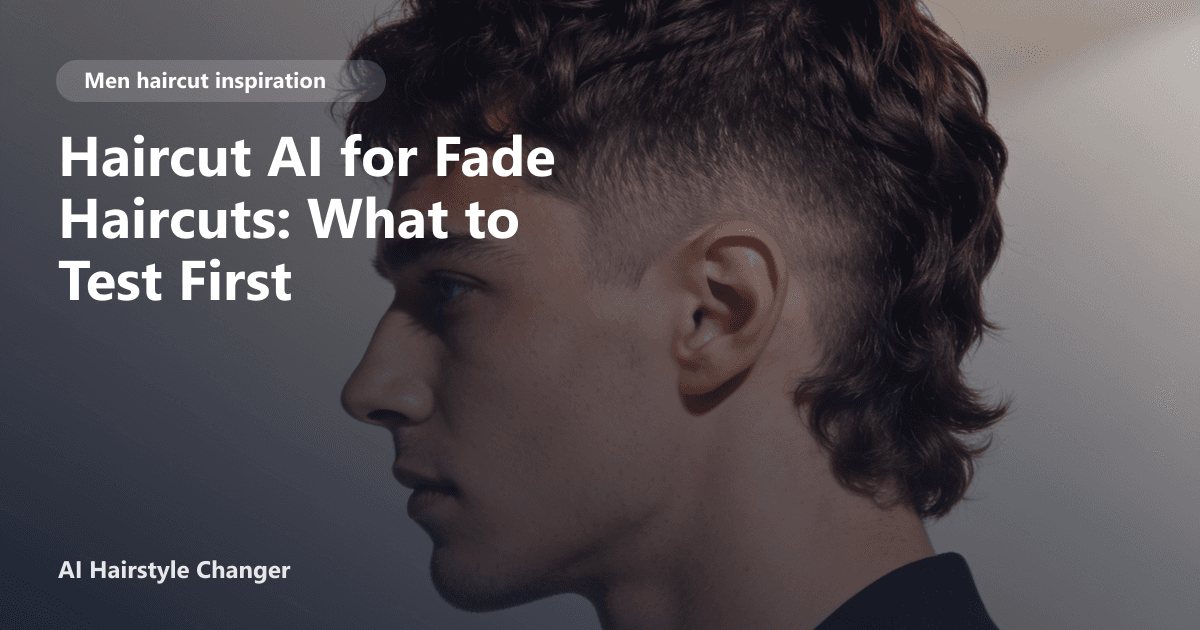
The mullet has made a comeback, blending short faded sides with longer hair at the back. Today's mullets are more about texture and movement than the old-school extremes.
Key details to test:
- Fade type: Low or drop fades keep it modern.
- Back length: 3-6 inches is enough for a noticeable tail without going full retro.
- Top and fringe: Textured or messy fringe makes it current.
- Volume placement: Keep volume at the crown, not the sides.
When it fails:
- If you work in a conservative office, a dramatic mullet may not fly.
- Needs regular shaping to avoid looking unkempt.
For curly hair variations, see Hairstyles for Curly Hair Men: Best Cuts by Length.
How to Use AI Hairstyle Changer for Fades, Buzz Cuts, and More
Testing styles with AI isn't just about seeing a new look - it's about making smarter choices. Here's how to get the most from your try-on experience:
1. Upload a clear selfie: Natural light and neutral expression work best. 2. Test multiple fade heights: Try low, mid, and high fades to see how each shapes your face. 3. Experiment with length: See how different top lengths change the vibe of each style. 4. Compare side profiles: Some fades and undercuts look sharper from the side - double check before you decide. 5. Shortlist your favorites: Save 2-3 options to show your barber. Reference images make communication easier.
AI Hairstyle Changer lets you test these variations quickly, so you can walk into your appointment knowing exactly what you want.
What to Tell Your Barber: Turning AI Try-Ons into Real Results
Even the best AI preview is only as good as the instructions you give at the salon. Bring your shortlisted images and be specific:
- Point out the exact fade height you want (e.g., "low skin fade ending just above the ear")
- Specify top length in inches or clipper guard numbers
- Note how you want the fringe styled - forward, up, or textured
- Ask for advice on upkeep and how often to return for touch-ups
A good barber will appreciate clear references and can adjust the style for your hair type and growth pattern.
Common Mistakes to Avoid When Choosing a Fade Family Cut
- Ignoring hair type: Straight, wavy, and curly hair all fade differently. Test styles that match your natural texture.
- Going too short too soon: If you're unsure, start with a longer fade or buzz. You can always go shorter next time.
- Forgetting about maintenance: Fades and undercuts look best with regular trims. If you can't commit, try a longer, blended style.
- Not considering face shape: Use the AI tool's different angles to see if a style flatters your jawline and forehead.
FAQ
How do I know which fade height suits my face?
Generally, low fades soften round faces, while high fades add definition to longer or oval faces. Use AI try-ons to compare side-by-side and see which balances your features best.
Can I test curly hair fades and mullets with AI?
Yes. AI Hairstyle Changer includes options for curly, wavy, and straight hair. Preview curly fades or modern mullets to find a version that works with your texture. For more curly hair ideas, see Hairstyles for Curly Hair Men: Best Cuts by Length.
What if I don't like any of the styles I try on?
Use the AI tool to mix and match elements - like a low fade with a longer fringe, or an undercut with textured top. You can also browse the Mens Hair Styles Guide: Best Hairstyles by Hair Type and Length for more inspiration.
How often should I get a fade or buzz cut touched up?
Most fades and buzz cuts look best with trims every 2-4 weeks. Ask your barber for a maintenance schedule based on your hair growth and chosen style.
Takeaway: Preview, Decide, and Book with Confidence
Choosing between a fade, buzz, undercut, or mullet doesn't have to be a guessing game. With AI Hairstyle Changer, you can preview your top picks, save reference images, and walk into your next appointment ready to get the cut you actually want. Ready to find your fit? Head to Haircut AI and Haircut Finder: Find a Style That Fits You to start your transformation.