If you've ever buzzed your hair, you know the dilemma: you're ready to grow it out, but dread the weeks of uneven, shapeless regrowth. The so-called "awkward stage" can make you question whether you should just reach for the clippers again. But with the right approach - and a few strategic style choices - you can transition from a buzz cut to a longer, sharper look without feeling stuck in limbo.
Why Growing Out a Buzz Cut Feels Awkward
A buzz cut is all about uniformity. As it grows, different areas (especially around the crown, temples, and neckline) sprout at different rates. The result: fuzzy sides, uneven volume, and a shape that loses its edge. This is the phase where many guys give up and shave it all off again.
But you don't have to. By planning your next steps and working with your barber, you can use fades, undercuts, or even a mullet to bridge the gap - keeping your look intentional and sharp at every length.
Step 1: Map Out Your Next Style
Before you let your hair grow wild, decide what you want your next phase to look like. Do you want a clean low taper fade, a disconnected undercut, or a retro-inspired mullet? Each option suits different face shapes, hair types, and lifestyles.
- Low Taper Fade: Great for a gradual transition, especially if you want to keep the sides neat as the top grows. Works for straight and curly hair.
- Undercut: Lets the top grow long while keeping sides and back short. Perfect for high-contrast looks or if you want to slick back or part your hair later.
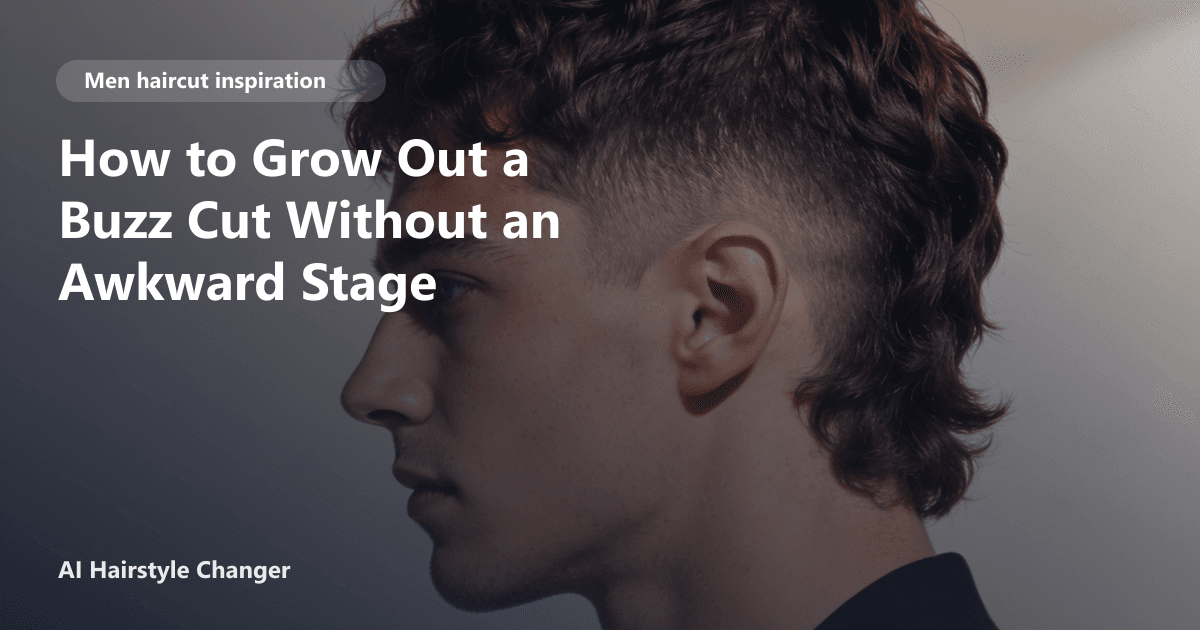
- Mullet: For those who want to embrace texture and length at the back while keeping the sides sharp. Surprisingly versatile and coming back in style.
- Textured Crop: A mid-point between buzz and longer styles, adding shape and movement. Good for hiding uneven growth.
If you're not sure which suits you, upload a selfie to AI Hairstyle Changer. Try on fades, undercuts, or mullet shapes virtually, and shortlist your favorites for your barber.
The First Few Weeks: Keeping It Clean
For the first month after a buzz cut, growth is subtle but noticeable. This is when edges start to blur, and the neckline gets fuzzy. Instead of letting it all grow out, book a clean-up every 2-3 weeks:
- Ask your barber for a line-up or edge-up around the forehead, temples, and neckline. This keeps your style looking intentional.
- Tidy the sideburns and ears so the shape remains crisp.
- Use a lightweight styling cream to add control and minimize puffiness as hair thickens.
If you're considering a fade, this is the time to start blending the sides. For more on fade options, check out Low Taper Fade for Straight Hair: Best Variations and Styling or Low Taper Fade for Curly Hair: What to Ask Your Barber.
Transitioning to a Fade: The Most Seamless Option
A fade is the most forgiving way to grow out a buzz cut. By gradually increasing the length from the neckline up, you reduce bulk at the sides and keep the overall shape sharp.
What to ask for:
- Start with a low or mid fade, depending on your hair density and face shape.
- Keep the top slightly longer than the sides - ask your barber to use scissors on top and clippers on the sides.
- For straight hair, a low taper fade offers a clean silhouette. For curls, a drop fade can enhance natural volume.
Maintenance:
- Schedule touch-ups every 3-4 weeks to keep the fade fresh.
- Use a matte paste or light pomade to add texture as the top grows.
When it works:
- Best for men who want a classic, low-maintenance look.
- Easiest for those with straight or slightly wavy hair.
When it fails:
- If you want to grow the top very long quickly, a fade may require more frequent trims to keep the sides neat.
For more fade inspiration, visit our Mens Hair Styles Guide: Best Hairstyles by Hair Type and Length.
Going for an Undercut: High Contrast, Easy Upkeep
The undercut is a strong choice if you want to grow the top out with minimal fuss. By keeping the sides and back short, you let the top reach new lengths while avoiding the dreaded mushroom look.
What to ask for:
- Request a disconnected undercut - clippers on the sides, scissor cut on top.
- Decide on the undercut height: higher for more contrast, lower for a subtler transition.
- Let the top grow past 2 inches before styling. This gives enough length for a side part or slicked-back look.
Maintenance:
- Sides need a trim every 3-4 weeks. The top can be left alone or trimmed for split ends.
- Use a blow dryer and volumizing mousse to add lift as length increases.
When it works:
- Ideal for thick or straight hair.
- Great if you want to experiment with styling as the top grows.
When it fails:
- Not the best for very fine or thinning hair, as the contrast can accentuate scalp visibility.
Embracing the Mullet: Modern, Edgy, and Versatile
The mullet isn't just a retro joke - it's a practical way to grow out a buzz cut, especially if you want length at the back without sacrificing a clean look up front.
What to ask for:
- Keep the front and sides short with a fade or taper.
- Let the back grow out and ask your barber to layer for movement.
- Add a textured fringe or curtain bangs for a modern twist.
Maintenance:
- Shape the back every 5-6 weeks to avoid looking scruffy.
- Use a light styling cream for separation and control.
When it works:
- Best for wavy or curly hair, but can be adapted for straight hair with layering.
- Perfect for guys who want to stand out or try something bold.
For more curly hair options, see Hairstyles for Curly Hair Men: Best Cuts by Length.
The Textured Crop: Blending Out the Awkwardness
If you're not ready for a dramatic change, a textured crop is a great way to bridge the gap between a buzz cut and longer styles. It adds shape and hides uneven growth.
What to ask for:
- Request a scissor cut all over, with added texture through point-cutting or razor work.
- Ask for a short fringe or forward-swept bangs to control the hairline.
- Keep the sides short but not skin-faded.
Maintenance:
- Trim every 4-6 weeks to keep shape.
- Use a salt spray or matte clay for volume and definition.
When it works:
- Good for all hair types, especially if you want a low-commitment look.
- Eases the transition to longer styles like a quiff or pompadour.
How to Use AI Hairstyle Changer to Plan Your Transition
One of the hardest parts of growing out a buzz cut is visualizing what comes next. AI Hairstyle Changer lets you upload your selfie and preview fades, undercuts, mullets, or textured crops before you commit. This means you can test how a low taper fade or a modern mullet fits your face and hair type, then save reference images for your barber.
- Experiment with different fade heights and shapes.
- See how a disconnected undercut changes your profile.
- Try on a mullet or crop to compare side-by-side.
- Build a shortlist of styles to avoid haircut regret.
It's a practical way to skip the guesswork and feel confident as you grow out your buzz cut.
Avoiding Common Mistakes When Growing Out a Buzz Cut
- Skipping trims: Letting everything grow at once leads to uneven bulk and messy lines. Regular clean-ups keep your look intentional.
- Ignoring your hair type: Not every style suits every hair texture. Use Buzz Cut Guide: Lengths, Face Shapes, and Variations to match your next step to your hair.
- Not using product: As hair grows, it needs more control. Lightweight creams or matte pastes help tame awkward volume.
- Winging it: Without a plan, you're more likely to get frustrated. Preview styles with AI Hairstyle Changer to set clear goals.
FAQ
How long does it take to grow out a buzz cut to a fade or undercut?
Most men need 4-8 weeks to reach enough length for a low or mid fade, and 2-3 months for an undercut top. Regular trims keep the shape looking sharp throughout.
Can I skip the awkward stage completely?
You can't avoid regrowth, but by blending the sides, shaping the neckline, and using a try-on tool like AI Hairstyle Changer, you can keep your look intentional at every step.
What should I tell my barber when transitioning from a buzz cut?
Bring reference photos (from AI Hairstyle Changer or style guides), specify your target length for the top and sides, and ask for advice on fade height, undercut disconnection, or mullet layering based on your hair type.
Are there styles to avoid during the grow-out phase?
Avoid letting everything grow out evenly without shaping. Skip high-maintenance styles if you don't want frequent trims. Stick to fades, undercuts, or crops for the smoothest transition.
Takeaway: Grow Out With Confidence
Growing out a buzz cut doesn't have to mean weeks of awkward hair. With the right plan - whether you choose a fade, undercut, mullet, or textured crop - you can look sharp at every stage. Use AI Hairstyle Changer to preview your next style, save references, and walk into your next appointment with confidence. Ready to find your next look? Head to Haircut AI and Haircut Finder: Find a Style That Fits You and start your transformation.