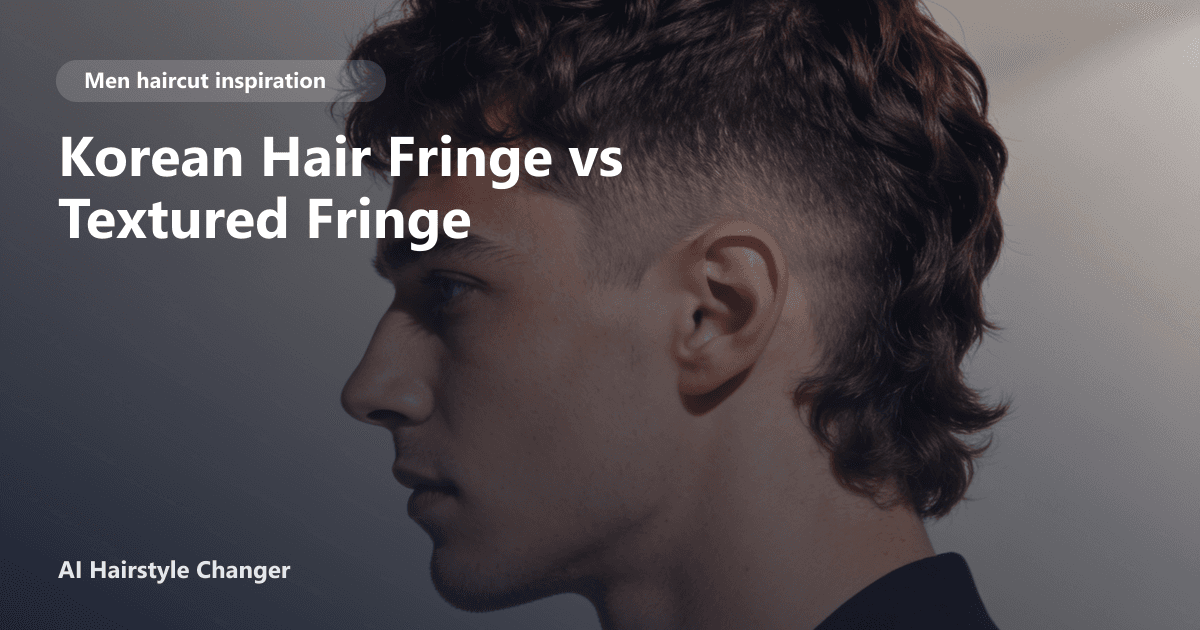
Facing your next haircut, you want more than a vague idea of how a new fringe will look. Maybe you're torn between a sharp Korean hair fringe and a messy, textured fringe. The wrong choice can mean months of awkward styling or a look that simply doesn't fit your face shape or lifestyle. This guide breaks down the differences, tradeoffs, and best uses for each fringe style - so you can walk into your barber appointment with confidence and a clear reference photo.
The Decision: Korean Hair Fringe or Textured Fringe?
Both fringes are popular among men exploring modern fades, undercuts, and even mullet-inspired shapes. But the vibe, maintenance, and suitability are very different. The Korean hair fringe, often seen in K-pop and K-drama looks, is defined by its smooth, rounded, and usually longer bangs that sweep across the forehead. The textured fringe, on the other hand, is choppy, layered, and intentionally messy, adding volume and edge.
Before you commit, consider:
- Your hair type (straight, wavy, curly)
- How much time you want to spend styling
- Whether you want a soft, clean look or a more rugged, casual vibe
- How much forehead coverage you need
Korean Hair Fringe: Soft, Clean, and Youthful
The Korean hair fringe works best with straight or slightly wavy hair. It's cut with precision, usually between eyebrow and eyelash length, and styled to curve softly over the forehead. This fringe is often paired with a low taper fade, an undercut, or even a subtle mullet for a modern twist.
Who It Suits:
- Oval or heart-shaped faces (the fringe softens angular features)
- Men with straight or fine hair
- Anyone wanting a polished, K-pop-inspired look
What to Ask For:
- Fringe length: between the brows and lashes
- Slight layering for movement, but not too choppy
- Sides blended into a taper fade or undercut
- Fringe styled forward and slightly to one side
Maintenance:
- Needs regular trims to keep the shape
- Blow-drying and light product (wax or cream) for hold
- Can get oily or flat if not washed regularly
For more on pairing this fringe with a fade, see Low Taper Fade for Straight Hair: Best Variations and Styling.
Textured Fringe: Casual, Choppy, and Versatile
Textured fringes are cut with razors or point-cutting scissors to create uneven, piecey layers. The length can vary from short (just above the brows) to longer, almost touching the eyes. This style works with fades, undercuts, or even as the front of a modern mullet.
Who It Suits:
- Round or square faces (adds angles and height)
- Medium to thick hair, straight or wavy
- Guys looking for a low-maintenance, tousled look
What to Ask For:
- Fringe cut with visible texture and separation
- Length: from mid-forehead to brow level
- Sides faded or disconnected for contrast
- Optionally, add volume with a matte paste
Maintenance:
- Easy to style with fingers and a bit of product
- Grows out well, but may need reshaping every 4 - 6 weeks
- Can look messy if not styled intentionally
If you want to see how this works with curly hair, check Hairstyles for Curly Hair Men: Best Cuts by Length.
Fade, Buzz, Undercut, and Mullet: How Fringes Change the Game
Fringes can be adapted to almost any men's haircut family. Here's how each core style interacts with Korean and textured fringes:
- Fade with Fringe: Both Korean and textured fringes work well with low, mid, or high fades. The clean sides put all the focus on the fringe. Korean fringes look sleeker with a low taper, while textured fringes add edge to a mid or high fade.
- Buzz Cut with Fringe: Rare, but possible. Some modern buzz cuts leave a short, blunt fringe at the front. See the Buzz Cut Guide: Lengths, Face Shapes, and Variations for inspiration.
- Undercut with Fringe: The disconnected undercut is a classic partner for both styles. Korean fringes create a soft contrast, while textured fringes make the undercut more rebellious.
- Mullet with Fringe: The modern mullet often features a fringe - Korean for a retro vibe, or textured for a punk edge.
Four Ways to Wear a Fringe: Detailed Examples
Here are four specific directions you can take, each with its own pros and cons:
1. Korean Fringe with Low Taper Fade
- Look: Neat, soft, and face-framing
- Who it suits: Straight hair, oval faces
- Salon notes: Ask for a rounded fringe, sides faded low, and minimal choppiness
- Upkeep: Trim every 3 - 4 weeks, style with a round brush and light cream
2. Textured Fringe with High Fade
- Look: Bold, high-contrast, and modern
- Who it suits: Thick or wavy hair, square faces
- Salon notes: Request aggressive point-cutting for texture, high fade on the sides
- Upkeep: Easy to style, grows out into a messy crop
3. Korean Fringe with Undercut
- Look: K-pop inspired, dramatic contrast
- Who it suits: Fine to medium hair, heart-shaped faces
- Salon notes: Keep the fringe long and smooth, undercut disconnected
- Upkeep: High contrast means visible regrowth - trim every 2 - 3 weeks
4. Textured Fringe with Mullet
- Look: Edgy, retro, and full of attitude
- Who it suits: Wavy or curly hair, round faces
- Salon notes: Fringe should be uneven and choppy, back left long and layered
- Upkeep: Style with matte product, embrace the messiness
What to Tell Your Barber: Practical Tips
- Fringe Length: Be specific - "I want the fringe to hit just above my brows" or "I want it long enough to brush my lashes."
- Texture: For a Korean fringe, request minimal choppiness. For a textured fringe, ask for visible separation and layering.
- Sides: Decide if you want a fade, undercut, or blended sides. Bring reference photos.
- Styling: Mention your daily routine and how much time you want to spend.
If you're unsure, use AI Hairstyle Changer to preview both styles on your own face and save your favorite look for your barber.
Maintenance and Upkeep: What to Expect
- Korean Fringe: Needs more frequent trims and careful styling. Can get oily or lose shape if neglected.
- Textured Fringe: Easier to maintain, but can look messy if not shaped regularly.
- Both: Use a light hold product, avoid heavy gels, and wash regularly to prevent product build-up.
For more maintenance tips by hair type, see the Mens Hair Styles Guide: Best Hairstyles by Hair Type and Length.
How AI Hairstyle Changer Helps You Decide
Trying on a new fringe is a big commitment. AI Hairstyle Changer lets you upload your selfie and preview both Korean and textured fringes in seconds. See how each style fits your face shape, hair density, and personal style - before you book your appointment. You can also shortlist your top looks and bring them as references to your barber, reducing the risk of haircut regret.
FAQ
What's the main difference between a Korean hair fringe and a textured fringe?
A Korean hair fringe is smooth, rounded, and polished, usually styled forward or slightly to the side. A textured fringe is choppier, with visible layers and a messier finish.
Which fringe is easier to maintain?
Textured fringes are generally easier to style and maintain, as they grow out well and don't require as much precision. Korean fringes need regular trims and careful styling to keep their shape.
Can I combine a fringe with a fade or undercut?
Absolutely. Both Korean and textured fringes pair well with fades and undercuts. The choice depends on whether you want a clean or edgy look. For more, see Low Taper Fade for Curly Hair: What to Ask Your Barber.
How do I know which fringe suits my face shape?
Oval and heart-shaped faces often suit Korean fringes, while round and square faces benefit from the angles of a textured fringe. Use AI Hairstyle Changer to preview both and see which flatters you most.
Takeaway: Try Before You Commit
Choosing between a Korean hair fringe and a textured fringe isn't just about trends - it's about what fits your face, hair, and lifestyle. Use AI Hairstyle Changer to test-drive both looks, shortlist your favorites, and walk into your next appointment with confidence. Ready to find your perfect style? Head to Haircut AI and Haircut Finder: Find a Style That Fits You.