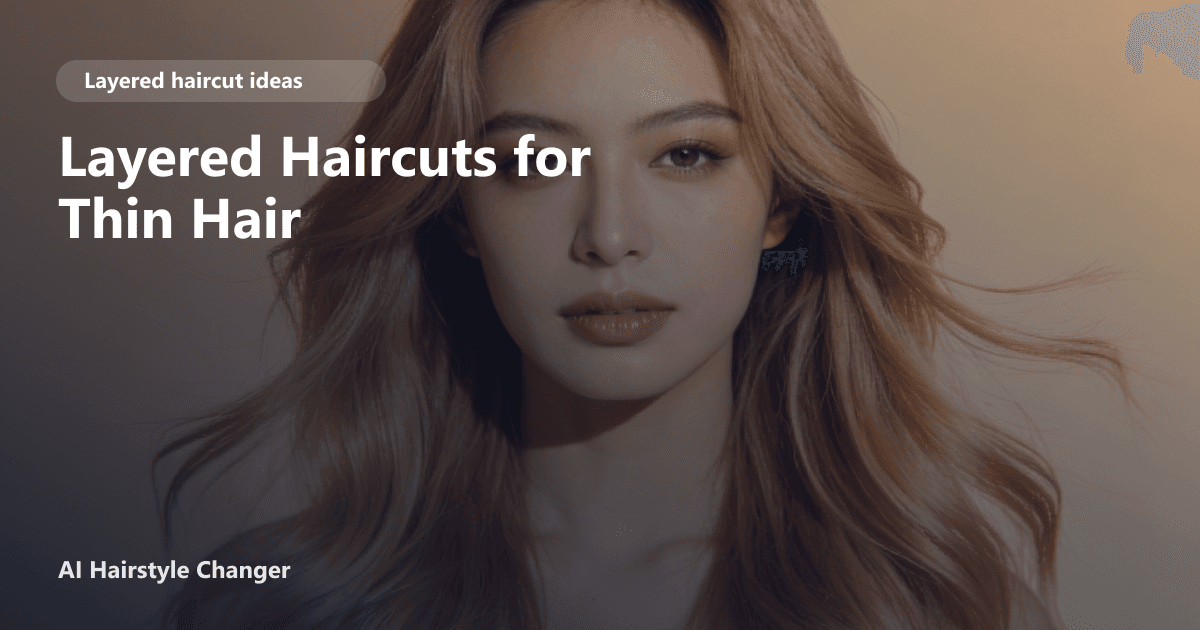
If you have thin hair, the pressure to choose the right haircut is real. One wrong move and your hair can look even flatter, stringier, or harder to style. Many people want layers for thin hair, but worry: Will layers make my hair look thinner? Can I get more volume without sacrificing length? How do I avoid a style that falls flat a week after leaving the salon?
This guide breaks down layered haircuts for thin hair - what works, what to avoid, and how to preview your new look with the help of AI Hairstyle Changer before you commit.
Why Layers Work for Thin Hair
Layers can transform thin hair, adding movement, shape, and the illusion of fullness. The trick is getting the right type of layering and length for your hair's density, face shape, and lifestyle. Overly choppy or short layers can make thin hair look sparse, but well-placed, soft layers create body and bounce.
Key benefits of layered hair for thin hair include:
- Enhanced volume at the crown and sides
- More styling options (waves, blowouts, tousled looks)
- Easier movement and less limpness
- Face-framing effects that draw attention to your features
Consulting with your stylist - and previewing styles virtually - helps ensure you get the benefits without the pitfalls.
Soft, Face-Framing Layers: A Go-To for Fine Hair
For many with thin hair, soft, face-framing layers are the safest and most flattering option. These layers start below the chin or collarbone, gently curving in toward the face. They add subtle volume in front, make hair look fuller around the jawline, and avoid removing too much bulk from the ends.
Who they suit:
- Anyone with shoulder-length to long thin hair
- Oval, heart, or round face shapes
Salon conversation tips:
- Ask for long, blended layers starting at the chin or collarbone
- Request minimal thinning at the ends
- Specify you want to keep as much fullness as possible
Maintenance:
- Trim every 8 - 12 weeks to keep layers fresh
- Blow-dry with a round brush for volume
If you want to see how different face-framing layers look on you, upload your photo to AI Hairstyle Changer and compare subtle versus more dramatic options.
Shoulder-Length Layers for Maximum Movement
Shoulder-length layered haircuts are a sweet spot for thin hair. This length gives the illusion of thicker ends while allowing for movement and bounce. Layers can be tailored to your hair's density - shorter, internal layers for extra lift, or longer, blended layers for a sleeker look.
Best for:
- Fine hair that tends to fall flat when long
- Those who want easy styling without sacrificing all their length
What to ask your stylist:
- Request shoulder-length with soft, graduated layers
- Avoid heavy razoring or texturizing, which can make ends look wispy
Upkeep:
- Regular trims to prevent split ends
- Use volumizing mousse or spray at the roots
For more inspiration, check out Layered Shoulder-Length Hair: Best Cuts That Keep Movement for real examples and styling tips.
Long Layers: Keeping Length Without Losing Volume
If you love long hair but struggle with limpness, long layers can help. The key is to keep layers minimal and well-blended, focusing on volume at the crown and gentle shaping through the lengths. Avoid too many short layers, which can make thin hair look stringy.
Great for:
- Thin hair with some natural body
- Those who want to keep as much length as possible
Salon tips:
- Ask for long, subtle layers that start below the shoulders
- Specify you want fullness at the ends
Styling:
- Use a large-barrel curling iron or blow-dry with a round brush for lift
- Dry shampoo at the roots can add texture
Previewing long layered looks with AI Hairstyle Changer lets you see exactly how much layering flatters your face and hair type before you book your appointment.
Layered Bobs: Shorter Styles That Add Bulk
Bobs with layers can be surprisingly effective for thin hair. A layered bob creates the illusion of density, especially when the cut is slightly angled or stacked at the back. The right bob can make thin hair look thicker and more modern.
Who should try it:
- Thin, straight hair that struggles to hold volume
- Anyone ready for a low-maintenance, bold change
Salon conversation:
- Ask for a chin-length or collarbone bob with soft, graduated layers
- Avoid excessive thinning or razoring
Maintenance:
- Trim every 6 - 8 weeks to maintain the shape
- Blow-dry upside down for extra lift
Curious how a bob would look on you? Use AI Hairstyle Changer to preview classic, angled, or layered bob variations before you decide.
Layer Placement: Where to Add Volume (and Where to Avoid)
The placement of layers makes a huge difference in how thin hair looks. Here's what to consider:
- Crown layers: Add lift at the top, making hair look fuller from the front.
- Face-framing layers: Draw attention to cheekbones and jawline.
- Avoid too-short layers: These can stick out or make hair look sparse.
- Minimal layering at the ends: Keeps the base looking dense, not wispy.
Bring reference photos - either your own or ones you've tried on with AI Hairstyle Changer - to show your stylist exactly what you want. For a deeper dive into matching layers to your face shape and hair type, see the Layered Haircuts Guide: Best Layered Styles by Length, Hair Type, and Face Shape.
Layered Cuts to Avoid for Thin Hair
Not every layered style works for fine or thin hair. Certain techniques can actually make hair look thinner or harder to manage:
- Heavy razoring or thinning: Removes too much bulk, leaving ends stringy.
- Short, choppy layers: Can stick out, especially if your hair is straight or lacks natural wave.
- Excessive texturizing: Makes hair harder to style and maintain volume.
If your stylist suggests aggressive layering, ask about alternative techniques that keep fullness at the ends. Bring virtual try-on images to help communicate the look you want.
Salon Conversation Checklist: Getting the Right Layers
When you're ready to book your appointment, use these talking points to get the best results for thin hair:
- Specify your desired length (shoulder, collarbone, long)
- Ask for soft, blended layers - minimal thinning
- Request volume at the crown and around the face
- Bring reference images, including AI Hairstyle Changer try-ons
- Discuss maintenance: trims every 8 - 12 weeks, at-home styling tips
A clear conversation and visual examples help avoid haircut regret and ensure your stylist understands your goals.
Previewing Layered Haircuts with AI Hairstyle Changer
One of the biggest advances for anyone with thin hair is the ability to preview layered styles virtually. With AI Hairstyle Changer, you can:
- Upload your selfie and try on a range of layered cuts
- Experiment with length, layer placement, and face-framing options
- Save your favorites to show your stylist
- Avoid surprises and reduce the risk of haircut regret
Trying on styles before your appointment lets you make confident decisions, especially when you're unsure how a new cut will look with your hair type.
FAQ
Will layers make my thin hair look even thinner?
Not if they're done right. Soft, blended layers add movement and volume without sacrificing fullness. Avoid choppy or overly thinned layers, which can make hair look sparse. Previewing styles with AI Hairstyle Changer helps you spot the difference.
How often should I trim layered hair if it's thin?
Plan for a trim every 8 - 12 weeks to keep layers fresh and prevent split ends. Shorter bobs or heavily layered styles may need trims every 6 - 8 weeks to maintain their shape.
What styling products work best for layered thin hair?
Lightweight volumizing mousse, root-lifting sprays, and dry shampoo add body without weighing hair down. Avoid heavy creams or oils, which can flatten fine strands.
Can I get curtain bangs or fringe with layered thin hair?
Yes, as long as the bangs are soft and blended into the layers. Curtain bangs can add fullness around the face, but avoid heavy, blunt bangs that remove too much density from the sides.
Takeaway: Try Before You Cut
Layered haircuts can be a game-changer for thin hair, but the right technique is everything. Use AI Hairstyle Changer to preview layered styles, experiment with lengths and placements, and bring your favorites to your next salon visit. For more inspiration or to try on cuts with more clarity, head to Hairstyle Try-On Online: Free Test Cuts Before Booking and see your future look today.