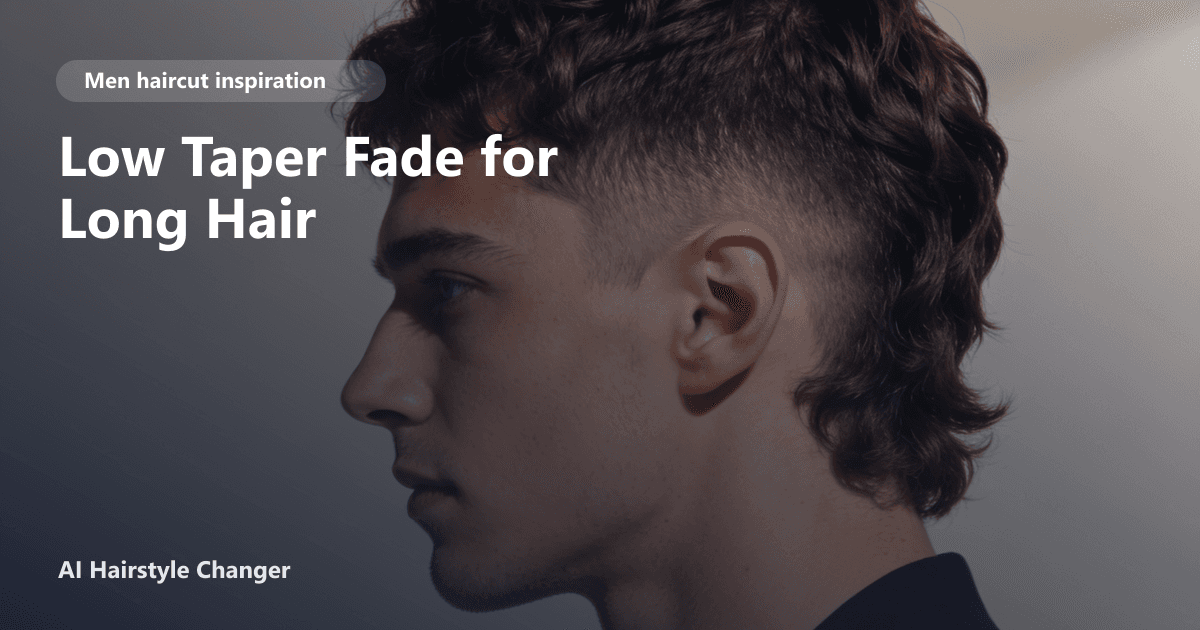
If you're growing out your hair but want a sharp, modern edge, the low taper fade for long hair solves a classic dilemma: how to keep length without looking messy or dated. Maybe you've seen the look on athletes, musicians, or trendsetters - longer hair on top, but with clean, gradual fading at the sides and nape. The result is a style that's both versatile and low-maintenance, if you get the details right.
But which variation fits your hair type, face shape, and lifestyle? And how do you explain exactly what you want to your barber, especially if you've never tried a fade before? This guide breaks down the most popular low taper fade directions for long hair, who they suit, what to ask for, and how to preview the look virtually with AI Hairstyle Changer before you commit to the chair.
Why Choose a Low Taper Fade with Long Hair?
The low taper fade is a subtle, adaptable way to add shape and polish to longer hair. Unlike a high fade, which can make the sides look almost shaved, a low taper starts fading just above the ear and keeps the transition gradual. This preserves more length around the temples and neck, which is ideal if you want to keep your hair's natural movement and volume.
A low taper fade works particularly well for men who:
- Want to keep 3+ inches on top for styling options (slick back, loose waves, textured fringe)
- Prefer a professional look that doesn't require daily touch-ups
- Need a haircut that grows out gracefully between appointments
- Like the contrast of clean sides with a longer, flowing top
If you're not sure how a low taper fade will look with your hair type, AI Hairstyle Changer lets you preview the effect before you commit. This is especially helpful if you're debating between a fade, undercut, or even a mullet-inspired shape.
Key Variations: Low Taper Fade Directions for Long Hair
There's no single way to wear a low taper fade with long hair. The right direction depends on your hair texture, face shape, and personal style. Here are four of the most popular variations:
1. Classic Low Taper with Textured Top
Best for: Straight or slightly wavy hair, oval or square faces.
- Sides and nape faded from a #2 or #3 guard up to about an inch above the ear
- Top left 4-6 inches, layered for movement
- Styling: Blow-dry for volume, matte clay for texture
- Ask for: A gradual fade that doesn't expose too much scalp. Request point-cutting or razor texturizing on the top for a natural finish.
This cut is timeless and easy to adapt for work or weekends. Check out Low Taper Fade for Straight Hair: Best Variations and Styling for more inspiration if your hair is naturally straight.
2. Curly Low Taper with Defined Edges
Best for: Naturally curly or coily hair, round or heart-shaped faces.
- Sides faded low with a #1 or #2 guard, blending into natural curls
- Top left 3-5 inches, shaped for curl definition
- Optional: Line-up at the forehead and temples
- Styling: Curl cream or leave-in conditioner for definition
- Ask for: A soft fade that enhances your curl pattern, not a harsh disconnect. Specify if you want a sharp edge-up or a more natural hairline.
For more on curly fades, see Low Taper Fade for Curly Hair: What to Ask Your Barber and Hairstyles for Curly Hair Men: Best Cuts by Length.
3. Low Taper Undercut Hybrid
Best for: Thick, straight, or wavy hair; long faces.
- Sides faded low, but with a disconnected undercut (clear line between sides and top)
- Top left 5-7 inches, blunt or layered
- Styling: Slick back, man bun, or loose ponytail
- Ask for: A defined undercut line above the fade, with the top kept long enough to tie up or style back. Specify how high you want the disconnect.
This look is bold and modern, great for those who want a strong contrast. Maintenance is moderate - undercut lines need regular touch-ups, but the fade grows out cleanly.
4. Mullet-Inspired Low Taper
Best for: Wavy or curly hair, oval or square faces, anyone wanting a retro edge.
- Sides faded low, but length at the back is left longer (3+ inches)
- Top and crown blended into the longer back
- Styling: Sea salt spray for texture, air-dry for natural waves
- Ask for: A low fade that tapers into the nape, not a blunt cut. Make sure the back length is blended, not disconnected, for a modern take on the mullet.
This version is less extreme than a classic mullet but still delivers that vintage attitude. It's a great way to try a trending style without going full '80s.
What to Tell Your Barber: Practical Salon Conversation Tips
A great fade depends on clear communication. Here's how to make sure you and your barber are on the same page:
- Bring reference photos (or your AI Hairstyle Changer try-on results)
- Specify the fade height: "Low taper, starting just above the ear"
- State your preferred guard length for the shortest part (usually #1 to #3)
- Describe how much length you want to keep on top and at the back
- Mention if you want a line-up, disconnected undercut, or blended mullet shape
- Ask about layering, especially if your hair is thick or wavy
If you're unsure, use AI Hairstyle Changer to shortlist a few variations and show them at your appointment. This makes it easier to get exactly what you want.
Maintenance, Upkeep, and What to Avoid
A low taper fade for long hair is lower maintenance than you might think, but there are a few tradeoffs:
- Sides and nape will need a clean-up every 3-4 weeks to keep the fade sharp
- The top can grow out for 2-3 months, but regular trims prevent split ends
- Use a lightweight styling product to avoid weighing down longer hair
- Avoid high fades or aggressive undercuts if you want a subtle, blended look
- If your hair is very fine, ask for minimal thinning - too much can make the top look flat
For more on choosing a style that fits your hair type, visit the Mens Hair Styles Guide: Best Hairstyles by Hair Type and Length.
Who Looks Best in a Low Taper Fade for Long Hair?
This style is especially flattering for men with:
- Oval, square, or long face shapes (the fade adds structure)
- Medium to thick hair (for more volume and contrast)
- Natural waves or curls (the fade highlights texture)
- A desire for versatile styling (slick back, messy, or tied up)
If you have very fine or thinning hair, a fade can sometimes make the top look thinner by contrast. In that case, consider a softer taper or a longer, blended fade. Previewing the look with AI Hairstyle Changer can help you spot potential issues before you cut.
How Does a Low Taper Fade Compare to Buzz, Undercut, and Mullet Styles?
If you're torn between a fade, buzz cut, undercut, or mullet, here's a quick comparison:
| Style | Sides/Nape | Top Length | Upkeep | Best For |
|---|---|---|---|---|
| Low Taper Fade | Gradual fade, low | 3-7 inches | Moderate | Most hair types, versatility |
| Buzz Cut | Clipper all over | 0.5-1 inch | Low | Easy upkeep, strong features |
| Undercut | Shaved/disconnected | 4+ inches | Moderate | Thick hair, bold contrast |
| Mullet | Faded/sides short | Back 3+ inches | Moderate | Wavy/curly hair, retro style |
For a deep dive on buzz cuts, see the Buzz Cut Guide: Lengths, Face Shapes, and Variations.
Virtual Try-On: Reduce Haircut Regret
One of the biggest risks with a new fade is not knowing how it'll suit you until it's too late. With AI Hairstyle Changer, you can upload your selfie and preview multiple low taper fade variations - classic, curly, undercut, or mullet-inspired - before you book your appointment. This makes it easier to:
- Compare different fade heights and shapes
- See how your natural hair type responds to each style
- Save your favorite looks to show your barber
- Avoid common mistakes (like going too short or choosing the wrong blend)
Trying on styles virtually gives you more confidence and helps you communicate exactly what you want, reducing the chance of post-cut regret.
FAQ
How often should I get a low taper fade touched up?
Most men find that a low taper fade looks best with a clean-up every 3-4 weeks. If you prefer a softer grow-out, you can stretch it to 5 weeks, but the fade will lose its sharpness. The top can be trimmed every 2-3 months, depending on your desired length.
Can a low taper fade work with curly or wavy long hair?
Absolutely. A low taper fade can highlight your natural texture and make curls or waves pop. The key is to keep the fade soft and blended, and to avoid taking the sides too short. For more curly-specific tips, see Low Taper Fade for Curly Hair: What to Ask Your Barber.
What products are best for styling a low taper fade with long hair?
For straight or wavy hair, use a lightweight matte clay or cream for texture and hold. For curly hair, a leave-in conditioner or curl cream helps define shape without crunch. Avoid heavy waxes or gels, which can weigh down longer hair and make the fade less noticeable.
What's the difference between a low taper fade and an undercut?
A low taper fade is a gradual blend from short to long around the sides and nape, starting low near the ear. An undercut is a sharp disconnect - sides are clipped very short or shaved, while the top remains long with a clear line between the two. You can combine both for a hybrid look if you want more contrast.
Takeaway: Try Before You Cut
A low taper fade for long hair is one of the most versatile and flattering cuts you can get, but the details matter. Use AI Hairstyle Changer to try on different fade variations before your appointment, and bring your top picks to your barber for a confident, regret-free experience. Ready to find your next signature style? Head to Haircut AI and Haircut Finder: Find a Style That Fits You to start exploring.