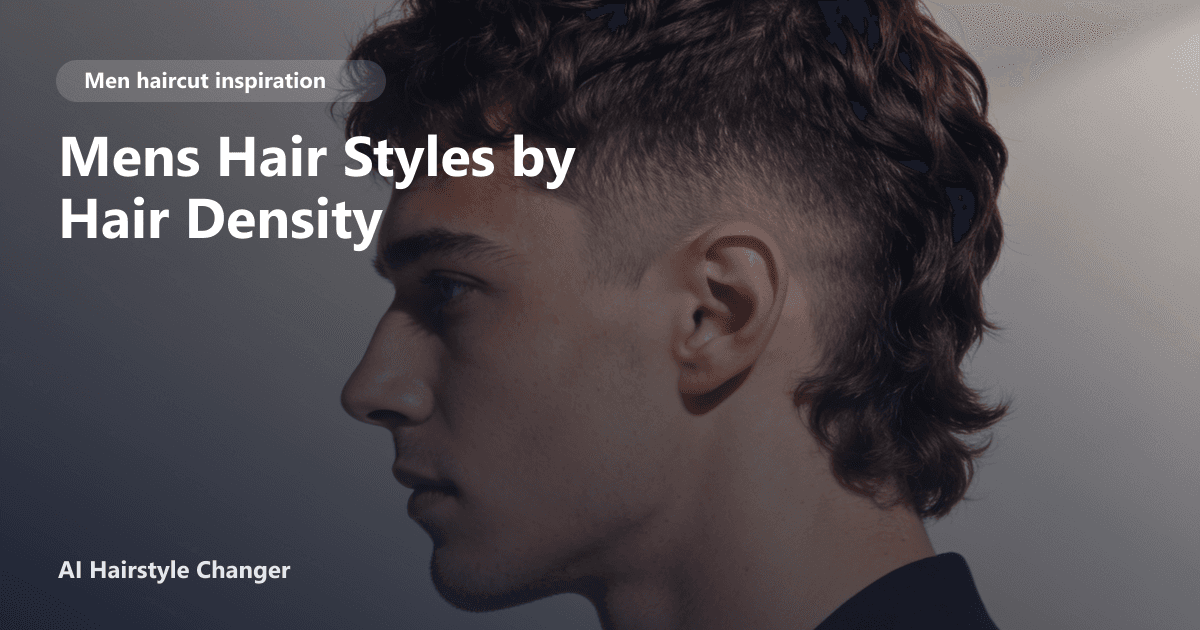
Choosing a new haircut isn't just about following trends - it's about finding a style that works with your hair's natural density. If you've ever left the barber with a cut that looked great on someone else but fell flat (or puffed up) on you, you already know how much hair density matters. The right style can add volume to thin hair, control bulk for thick hair, or make the most of that in-between zone. But how do you know which cuts will actually work for your hair type before you commit? That's where using a virtual try-on tool like AI Hairstyle Changer can save you from regret - and help you walk into your next appointment with confidence.
Understanding Hair Density: Why It Matters for Men's Styles
Hair density refers to the number of hair strands per square inch on your scalp. High-density (thick) hair can look full and voluminous but may be hard to tame. Low-density (thin) hair can appear flat or sparse, making volume and texture crucial. Medium-density hair sits in the middle, offering the most flexibility.
Knowing your density helps you choose cuts that flatter your natural look and require less daily styling. Before you sit in the barber's chair, take a close look at your scalp or consult your stylist. Or, upload a selfie to AI Hairstyle Changer to preview how different densities affect the same cut.
Classic and Modern Cuts for Thick Hair
Thick hair offers plenty of styling options but can easily become bulky or unmanageable. The key is to remove enough weight while keeping the style sharp.
- Textured Crop: Ask for heavy texturing on top with faded or undercut sides. This cut removes bulk and gives a modern, easy-to-style finish. Styling with matte clay helps keep volume controlled. Avoid blunt, uniform lengths, which can create a helmet effect.
- Disconnected Undercut: With thick hair, a disconnected undercut keeps the sides tight while letting the top stay long and full. Ask your barber for a clear transition between top and sides. This style works well if you like dramatic contrast and want to show off hair volume.
- Layered Quiff: Layers are your friend. Request a quiff with plenty of internal layers to lighten the top. Blow-dry with a round brush for height, then finish with a light hold product. Avoid heavy pomades - they can make thick hair look greasy and weighed down.
- Short Tapered Sides: For a more conservative look, try a classic taper with short sides and slightly longer top. This keeps the silhouette clean and manageable. Ask for scissor-over-comb on the sides to avoid harsh lines.
If you're not sure how much bulk to remove, use AI Hairstyle Changer to preview different taper and layering options before you commit.
Best Haircuts for Thin or Fine Hair
Thin hair needs styles that create the illusion of thickness and movement. The right cut can make a big difference in perceived volume.
- Textured Fringe: Adding a fringe (bangs) with choppy layers can make thin hair look fuller. Ask for a textured crop with a forward fringe and avoid heavy, blunt lines. Styling with a volumizing mousse helps lift the roots.
- Short Caesar Cut: This classic cut works well for receding hairlines or thinning crowns. Ask for a short, even length all over with a slight forward fringe. Keep the sides tight to emphasize the top.
- Messy French Crop: A slightly longer French crop with messy, layered texture adds volume and hides scalp visibility. Avoid slicked-back styles, which can expose thin spots.
- Side-Parted Crew Cut: A subtle side part with a crew cut gives structure and makes hair look denser. Ask your barber to blend the sides smoothly and keep the top slightly longer for styling flexibility.
With AI Hairstyle Changer, you can see how these cuts will look with your actual hair density - no guesswork required.
Medium Density: The Most Versatile Zone
Medium-density hair gives you the most freedom to experiment. You can go shorter or longer, textured or neat, without worrying about excess bulk or lack of volume.
- Classic Pompadour: Medium-density hair holds a pompadour shape well. Ask for a gradual fade on the sides and enough length on top to sweep back. Use a light pomade for shine and hold.
- Modern Side Part: This timeless style suits most face shapes. Request a hard or soft part, with the top scissor-cut for natural movement. Styling cream keeps it looking sharp without stiffness.
- Loose Waves: If your hair has a bit of natural wave, let it show. Ask for medium length on top with layered sides. Use sea salt spray to enhance texture and air-dry for a relaxed look.
- Short Textured Cut: For easy upkeep, go for a short, choppy cut with blended sides. This style can be dressed up or down and requires minimal styling.
Not sure which direction to take? Preview pompadours, side parts, or textured crops with AI Hairstyle Changer to find your best match.
How to Talk to Your Barber: Key Details to Share
When you've narrowed down your options, it's time to have a detailed conversation at the salon. Here's what to cover:
- Length: Be specific - "two inches on top, faded to a half-inch on the sides," for example.
- Layering: Ask for internal layers to manage bulk (for thick hair) or point-cutting for texture (for thin hair).
- Fringe: Decide if you want a fringe, how long, and how you want it to fall (forward, side-swept, or up).
- Volume Placement: Let your barber know where you want fullness - on top, at the crown, or evenly distributed.
- Maintenance: Be honest about your styling habits. Some cuts need daily blow-drying, while others air-dry well.
- What to Avoid: Mention past cuts that didn't work and why - too poofy, too flat, too high-maintenance, etc.
Bringing a shortlist of reference photos (or your AI Hairstyle Changer try-on images) makes this conversation easier and more productive.
When Styles Fail: What to Watch Out For
Even the best haircut can fall short if it doesn't suit your density. Common pitfalls include:
- For Thick Hair: Avoid blunt, one-length styles that create a blocky silhouette. Watch for styles that require constant thinning - these can grow out unevenly and look messy.
- For Thin Hair: Steer clear of long, flat styles that accentuate scalp visibility. Heavy products can weigh hair down and make it look limp.
- For Medium Hair: Beware of over-layering, which can make hair look wispy or uneven as it grows out.
Previewing styles with AI Hairstyle Changer helps you spot these issues before you commit. You'll see how different lengths, layers, and finishes look on your actual hair density - no surprises after the cut.
Styling and Upkeep: Make Your Cut Last
A great haircut is only the start. The right styling routine keeps your look sharp between appointments.
- Thick Hair: Use matte clays or lightweight creams to control volume. Blow-dry on medium heat and avoid heavy oils.
- Thin Hair: Volumizing sprays and light mousses add lift. Blow-dry with your head upside down for extra body.
- Medium Hair: Most products work, but avoid over-applying. Rotate between creams and sprays for different looks.
- General Tips: Regular trims every 4-6 weeks prevent awkward grow-out phases. Use a wide-tooth comb for less breakage, and avoid over-washing, which can strip natural oils.
Want more tailored advice? See the Mens Hair Styles Guide: Best Hairstyles by Hair Type and Length for a deeper dive into matching styles to your hair's unique qualities.
Exploring Styles for Curly and Wavy Hair
Curly and wavy hair brings its own set of density challenges. Thick curls can become unruly, while thin curls may lack definition.
- For Thick Curly Hair: Ask for layered cuts that remove weight while keeping curls intact. Avoid razor cuts, which can create frizz.
- For Thin Curly Hair: Opt for shorter, tighter cuts that encourage curl formation. Use curl creams for definition.
Check out Hairstyles for Curly Hair Men: Best Cuts by Length and Short Mens Hairstyles for Curly Hair for more inspiration tailored to curl patterns and density.
FAQ
How do I determine my hair density at home?
Part your hair in several places and look at how much scalp shows. If you see a lot of scalp, your hair is likely thin; if you see very little, it's thick. Medium density falls in between. Your stylist can also help you assess this during a consultation.
Can I use the same haircut for different hair densities?
Some styles are versatile, but the results will look different depending on your density. For example, a textured crop may look full and voluminous on thick hair but softer and more subtle on thin hair. Using a tool like AI Hairstyle Changer lets you preview these differences and adjust your expectations.
What's the best way to show my barber what I want?
Bring clear reference photos that match your hair density and texture. AI Hairstyle Changer lets you generate personalized try-on images, which are more accurate than celebrity photos or generic style books.
How often should I get a trim to keep my style looking fresh?
Most men benefit from a trim every 4-6 weeks, but this can vary based on your cut and how fast your hair grows. Short, structured styles may need more frequent upkeep, while longer, layered looks can go a bit longer between appointments.
Takeaway: Try Before You Cut
Your hair density shapes which styles will truly work for you. By understanding your density and previewing cuts with AI Hairstyle Changer, you can avoid disappointment and walk into your next appointment with confidence. Ready to find your best look? Head to Haircut AI and Haircut Finder: Find a Style That Fits You and start exploring.