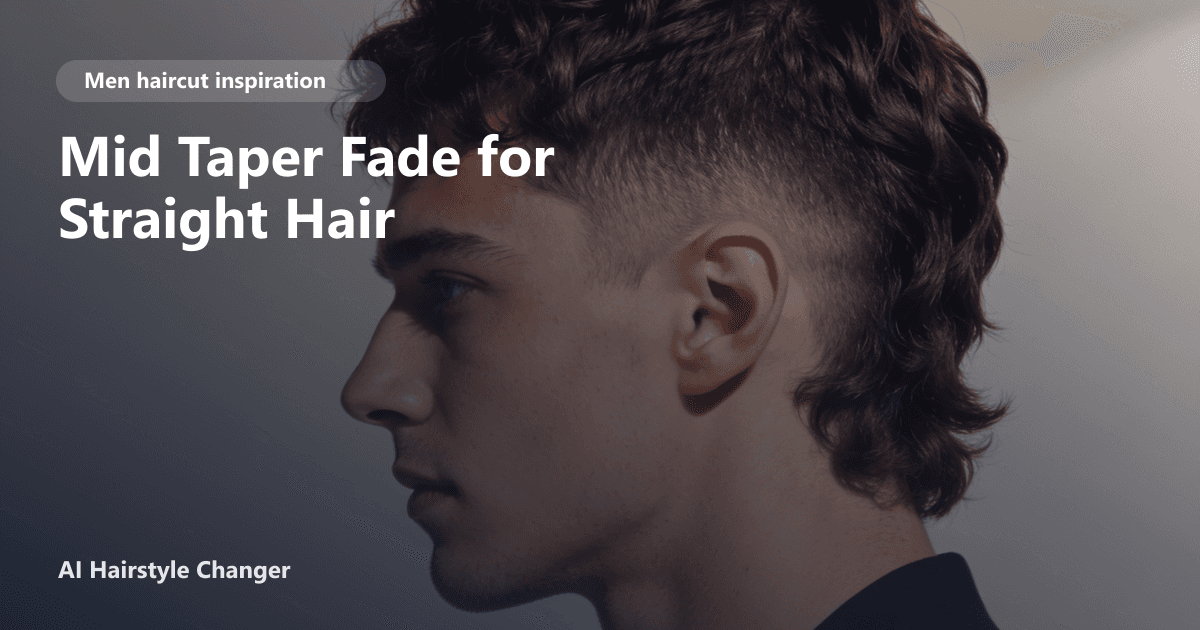
If you're staring at the mirror, debating a major change for your straight hair, the mid taper fade is likely on your radar. Maybe you've seen it in the wild - clean, modern, and versatile. But what if it doesn't fit your face shape, hair texture, or daily routine? The risk of haircut regret is real, especially when you can't easily undo a fade. That's where AI Hairstyle Changer comes in, letting you preview a mid taper fade on your own photo before you ever sit in the chair.
Why the Mid Taper Fade Works for Straight Hair
The mid taper fade is a favorite among men with straight hair because it strikes a balance: not as dramatic as a skin fade, but sharper than a classic taper. The fade starts around the temples and arches just above the ears, gradually blending into longer hair on top. For straight hair, this means crisp lines, visible contrast, and a style that looks intentional - even as it grows out.
Who Should Consider It?
- Men with medium to dense straight hair seeking a low-maintenance but polished style.
- Anyone wanting a haircut that grows out gracefully and doesn't require weekly touch-ups.
- Those looking to add structure to round or oval faces, as the fade elongates and sharpens facial features.
When It Might Not Be Ideal
- If your hair is extremely fine or thinning, the fade can expose more scalp than you'd like.
- Those with cowlicks at the temples may struggle to keep the fade looking even.
- If you want a style with lots of movement or volume at the sides, a mid taper fade may feel too tight.
Key Mid Taper Fade Variations for Straight Hair
The mid taper fade isn't one-size-fits-all. Here are four ways to personalize the look:
1. Classic Mid Taper Fade
This is the clean, barbershop-fresh version: sides and back faded from about a #2 guard at the bottom up to a #4 or #5 at the parietal ridge, with the top left 2 - 4 inches long. The transition is smooth, not harsh, and the outline around the ears is sharp. Ask your barber for a natural neckline and minimal bulk removal on top for easy styling.
2. Mid Taper Fade with Textured Crop
Pairing a mid taper fade with a textured crop on top brings in a European streetwear edge. The top is cut to 1.5 - 3 inches, heavily point-cut or razored for choppiness. Straight hair benefits from this because it adds movement and avoids the flat, helmet look. Style with matte clay for separation. Ideal for square faces or those wanting a modern, youthful vibe.
3. Mid Taper Fade with Side Part
For a more classic, office-friendly approach, keep the top longer (3 - 5 inches) and add a defined side part. The fade keeps the sides crisp, while the part adds a touch of formality. Use a lightweight pomade to keep the hair in place without weighing it down. This variation works well for men with straight, manageable hair who want versatility - slick it back for work, mess it up for the weekend.
4. Mid Taper Fade with Fringe
Adding a forward fringe to a mid taper fade creates a softer, trendier look. The top is left 2 - 3 inches, with the front slightly longer and cut to fall over the forehead. This style can help balance a high forehead or add interest to a longer face. Straight hair will naturally lay flat, so ask your barber for subtle layering to prevent the fringe from looking too heavy or blunt.
What to Tell Your Barber for a Mid Taper Fade
Walking into a salon with a clear vision makes all the difference. Here's what to specify:
- Taper starting point: Ask for the fade to begin at the midpoint between your temple and ear.
- Guard numbers: Typical fades use a #2 or #3 at the base, blending up to a #4 or #5.
- Top length: Decide if you want to keep it short and textured or longer for styling flexibility.
- Blending: Request a gradual, seamless blend - no harsh lines unless you want a disconnected undercut effect.
- Neckline: A natural or slightly rounded neckline grows out best and looks less severe.
- Sideburns: Tapered or faded into the skin for a modern finish.
Bringing in reference photos - either from AI Hairstyle Changer or curated online galleries - helps eliminate confusion. If you're torn between a mid and low fade, check out Low Taper Fade for Straight Hair: Best Variations and Styling for a side-by-side comparison.
Styling and Maintenance Tips
A mid taper fade for straight hair is low-fuss, but a little effort goes a long way:
- Daily styling: Use a light matte paste or styling powder to add volume and separation, especially for textured crops or fringes.
- Washing: Straight hair can get oily at the roots; wash every 1 - 2 days and avoid heavy conditioners on the scalp.
- Trims: To keep the fade sharp, book touch-ups every 2 - 3 weeks. If you like a softer grow-out, you can stretch it to 4 weeks.
- Avoid: Overusing gel or heavy pomades, which can weigh down straight hair and make the fade look greasy.
When to Try a Buzz, Undercut, or Mullet Instead
While the mid taper fade is versatile, it's not the only option for straight hair:
- Buzz Cut: If you want ultra-low maintenance, a buzz cut is hard to beat. It's especially good for those with even hair density and strong bone structure. See the Buzz Cut Guide: Lengths, Face Shapes, and Variations for tips on finding your ideal length.
- Undercut: For more contrast and a bolder look, try a disconnected undercut. This works well if you want to keep length on top but like clean, shaved sides. Straight hair makes the transition especially sharp.
- Mullet: If you're feeling adventurous, a modern mullet with a mid taper fade at the sides blends retro and contemporary. The top and back are left longer, with the fade keeping the sides tidy. This cut is trending for men who want to stand out.
If you're not sure which direction to go, AI Hairstyle Changer lets you preview all these styles on your face - no risky salon experiments required.
Comparing Fade Heights: Mid vs. Low vs. High
Understanding the difference between fade heights can help you communicate with your barber and avoid surprises. Here's a quick comparison:
| Fade Height | Where It Starts | Best For | Maintenance |
|---|---|---|---|
| Low | Just above ears | Subtle, conservative, easy grow-out | 3-4 weeks |
| Mid | At temples | Balanced, modern, versatile | 2-3 weeks |
| High | Above temples | Edgy, high-contrast, bold | 1-2 weeks |
If you're considering a low fade, especially for different hair textures, check out Low Taper Fade for Curly Hair: What to Ask Your Barber for more tailored advice.
Face Shape and the Mid Taper Fade
The mid taper fade is forgiving, but it shines on certain face shapes:
- Oval: Almost any variation works; experiment with top length and fringe.
- Round: Go for more volume on top and tighter sides to elongate the face.
- Square: A textured crop or fringe softens strong jawlines.
- Long/Oblong: Avoid too much height on top; a forward fringe balances proportions.
For a broader overview of what suits your features, see the Mens Hair Styles Guide: Best Hairstyles by Hair Type and Length.
Previewing Your Fade with AI Hairstyle Changer
Choosing a new cut is easier when you can see it on yourself first. With AI Hairstyle Changer, you can:
- Upload a selfie and try on mid taper fade variations in seconds.
- Adjust fade height, top length, and styling direction to match your preferences.
- Save and compare different looks side by side, making it easy to show your barber exactly what you want.
- Build a shortlist of reference images for your next appointment, reducing the chance of miscommunication.
This virtual try-on experience is especially useful if you're debating between a fade, buzz, undercut, or mullet - test them all before you commit.
FAQ
How often should I get a mid taper fade touched up?
Every 2 - 3 weeks keeps the fade looking sharp. If you prefer a more relaxed look, you can stretch it to 4 weeks, but the lines will soften as it grows out.
Can a mid taper fade work for thin or fine straight hair?
It can, but be cautious: fades expose more scalp, so ask your barber to keep the fade higher and leave more weight at the sides if you're concerned about coverage.
What's the difference between a mid taper fade and a low taper fade?
A mid taper fade starts higher - at the temples - while a low taper begins just above the ears. The mid taper offers more contrast and a sharper look. For more details, see Low Taper Fade for Straight Hair: Best Variations and Styling.
Can I style a mid taper fade into a quiff or pompadour?
Absolutely. Keeping the top longer (3 - 5 inches) allows for volume and styling flexibility. Use a volumizing product and a blow dryer for best results.
Takeaway: Make Your Next Fade a Confident Choice
The mid taper fade for straight hair offers a fresh, adaptable look that works for most face shapes and lifestyles. Whether you prefer a classic finish, a textured crop, or a bold fringe, previewing your options with AI Hairstyle Changer ensures you walk into your next appointment with clarity and confidence. Ready to find a style that truly fits you? Explore more at Haircut AI and Haircut Finder: Find a Style That Fits You.