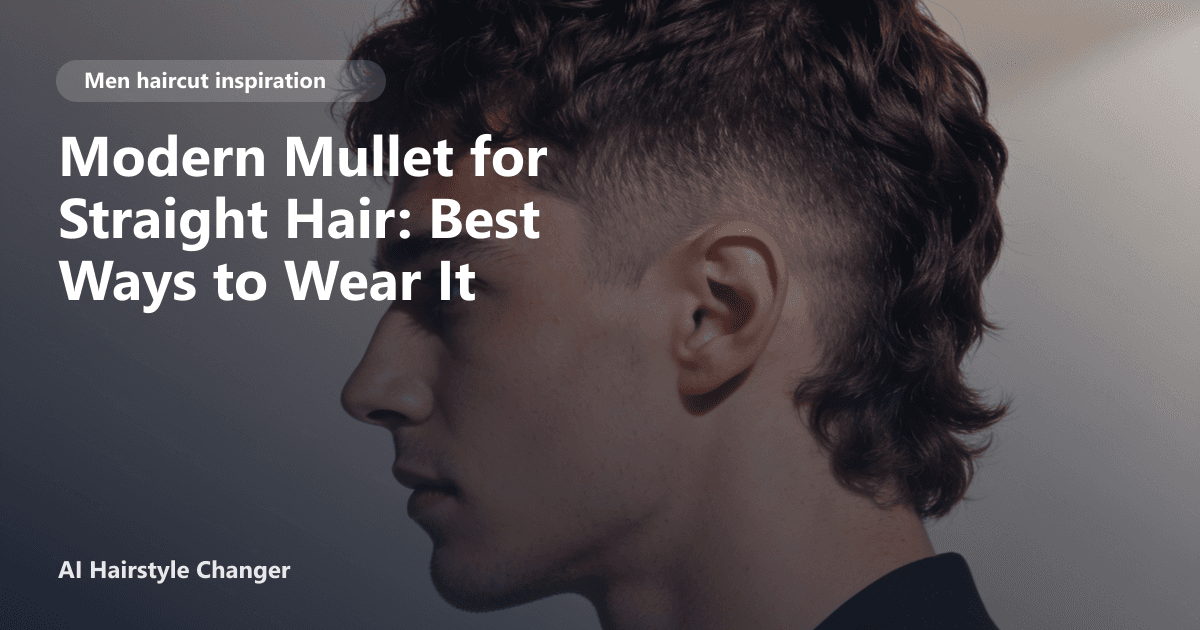
If you're planning a haircut and debating whether a mullet could actually work for your straight hair, you're not alone. The modern mullet has made a comeback, but pulling it off requires more than just asking for "short in the front, long in the back." Straight hair opens up a range of mullet possibilities - from subtle to bold - each with its own vibe, maintenance needs, and styling tricks. The real challenge: picturing how each variation will look on you before you commit.
That's where a virtual try-on tool like AI Hairstyle Changer can save you from haircut regret. Here's a deep dive into the best modern mullet styles for straight hair, how to talk about them with your barber, and what to expect from each option.
Why the Modern Mullet Works for Straight Hair
Straight hair makes every transition, layer, and fade in a mullet visible. This can be a blessing or a curse: the right cut looks sharp and intentional, but a bad one looks flat or unfinished. Modern mullets for straight hair use fades, undercuts, and texture to add shape and movement, making the look tailored rather than retro.
If you want a style that stands out, but still fits in at work or school, the modern mullet is versatile enough to adapt. The key is choosing a variation that matches your face shape, lifestyle, and how much daily styling you're willing to do.
Classic Tapered Mullet: The Low-Key Option
For men who want a mullet that's wearable in most settings, the classic tapered mullet is a strong starting point. Here's what sets it apart:
- Sides: Gradually tapered from the temple down, avoiding harsh lines. Ask your barber for a low taper fade that keeps the sides neat but not skin-tight.
- Back: Kept longer, but not dramatically so - think collar-length, with soft layering.
- Front: Fringe can be blunt or side-swept, depending on your preference.
This version works especially well for straight hair because it keeps the silhouette clean. Maintenance involves regular trims every 4 - 6 weeks to keep the taper sharp and the back tidy. Styling is minimal: a bit of matte paste for texture, and you're done.
If you want to see how a low taper would pair with your natural texture, check out Low Taper Fade for Straight Hair: Best Variations and Styling.
Fade Mullet: Clean Edges, Bold Contrast
The fade mullet is a modern update that uses a skin or drop fade on the sides to create a crisp contrast with the longer back. This style is ideal for straight hair, since the fade makes every transition sharp and intentional.
- Sides: Ask for a mid or high skin fade, blending smoothly into the longer top and back.
- Back: Can range from subtle to dramatic in length. The longer the back, the bolder the statement.
- Top: Keep it slightly longer for volume, or go shorter for a sleeker look.
A fade mullet suits oval, square, or oblong faces best. It requires more frequent trips to the barber (every 2 - 3 weeks) to keep the fade crisp. Styling is straightforward: blow-dry for volume, finish with a light wax or texture spray.
Want to compare fade options for different hair types? Low Taper Fade for Curly Hair: What to Ask Your Barber has practical tips if your hair has a bit of wave.
Undercut Mullet: Edgy and Low Maintenance
If you want a mullet with a strong edge and minimal daily styling, the undercut mullet is a top contender. It's defined by a clear disconnect between the long back and the buzzed or clipped sides.
- Sides: Shaved or clipped short (usually #1 or #2 guard), with a sharp line separating from the top.
- Back: Left long and often heavily textured, sometimes with razored ends for movement.
- Top/Fringe: Can be blunt, curtain, or cropped - choose based on your face shape.
This version works well for guys with straight, dense hair who want to avoid bulk. The undercut means less volume on the sides and less time spent styling. However, it's not the best choice for thin or fine hair, as it can accentuate scalp exposure.
To see how an undercut would look with your features, upload a selfie to AI Hairstyle Changer and experiment with different disconnects and back lengths before your next appointment.
Textured Modern Mullet: Movement for Straight Hair
Straight hair can sometimes make a mullet look flat. The solution? Texture. Modern mullets often use point-cutting, razoring, or layering to add life and movement to straight strands.
- Sides: Can be faded, tapered, or undercut - choose based on how bold you want the look.
- Back: Layered and sometimes feathered, with ends left choppy rather than blunt.
- Top/Fringe: Shaggy or tousled fringe adds softness.
Ask your barber for "lots of texture through the back and top, with choppy layers." Styling involves a texturizing spray or sea salt spray, and a quick blow-dry with your fingers. This version suits most face shapes, especially if you want something less severe than a classic mullet.
For more ideas on how to match cut and texture to your hair type, see the Mens Hair Styles Guide: Best Hairstyles by Hair Type and Length.
Buzzed Mullet: Minimalist and Bold
For men who want a low-maintenance, high-impact look, the buzzed mullet is gaining traction. It combines the simplicity of a buzz cut with the attitude of a mullet.
- Sides/Top: Clipped short all over (usually #2 - #4 guard), but leave the back longer - often an inch or two more than the top.
- Back: Kept longer and sometimes textured for contrast.
This style is best for those with strong bone structure and straight, thick hair. It's extremely easy to maintain - just buzz the top and sides every few weeks, and trim the back as needed. However, it's not ideal for men with cowlicks or irregular hair growth patterns, as these can become more visible.
Curious if a buzzed mullet would suit your face shape? The Buzz Cut Guide: Lengths, Face Shapes, and Variations breaks down what works and what to avoid.
How to Talk to Your Barber About a Modern Mullet
Walking into a salon with only a vague idea of a mullet can lead to disappointment. Here's how to make sure you leave with the look you want:
- Bring Reference Photos: Use AI Hairstyle Changer to shortlist photos of mullets you've tried virtually. Show your barber exactly what you want.
- Specify Lengths: Be clear about how long you want the back, top, and sides. For example, "I want the back to hit just above my collar, sides faded to a #1, and the top left about two inches."
- Discuss Texture: If you want movement, ask for point-cutting or razored layers, not blunt cuts.
- Fringe Direction: Decide if you want a blunt, curtain, or side-swept fringe. This changes the overall vibe.
- Maintenance: Ask how often you'll need trims to keep the shape sharp.
A clear conversation saves you from misunderstandings - especially with a style as customizable as the modern mullet.
When a Modern Mullet Doesn't Work
Not every hair type or lifestyle suits a mullet, even if you have straight hair. Here's when to reconsider:
- Extremely Fine or Thin Hair: Mullets can accentuate thinness at the crown or back.
- Strict Work Dress Codes: Some workplaces still frown on dramatic haircuts.
- Low Commitment to Upkeep: Faded and undercut mullets need frequent trims; textured versions need styling.
If you're unsure, try on several mullet variations with AI Hairstyle Changer to see which (if any) fit your features and comfort zone.
Styling and Maintenance: Keeping Your Mullet Sharp
A modern mullet for straight hair can be as low- or high-maintenance as you want, depending on the version you choose. Here are tips for keeping yours looking intentional:
- Regular Trims: Fade and undercut mullets need touch-ups every 2 - 3 weeks; classic and textured versions can stretch to 4 - 6 weeks.
- Products: Use matte paste or texture spray for volume and definition. Avoid heavy gels that make straight hair look greasy.
- Blow-Drying: A quick blow-dry with your fingers or a vent brush adds lift and prevents flatness.
- Avoid Over-Washing: Too much shampooing can make straight hair limp. Stick to 2 - 3 times per week, and use dry shampoo if needed.
FAQ
How do I know which mullet suits my face shape?
Oval and square faces can wear most mullet variations. If your face is round, opt for more volume on top and a longer back. Oblong faces benefit from a fringe or curtain bangs to balance proportions. For a full breakdown, see the Mens Hair Styles Guide: Best Hairstyles by Hair Type and Length.
Can I combine a mullet with a fade or undercut?
Absolutely. Modern mullets often feature faded or undercut sides for contrast. Decide how dramatic you want the transition - subtle tapers for a classic look, or sharp fades/undercuts for an edgier style. Use AI Hairstyle Changer to preview different combinations before your appointment.
What should I tell my barber to avoid a dated mullet look?
Ask for blended layers, texture through the back, and a clean transition between sections. Avoid harsh bowl cuts or overly long, blunt backs. Bringing reference photos (especially ones you've tried virtually) helps clarify your vision.
Is a mullet hard to maintain with straight hair?
It depends on the variation. Faded and undercut mullets need frequent trims, while classic and textured versions are lower maintenance. Straight hair makes every detail visible, so regular styling and product use keeps the look sharp.
Takeaway: Preview Before You Cut
Choosing a modern mullet for straight hair is about finding the right balance between boldness and wearability. With so many variations - tapered, faded, undercut, textured, or buzzed - it pays to see how each one works with your features before you commit. AI Hairstyle Changer lets you try on styles virtually, shortlist your favorites, and walk into your next appointment with confidence. Ready to find your perfect cut? Visit Haircut AI and Haircut Finder: Find a Style That Fits You and start exploring.