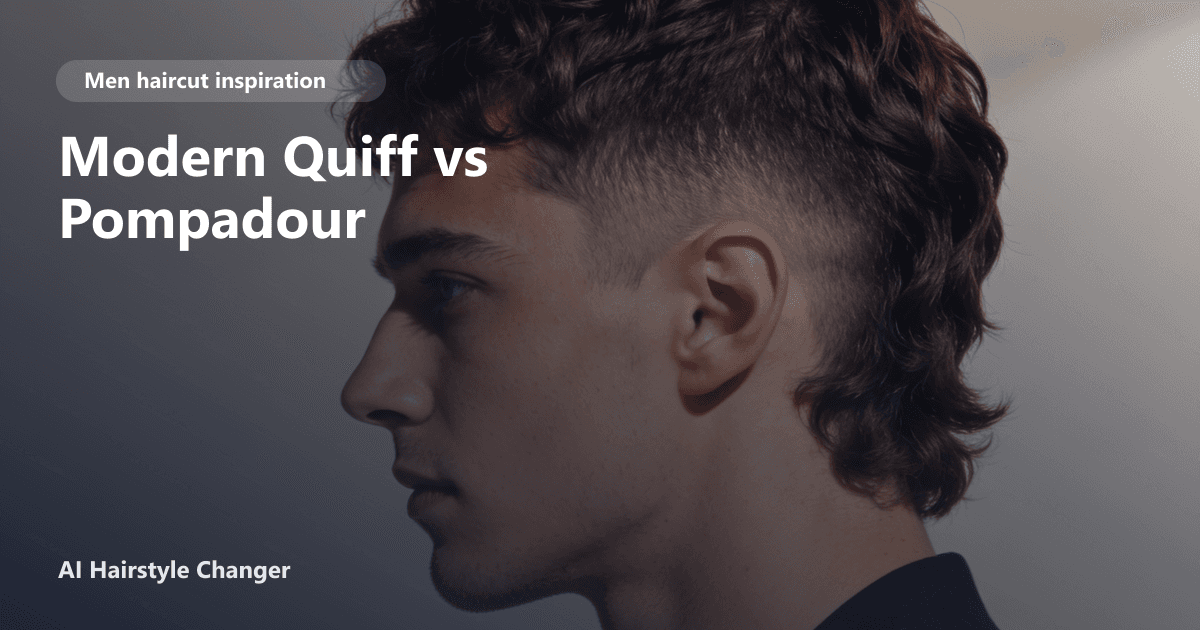
If you're staring at the mirror before your next haircut, stuck between a modern quiff and a pompadour, you're not alone. Both styles are icons in men's grooming, but choosing the right one can mean the difference between a fresh, confident look and a cut you regret for weeks. With the rise of AI hairstyle try-on tools, you don't have to gamble - now you can preview both styles on your own face before you commit.
Understanding the Modern Quiff and Pompadour
The modern quiff and pompadour often get confused, but they're distinct in shape, attitude, and upkeep. Both draw from classic roots, yet each has evolved with today's fades, undercuts, and textured finishes. Here's what sets them apart:
- Modern Quiff: Defined by volume at the front, brushed upward and back, often with textured layers. The sides are usually faded or tapered, blending into the longer top.
- Pompadour: Features a dramatic sweep of hair up and back from the forehead, with the most volume concentrated at the front. Sides are typically shorter, either faded or undercut, but the top is slicker and more structured than the quiff.
Who Suits a Modern Quiff?
The modern quiff is a versatile choice, working well for men with straight to wavy hair and medium to thick density. It's especially flattering for oval, square, and heart-shaped faces. The quiff can add height, balance a strong jawline, or soften a wider forehead.
Ideal candidates:
- Want a style with movement and texture
- Prefer a haircut that looks good with casual or formal outfits
- Have time for daily styling but don't want to fuss with heavy products
Salon tips:
- Ask for 3 - 5 inches on top with textured layering
- Request a low or mid fade on the sides for a modern finish
- Discuss fringe direction - forward for a messier look, or back for a classic lift
- Avoid making the top too heavy if your hair is fine; this can weigh down the quiff
For more inspiration on fades, check out Low Taper Fade for Straight Hair: Best Variations and Styling.
When the Pompadour Wins
The pompadour is all about statement volume and retro appeal. It works best for men with straight or slightly wavy hair that holds shape. The pompadour flatters longer faces, adding width and drama, but can also sharpen softer features.
Best for those who:
- Love a polished, high-impact style
- Don't mind using a blow dryer and strong-hold product
- Want a look that stands out at events or in professional settings
Salon tips:
- Leave 4 - 6 inches on top for a true pompadour
- Opt for a skin fade or undercut for contrast
- Ask your barber to blend the crown for a seamless transition
- Avoid this style if your hair is very fine or thinning; volume is key
For more on undercut and fade combinations, see Mens Hair Styles Guide: Best Hairstyles by Hair Type and Length.
Key Differences: Quiff vs Pompadour
While both styles build height at the front, the quiff is looser and more textured, while the pompadour is sleek and sculpted. Here's a quick comparison:
| Feature | Modern Quiff | Pompadour |
|---|---|---|
| Volume | Moderate, textured | High, structured |
| Sides | Faded or tapered | Faded or undercut |
| Styling | Finger-combed, matte | Blow-dried, glossy |
| Upkeep | Medium | High |
| Face Shapes | Oval, square, heart | Oval, long, round |
| Attitude | Relaxed, modern | Bold, classic |
Fade, Buzz, Undercut, or Mullet: How They Pair
Both quiff and pompadour can be customized with modern sides:
- Fade: A low, mid, or high fade gives either style a fresh edge. Fades work especially well with quiffs for a balanced, contemporary look.
- Undercut: Disconnect the sides for a sharp contrast - great with a pompadour if you want maximum drama.
- Buzzed Sides: For ultra-low maintenance, ask for a buzzed fade. This is ideal for men who want to keep the focus on the top without daily side styling. Learn more in the Buzz Cut Guide: Lengths, Face Shapes, and Variations.
- Mullet Variations: While not traditional, some modern quiffs and pompadours are paired with a subtle mullet - longer at the back for a rebellious twist.
Styling and Maintenance: What to Expect
- Modern Quiff: Requires a light blow-dry and matte paste or clay. Work product through damp hair, then lift the front with your fingers or a vented brush. Maintenance is moderate - expect to trim every 3 - 4 weeks to keep the fade sharp.
- Pompadour: Needs a blow dryer, round brush, and strong-hold pomade. Start with damp hair, direct the front up and back, then finish with product for shine and hold. This style demands more time each morning and frequent trims to maintain the shape.
Upkeep tips:
- Invest in a good hair dryer and styling tools
- Use sea salt spray for added texture in quiffs
- Don't overload on heavy waxes, especially for fine hair
- Schedule regular appointments to keep sides and back neat
When Each Style Fails
No cut is perfect for everyone. Here's when to reconsider:
- Quiff: Not ideal for very curly or coily hair without significant straightening. If your hair is thin or receding, the quiff may look flat or uneven.
- Pompadour: Avoid if your hair resists volume or is prone to frizz. The style can look dated if the sides aren't kept tight, or if the top collapses during the day.
For men with curls, see Hairstyles for Curly Hair Men: Best Cuts by Length or Low Taper Fade for Curly Hair: What to Ask Your Barber.
Using AI Hairstyle Changer to Preview Your Cut
Deciding between a quiff and a pompadour is easier when you can actually see both on your face. AI Hairstyle Changer lets you upload a selfie and try on dozens of variations - adjusting length, fade height, and even experimenting with mullet or undercut options. This is especially useful if you're unsure how much volume suits your features, or if you want to bring clear references to your barber.
- Test different fade levels and top lengths before you commit
- Save your favorite looks as references for your next appointment
- Reduce the risk of haircut regret by previewing both styles from multiple angles
FAQ
How do I know if my hair is thick enough for a pompadour?
If your hair stands up easily after blow-drying and feels dense at the roots, you likely have enough thickness for a pompadour. Fine or thinning hair may struggle to hold the shape, even with strong product.
Can I combine a quiff or pompadour with a skin fade?
Absolutely. Both styles look sharp with a skin fade, adding a modern twist. Just be sure to ask your barber for a gradual blend so the transition isn't too harsh.
What's the easiest way to maintain volume in a quiff or pompadour?
Use a volumizing mousse or sea salt spray before blow-drying. For a quiff, finish with a matte clay; for a pompadour, use a strong-hold pomade for structure and shine.
Are these styles suitable for curly hair?
Both styles are challenging for curly hair without straightening. If you have loose curls, a textured quiff may work, but pompadours are best for straight or slightly wavy hair. See our Hairstyles for Curly Hair Men guide for alternatives.
Takeaway: Preview, Decide, and Book with Confidence
Choosing between a modern quiff and a pompadour doesn't have to be a guessing game. With AI Hairstyle Changer, you can see both styles on your own face, compare fade and undercut options, and walk into your next appointment with total confidence. Ready to find your signature look? Head to Haircut AI and Haircut Finder: Find a Style That Fits You and start experimenting today.