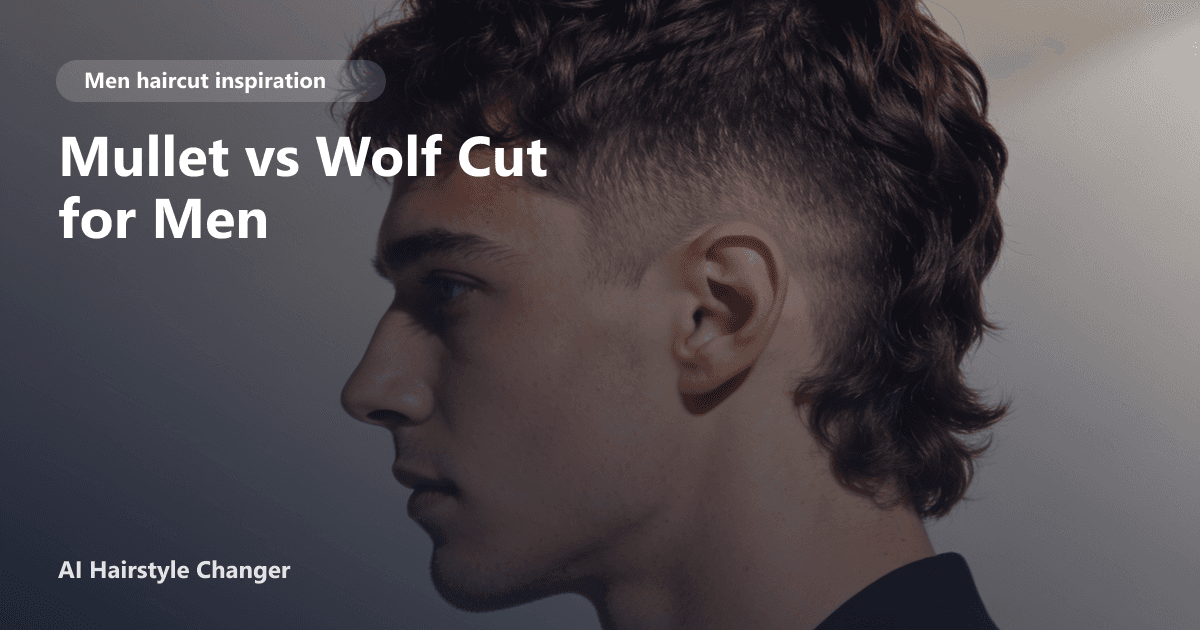
Deciding between a mullet and a wolf cut for your next haircut isn't just about chasing trends - it's about finding a style that fits your hair type, face shape, and maintenance comfort zone. Both haircuts offer bold statements, but they deliver very different vibes and upkeep. If you're weighing these two styles before your next barber visit, understanding their differences and seeing how each looks on you can make all the difference.
Mullet vs Wolf Cut: What's the Real Difference?
The mullet and the wolf cut both feature dramatic contrasts in length, but their silhouettes and styling couldn't be more different. The mullet is defined by short hair at the front and sides with a pronounced length at the back, often paired with fades or undercuts for a modern twist. The wolf cut, on the other hand, is all about layers and volume, blending shaggy, textured lengths from crown to nape with a messier, more lived-in finish.
- Mullet: Short front and sides, long back, sharp contrast.
- Wolf Cut: Layered all over, volume on top, softer transition to longer ends.
Both styles can be tailored to your face shape and hair type, but knowing which direction to take - and previewing the result with an AI hairstyle changer - can help you avoid haircut regret.
Who Should Try a Mullet?
The mullet is a statement cut that works especially well for men who want to stand out. It's ideal for straight or wavy hair, and can be adapted for curls with the right layering. If you have an oval or square face, the mullet's shape can add length and definition. Round faces benefit from a mullet with more volume at the crown and less bulk at the sides.
What to ask your barber:
- Short, tapered sides (consider a low fade or undercut for a modern look)
- Longer length at the back - anywhere from 3 to 8 inches, depending on preference
- Optional fringe or textured bangs for extra attitude
- Blended transition between the top and back
Maintenance:
- Regular trims every 4 - 6 weeks to keep the shape sharp
- Styling product to keep the back looking intentional, not scraggly
- Occasional reshaping if you grow it out
For more inspiration on fades and taper options for mullets, see Low Taper Fade for Straight Hair: Best Variations and Styling.
Who Should Try a Wolf Cut?
The wolf cut is a hybrid of the shag and mullet, characterized by messy, choppy layers and volume at the crown. It's a great choice for men with thick, wavy, or curly hair who want a style that looks effortless and edgy. The wolf cut flatters round and heart-shaped faces by adding height and breaking up width, while also suiting longer faces with softer, face-framing layers.
What to ask your barber:
- Heavily layered cut with shorter pieces at the crown (2 - 4 inches)
- Gradual lengthening toward the back and sides
- Textured ends for a wild, tousled finish
- Optional curtain bangs or a longer fringe
Maintenance:
- Moderate upkeep - layers grow out soft, but shape needs refreshing every 6 - 8 weeks
- Styling with sea salt spray or matte paste for texture
- Air-drying or diffusing works well for natural movement
If you're working with curls, check out Hairstyles for Curly Hair Men: Best Cuts by Length for more wolf cut ideas tailored to your texture.
Key Variations: Modern Mullet and Wolf Cut Directions
Both mullet and wolf cut styles have evolved far beyond their retro roots. Here are four popular directions for each:
Mullet Variations:
- Classic Mullet: Short, neat front; dramatic length at the back; minimal blending.
- Fade Mullet: Incorporates a skin or taper fade at the sides for a modern edge.
- Curly Mullet: Layers enhance natural curls, with volume focused at the back.
- Textured Mullet: Razor-cut ends and choppy layers create a rock-inspired finish.
Wolf Cut Variations:
- Short Wolf Cut: Cropped layers at the crown, shorter overall length, high texture.
- Long Wolf Cut: Extended layers, more length at the back, great for wavy hair.
- Wolf Cut with Bangs: Curtain or blunt bangs add face-framing interest.
- Disconnected Wolf Cut: Strong contrast between short top and longer back, almost mullet-like.
Face Shape, Hair Type, and Lifestyle Considerations
Choosing between a mullet and a wolf cut isn't just about what's trending. Consider these factors:
- Face Shape: Mullets elongate, wolf cuts soften. Oval and square faces handle both well. Round faces benefit from wolf cut volume up top; mullets need careful balance.
- Hair Type: Straighter hair shows off mullet contrast. Wavy and curly textures thrive with wolf cut layering. Fine hair may need extra product for volume.
- Lifestyle: Mullets require more frequent trims to avoid looking unkempt. Wolf cuts are more forgiving as they grow out, but still need shape maintenance.
For a broader view of what suits your features, visit the Mens Hair Styles Guide: Best Hairstyles by Hair Type and Length.
What to Tell Your Barber: Practical Tips
Whether you're leaning mullet or wolf cut, clear communication with your barber is key. Here's how to get the cut you want:
- Bring reference photos: Use AI Hairstyle Changer to create and shortlist your favorite looks.
- Specify length: For mullets, state how much length you want left at the back. For wolf cuts, discuss how short you want the crown layers and how much length to keep overall.
- Talk about blending: Mullets can be sharp or blended; wolf cuts should have seamless, shaggy transitions.
- Fringe direction: Decide if you want bangs, curtain fringe, or a clean forehead.
- Volume placement: Mullets often have flatter tops; wolf cuts emphasize crown volume.
- Maintenance: Ask how often you'll need to come back to keep the style looking intentional.
Previewing your options with AI Hairstyle Changer can help you show your barber exactly what you want, reducing the risk of miscommunication.
Upkeep and Styling: What to Expect
Both mullets and wolf cuts require some commitment, but the daily routine is different.
- Mullet:
- Use a lightweight pomade or cream to keep the back tidy.
- Blow-dry with a round brush for volume, or let it air dry for a relaxed look.
- Schedule trims every 4 - 6 weeks.
- Wolf Cut:
- Embrace texture - sea salt spray, mousse, or matte paste work well.
- Diffuse curls or waves for definition, or scrunch and air dry for a messier finish.
- Trims every 6 - 8 weeks to maintain layers.
For more on buzzed and faded styles that can blend into a mullet or wolf cut, see the Buzz Cut Guide: Lengths, Face Shapes, and Variations.
When Each Style Fails - and How to Avoid Regret
- Mullet Fails:
- Too much contrast between top and back can look dated or unintentional.
- Thin or fine hair may struggle to create the dramatic shape.
- Neglecting trims leads to a mullet that looks grown-out, not styled.
- Wolf Cut Fails:
- Heavy layering on thin hair can make it look stringy.
- Not enough texture in thick hair leaves the cut looking bulky.
- Overgrown wolf cuts lose their shape and edge.
Trying on both styles virtually with AI Hairstyle Changer can help you spot potential pitfalls before you commit. You can see how the shape, length, and texture play with your actual features, and even create a shortlist to discuss with your barber.
FAQ
Is a mullet or wolf cut easier to grow out?
Wolf cuts typically grow out more gracefully, as the layers soften and blend over time. Mullets maintain their dramatic shape as they grow, which may require more frequent reshaping to avoid an awkward phase.
Can you combine a fade with a mullet or wolf cut?
Absolutely. A low or mid fade can modernize either style. For inspiration on how fades work with different hair types, check out Low Taper Fade for Curly Hair: What to Ask Your Barber.
Which style works better for curly hair?
Wolf cuts are especially flattering for curls, as the layers enhance natural texture. Curly mullets can work too, but require careful shaping and regular trims. For more curly hair options, see Hairstyles for Curly Hair Men: Best Cuts by Length.
How can I test which suits me best?
Use AI Hairstyle Changer to upload your photo and try on both styles. This gives you a real sense of how each cut frames your face and works with your hair type, helping you make a confident decision.
Takeaway: Choose with Confidence
The choice between a mullet and a wolf cut comes down to your style, hair type, and how much upkeep you're up for. Both can be bold, flattering, and modern with the right approach. Before you book your appointment, try each look virtually with AI Hairstyle Changer - so you can walk into the salon with confidence and walk out loving your new cut. Ready to explore more options? Head to Haircut AI and Haircut Finder: Find a Style That Fits You.