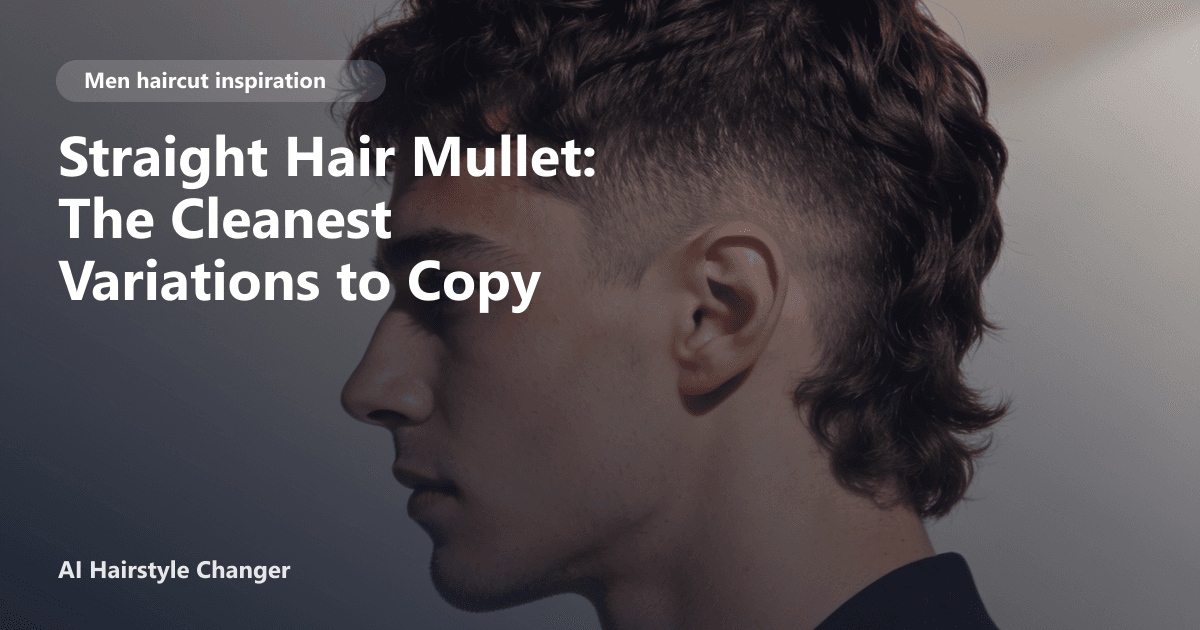
You're ready for a change and the mullet is calling your name - but you want a version that's sharp, modern, and fits your straight hair. Maybe you've seen the classic 80s mullet making a comeback, but you're not sure how to make it work for your texture or face shape. The risk: ending up with a cut that feels dated or doesn't suit your lifestyle. The solution: finding the cleanest straight hair mullet variations, and using AI Hairstyle Changer to preview your options before you book the chair.
Why Straight Hair Mullets Are Back - And How to Get Them Right
The mullet is no longer just a retro statement. Today's straight hair mullets are versatile, blending sharp fades, undercuts, and modern shapes. The key is tailoring the style to your face, hair density, and maintenance goals. Straight hair shows every line and layer, so precision matters. A great mullet can add edge without sacrificing polish, but the wrong version can look awkward or unfinished.
1. The Taper Fade Mullet: Clean and Contemporary
This is the go-to for guys who want a mullet that's office-friendly but still makes a statement. The sides are faded low and tight, while the back is left longer - usually grazing the collar. The top is kept neat, with a subtle transition to the back for a seamless look.
Who it suits: Most face shapes, especially oval and square. Works best if your hair is medium to thick.
What to ask for:
- Low taper fade on the sides and nape
- Back length: 2 - 4 inches, lightly layered
- Top: 2 - 3 inches, styled forward or with a slight quiff
- Keep the blend soft for a modern finish
Maintenance:
- Fade touch-ups every 2 - 3 weeks
- Use a lightweight styling cream for definition
When it fails: If your hair is very fine, the contrast can look too stark. For curly hair, see Low Taper Fade for Curly Hair: What to Ask Your Barber.
2. The Undercut Mullet: High Contrast, Low Fuss
Want maximum impact with minimal styling? The undercut mullet features buzzed or clippered sides and a disconnected transition to the longer back. The top can be slicked back, parted, or worn textured.
Who it suits: Guys with strong jawlines or round faces - this cut elongates your profile. Ideal for medium to thick straight hair.
What to ask for:
- Sides: 0.5 - 1 guard, disconnected from the top
- Back: 3 - 5 inches, blunt or shaggy
- Top: 3 - 4 inches, swept back or to the side
Maintenance:
- Sides need frequent buzzing (every 2 weeks)
- Use matte paste or pomade for control
When it fails: If you prefer subtlety, the harsh contrast may feel too bold. If you want more blending, consider the Low Taper Fade for Straight Hair: Best Variations and Styling.
3. The Modern Shag Mullet: Texture and Flow
If you want movement and a softer edge, the modern shag mullet is a top pick. Layers are the star here - the back is kept long and feathered, while the top and fringe are textured for volume.
Who it suits: Men with straight hair that's medium length or longer. Great for those who want a laid-back, lived-in look.
What to ask for:
- Soft, choppy layers throughout
- Back: 4 - 6 inches, razored for texture
- Fringe: Light and wispy, eyebrow length or longer
- Sideburns: Tapered or left natural
Maintenance:
- Style with sea salt spray or light mousse
- Trim every 6 - 8 weeks to keep shape
When it fails: If your hair is very fine or thin, heavy layering can make it look limp. For more structure, check out the Buzz Cut Guide: Lengths, Face Shapes, and Variations.
4. The Buzz Mullet: Minimalist Edge
For a low-maintenance take, the buzz mullet pairs a cropped top with a slightly longer nape. This is a bold, almost utilitarian look - think of it as a hybrid between a buzz cut and a mullet.
Who it suits: Guys who want minimal styling and upkeep. Best for straight hair with some density.
What to ask for:
- Top: 1 - 2 guard buzz
- Sides: Same as top, or faded to skin
- Back: 2 - 3 inches, blunt or softly tapered
Maintenance:
- Buzz the top and sides every 2 - 3 weeks
- Trim the back as needed
When it fails: If you want styling options or volume, this is too stark. For more length and versatility, see the Mens Hair Styles Guide: Best Hairstyles by Hair Type and Length.
5. The Classic Straight Hair Mullet: Subtle Throwback
If you're after a nod to the original but want to keep it wearable, the classic mullet for straight hair is all about balance. The sides are scissor-cut short, the back is left long but not extreme, and the top is kept natural.
Who it suits: Most hair types and face shapes, especially if you want a style that grows out well.
What to ask for:
- Sides: Scissor over comb, not buzzed
- Back: 3 - 5 inches, lightly layered
- Top: 3 - 4 inches, parted or tousled
Maintenance:
- Trim every 6 - 8 weeks
- Use a light styling cream for movement
When it fails: If you want a dramatic transformation, this may feel too safe. For more edge, try a mullet fade or undercut.
How to Talk to Your Barber About a Straight Hair Mullet
Preparation is everything. Bring clear reference photos - ideally ones you've tried on using AI Hairstyle Changer. Be specific about:
- Desired length at the back, sides, and top
- Whether you want a fade, undercut, or scissor-cut sides
- Layering: blunt, choppy, or feathered
- Fringe: short, long, or swept
- Maintenance expectations
Don't be afraid to ask for adjustments. Straight hair shows mistakes, so clarify how you want the transitions and blending to look. If you're unsure, preview several options with AI Hairstyle Changer and shortlist your favorites.
Maintenance and Styling Tips for Straight Hair Mullets
Straight hair mullets look sharp when they're clean and well-shaped. Here's how to keep yours on point:
- Use a lightweight conditioner to prevent flatness
- Style with a matte paste or cream for definition
- Blow-dry the top for volume, or let air dry for a softer finish
- Schedule regular trims for the back and sides
- Avoid heavy gels - they can make straight hair look greasy or weighed down
If you're experimenting with fades, check out Low Taper Fade for Straight Hair: Best Variations and Styling for more ideas.
Try Before You Cut: The AI Hairstyle Changer Advantage
Choosing a mullet variation is a commitment. AI Hairstyle Changer lets you upload your selfie and preview dozens of straight hair mullet styles - fade, undercut, buzz, or classic. This means you can see exactly how each cut frames your face, matches your hair density, and works with your style. Save your favorites, show them to your barber, and skip the regret.
If you're still weighing your options, explore the Mens Hair Styles Guide: Best Hairstyles by Hair Type and Length for a broader look at what's trending.
FAQ
Can I get a mullet if my hair is thin or fine?
Yes, but choose a variation with minimal layering and avoid harsh fades. The classic or taper fade mullet works best. Heavy layers can make thin hair look limp.
How do I style a straight hair mullet for work?
Keep the top neat and use a light styling cream. Ask your barber for a soft blend on the sides. The taper fade mullet is the most versatile for professional settings.
How often should I trim a mullet?
It depends on your variation. Faded or undercut mullets need trims every 2 - 3 weeks. Shaggy or classic mullets can go 6 - 8 weeks between cuts. Regular trims keep the shape sharp.
What's the difference between a mullet and a wolf cut?
A mullet has a distinct length contrast between the front and back. A wolf cut is more layered and rounded, with less dramatic length difference. Both can work for straight hair, but the mullet is bolder.
Takeaway: Find Your Best Mullet - with more clarity
The straight hair mullet is more versatile than ever, with clean variations for every vibe - from subtle to statement. Don't gamble with your next cut. Preview and shortlist your favorite styles with AI Hairstyle Changer, then bring your top picks to your barber for a confident, regret-free transformation. Ready to explore more options? Head to Haircut AI and Haircut Finder: Find a Style That Fits You and discover your next look.