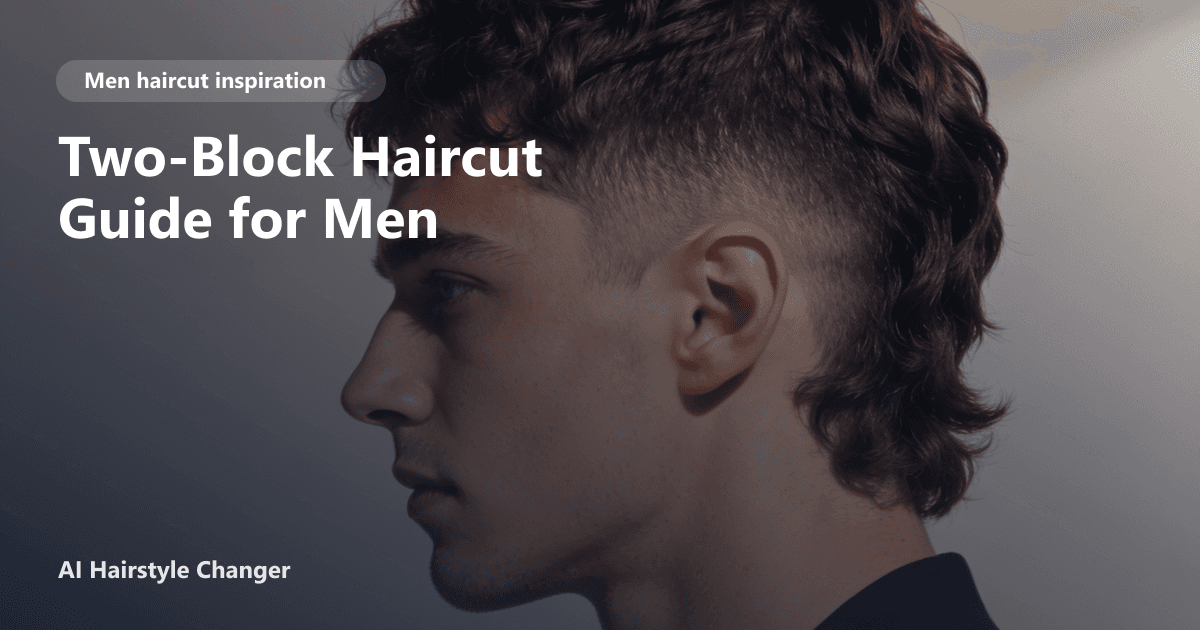
If you're considering a two-block haircut, you're likely weighing how it'll look on you versus classic fades, buzz cuts, undercuts, or even a mullet. Maybe you've scrolled Instagram and seen sharp, disconnected crops, but you're not sure how to describe what you want to your barber - or if it'll suit your hair type or face shape. The two-block is a versatile, statement-making cut, but the details matter: length, layering, fringe, and blending can make or break the look.
What Is a Two-Block Haircut?
The two-block haircut is defined by two distinct sections: the sides and back are cut very short or faded, while the top remains longer and more voluminous. This creates a clear contrast - hence the "two blocks." The style originated in Korea but has gained global popularity for its adaptability. It's a bridge between a classic undercut and a modern fade, offering more styling options than a buzz cut and a cleaner silhouette than a mullet.
Key features of a two-block haircut:
- Sides/back: Clipped short (skin fade, low taper, or undercut)
- Top: Longer, often textured or layered
- Fringe: Optional, can be styled forward, side-swept, or up
- Versatility: Works with straight, wavy, or curly hair
Who Should Get a Two-Block Haircut?
The two-block works best for men who want a sharp, defined look that's easy to personalize. It suits most face shapes - oval, round, square - but the details should be tweaked for your features. Men with thick, straight, or slightly wavy hair will find the most styling flexibility, but curly hair can also rock this look with the right approach.
Consider a two-block if you:
- Want a style that stands out but isn't extreme
- Like the idea of low sides with a fuller top
- Prefer a cut that can be styled messy, neat, or pushed back
- Need a haircut that transitions well from work to weekend
If you have a strong cowlick, very fine hair, or a receding hairline, ask your barber about modifications to avoid awkward volume or gaps. For more tailored advice by hair type, see the Mens Hair Styles Guide: Best Hairstyles by Hair Type and Length.
Two-Block vs. Fade, Buzz, Undercut, and Mullet: Key Differences
When you're comparing the two-block to other popular men's styles, it helps to know what sets each apart:
| Style | Sides/Back | Top | Maintenance | Best For |
|---|---|---|---|---|
| Two-Block | Short/faded | Longer, layered | Medium | Versatility, K-style |
| Fade | Tapered/faded | Varies | Medium | Clean, modern look |
| Buzz Cut | Clipped evenly | Clipped evenly | Low | Minimalist, easy upkeep |
| Undercut | Clipped/undercut | Longer, sharp | Medium | Edgy, disconnected look |
| Mullet | Short front/sides | Longer back | Medium-high | Retro, statement style |
If you're still torn, try the Buzz Cut Guide: Lengths, Face Shapes, and Variations or explore Low Taper Fade for Straight Hair: Best Variations and Styling for more inspiration.
Four Essential Two-Block Variations
1. Classic Two-Block with Tapered Sides
This version keeps the sides short but not skin-tight, usually with a low taper fade. The top is left 2-4 inches long and can be styled forward, parted, or tousled. It's a safe choice for most men and is easy to maintain with regular trims every 3-4 weeks.
- Ask your barber for: Low taper fade on the sides, scissor-cut top with light layering
- Styling: Blow-dry for volume, use matte paste for texture
- Avoid: Too much bulk on the sides if you have a round face
2. Disconnected Two-Block (Undercut Hybrid)
Here, the sides and back are clipped very short - sometimes to the skin - while the top stays significantly longer. There's a sharp line between the two lengths, creating a bold, edgy look.
- Ask for: High undercut or skin fade, clear disconnect, top at least 3-5 inches
- Styling: Pomade for slicked-back or side-parted looks
- Maintenance: Frequent trims to keep the disconnect sharp
- Who it suits: Angular faces, thicker hair types
3. Textured Two-Block for Wavy or Curly Hair
The two-block can be adapted for natural wave or curl by leaving more length and using point-cutting or thinning shears for texture. The sides are faded or tapered, but not too short - this avoids excessive poof or frizz.
- Ask for: Low fade, top left 3-6 inches, texture added with scissors
- Styling: Curl cream or light mousse for definition
- For more curly hair ideas, see Hairstyles for Curly Hair Men: Best Cuts by Length.
4. Two-Block Mullet
For a more daring look, combine the two-block with a mullet. The sides are faded or undercut, the top is medium length, and the back is left longer - usually skimming the collar.
- Ask for: Tapered or faded sides, top 2-4 inches, back left longer and blended
- Styling: Sea salt spray for texture, minimal product for a natural finish
- Who it suits: Confident personalities, oval or square faces
What to Tell Your Barber: Two-Block Cheat Sheet
Clear communication is the key to getting the two-block you want. Here's what to specify:
- Desired side length (fade, taper, or undercut; how high up)
- Top length in inches (bring reference photos)
- Layering: Blunt, textured, or point-cut
- Fringe: Forward, side-swept, or off the forehead
- Volume: Where you want lift (front, crown, all-over)
- Blending: Hard disconnect or soft blend
A good barber will adjust the cut for your hair density, growth patterns, and face shape. If you're unsure, use AI Hairstyle Changer to preview different two-block variations on your own photo and save your favorites as reference.
Styling and Upkeep: Keeping Your Two-Block Sharp
A two-block haircut looks best with regular upkeep - plan on a trim every 3-4 weeks to keep the sides neat and the top manageable. Styling varies by hair type:
- Straight hair: Blow-dry for volume, use a matte paste or clay
- Wavy/curly hair: Air-dry with curl cream or light mousse
- Fine hair: Volumizing powder or pre-styling spray
Avoid heavy, greasy products that weigh down the top or flatten the fringe. For fades, touch up the sides more often to maintain a crisp look. If you're considering a low taper fade variant, check out Low Taper Fade for Curly Hair: What to Ask Your Barber.
When the Two-Block Fails: Pitfalls and Fixes
Not every two-block is a win. Common mistakes include:
- Sides cut too high, making the head look round
- Top left too long for fine or thinning hair, causing limpness
- Poor blending, resulting in a helmet effect
- Ignoring natural growth patterns, leading to cowlicks or awkward volume
If you're nervous, try on different versions with AI Hairstyle Changer before committing. Bring your favorite preview to your barber for a clear, visual reference - this can help avoid miscommunication and regret.
FAQ
What face shapes suit the two-block haircut?
Most face shapes work, but oval and square faces are ideal. If you have a round face, keep the sides tighter and add volume on top to elongate your profile.
How do I style a two-block haircut at home?
Blow-dry the top for lift, then use a matte product for texture. For curly or wavy hair, scrunch in a curl cream and let air-dry. Adjust the fringe to suit your mood.
Can I combine a two-block with a fade or undercut?
Yes - the two-block is often paired with a low or mid fade, or a sharp undercut for extra contrast. Discuss your preference with your barber and bring reference photos.
Is the two-block high maintenance?
It's moderate: the top needs some styling, and the sides should be trimmed every few weeks to keep the contrast sharp. Using AI Hairstyle Changer helps you find a length and shape you'll be happy to maintain.
Takeaway: Try Before You Cut
The two-block haircut gives you flexibility and style, but the details make all the difference. Before you commit, use AI Hairstyle Changer to preview how different two-block, fade, undercut, or mullet variations look on you. Save your favorites and bring them to your next appointment for a haircut you'll actually love. Ready to find your next style? Head to Haircut AI and Haircut Finder: Find a Style That Fits You and start experimenting today.