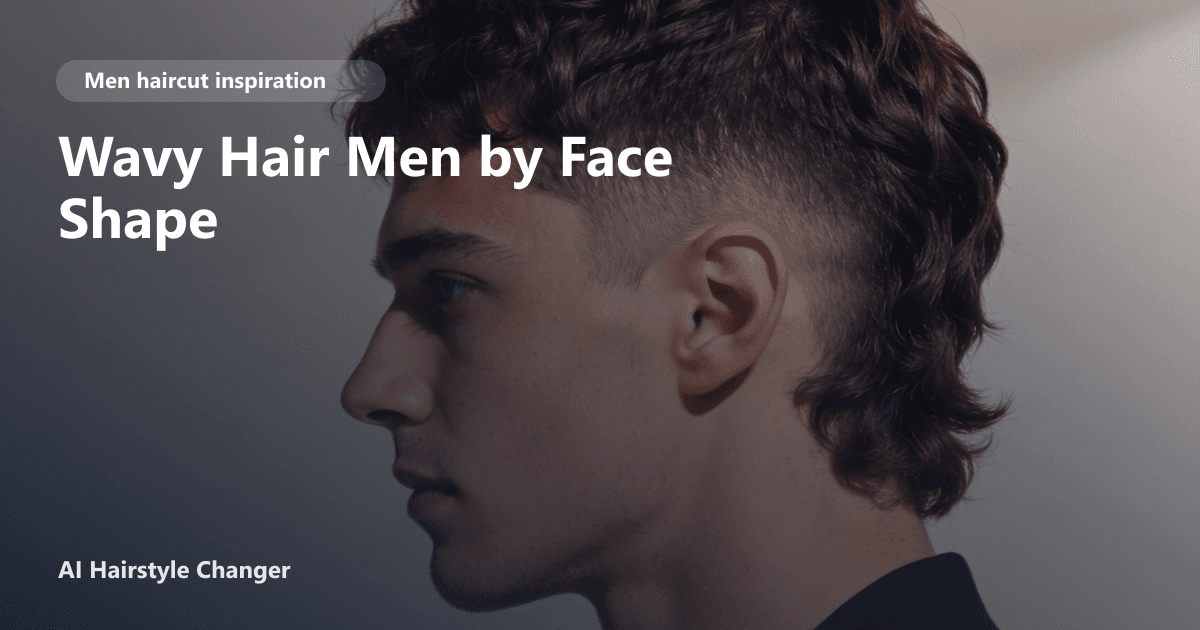
Choosing a wavy haircut that flatters your face shape can be surprisingly stressful. Maybe you've saved a dozen Instagram screenshots, but you're not sure if that textured crop or loose fringe will actually work for you. The right style can add structure, highlight your best features, and avoid the dreaded post-salon regret. But wavy hair's natural movement means a cut that looks sharp on one guy can fall flat - or puff out - on another, depending on face shape, hair density, and how you style it.
That's why more men are using AI Hairstyle Changer to preview wavy cuts on their own face before making the leap. In this guide, you'll get specific, face-shape-based advice for wavy haircuts, with practical details you can use in your next barber conversation. We'll cover how to tailor wavy styles for round, square, oval, and longer faces, plus how to use AI try-on tools to shortlist your favorites and walk into your appointment with confidence.
Why Face Shape Matters for Wavy Hair
Wavy hair naturally creates volume and movement, so the right cut can balance or accentuate your facial proportions. For example, a heavy fringe on a round face can make it look wider, while tight sides on a long face can exaggerate length. Understanding these dynamics helps you avoid styles that fight your features, and instead pick a cut that works with your natural texture.
Your face shape generally falls into one of these categories:
- Round: Cheekbones and face length have similar measurements; softer jawline.
- Square: Strong jawline, broad forehead, equal face width and length.
- Oval: Balanced proportions, slightly narrower chin than forehead.
- Oblong/Rectangular: Longer than wide, with a straight cheek line.
Wavy hair's versatility means you have options in every category. The key is knowing which elements - like fringe, volume placement, and length - will help you look your best.
Wavy Haircuts for Round Faces
If your face is round, your goal is to add height and structure, not width. Wavy hair can easily create bulk at the sides, which you want to minimize.
Best directions:
- Textured Quiff: Ask for short, tapered sides with length left on top. The wavy texture adds height and draws the eye upward, making the face appear longer. Request subtle layering on top to keep the waves defined but not bushy.
- Side-Swept Fringe: Instead of a heavy, straight-across fringe, opt for a side-swept style. This breaks up the roundness and adds angles. Keep the fringe light and textured, not blunt.
- Undercut with Wavy Top: A disconnected undercut keeps the sides tight and lets your waves on top shine. This style is low maintenance on the sides but needs regular shaping up top to avoid puffiness.
What to avoid:
- Full, blunt fringes that widen the face.
- Uniform length all over, which can create a helmet effect.
When you use AI Hairstyle Changer, try uploading a selfie and previewing styles with height and movement on top, keeping the sides neat. This lets you see how much volume works for your features before you commit.
Wavy Haircuts for Square Faces
A square face is defined by a strong jaw and broad forehead. The aim is to soften the angles without hiding your bone structure.
Best directions:
- Medium-Length Layers: Ask for layers that start around the temples and are longer on the sides, allowing the waves to fall naturally and soften the jawline. Avoid sharp, geometric lines.
- Messy Side Part: A loose, side-parted wavy style creates diagonal movement, breaking up the squareness. Keep the part low and let the waves fall across the forehead.
- Loose Pompadour: A wavy pompadour with volume at the front and tapered sides draws attention upward and away from the jaw. Use a lightweight product to keep the waves bouncy.
What to avoid:
- Super short buzz cuts, which can exaggerate angularity.
- Overly slicked-back styles that highlight the forehead.
Previewing these styles in AI Hairstyle Changer can help you find the right balance between structure and softness. Adjust the length and volume in the app to see what flatters your jaw and forehead most.
Wavy Haircuts for Oval Faces
Oval faces are considered the most versatile, but that doesn't mean every wavy cut will work equally well. The goal is to maintain your natural balance, not distort it.
Best directions:
- Classic Taper with Wavy Top: Ask for a gradual taper on the sides and back, leaving the top long enough to show off your waves. This keeps the silhouette clean and balanced.
- Wavy Fringe: A soft, textured fringe can add interest without overwhelming your features. Ask your stylist to keep the fringe light and let it blend into the sides.
- Shaggy Crop: A modern shag with choppy layers throughout works well with waves, adding movement and texture. This style is easy to maintain and grows out gracefully.
What to avoid:
- Extreme undercuts that throw off your face's natural symmetry.
- Heavy, forward-combed styles that hide your forehead.
AI Hairstyle Changer lets you experiment with subtle changes - like fringe length or taper tightness - so you can find a style that's distinctive but still balanced.
Wavy Haircuts for Oblong or Rectangular Faces
Longer faces benefit from styles that create width and avoid adding extra height. Wavy hair can do this naturally with the right cut.
Best directions:
- Medium-Length Waves with Volume at the Sides: Ask for layers that encourage your waves to spread out rather than up. The sides should be left a bit fuller, with minimal tapering.
- Curtain Fringe: A parted fringe that falls to either side adds horizontal lines across your face, visually shortening it. Keep the fringe light and textured, not heavy.
- Layered Bob or Bro Flow: For longer hair, a bro flow or soft layered bob lets the waves frame your face, adding width and movement.
What to avoid:
- Tall quiffs or pompadours that elongate the face.
- Super tight fades that make the face appear even longer.
With AI Hairstyle Changer, you can test how much width your waves add at different lengths, letting you fine-tune your look before you book your appointment.
Salon Conversation: What to Ask For
When you sit down in the chair, being specific helps avoid miscommunication. Here's how to translate your inspiration into clear instructions:
- Length: Know your target length on top and sides (e.g., "leave 3 inches on top, tapered to 1 inch on the sides").
- Layering: Ask for layers that work with your natural wave pattern, not against it. Too much thinning can make waves frizzy, while no layering can cause bulk.
- Fringe Direction: Specify if you want a side-swept, curtain, or no fringe at all.
- Volume Placement: Tell your stylist where you want the most volume - on top, at the sides, or evenly distributed.
- Maintenance: Ask how often you'll need a trim to keep the shape, and whether the cut will air-dry well or need styling.
- What to Avoid: Mention any elements that don't work for your face shape, like heavy fringes or tight fades.
Bringing AI Hairstyle Changer previews to your appointment gives your stylist a visual reference, making it easier to communicate exactly what you want.
Upkeep and Styling Tips for Wavy Hair
Wavy hair looks best with the right care and styling routine. Here's how to keep your cut looking intentional, not unruly:
- Use a lightweight, hydrating leave-in conditioner to define waves without weighing them down.
- Air-dry whenever possible, or use a diffuser on low heat to boost volume.
- Avoid heavy waxes or gels that can flatten natural movement.
- Trim every 4 - 8 weeks to maintain shape and prevent split ends.
- Refresh your style with a sea salt spray or light mousse for texture.
For more detailed advice on wavy, curly, and straight styles, check out the Mens Hair Styles Guide: Best Hairstyles by Hair Type and Length.
Comparing Wavy to Curly and Straight: What's Different?
Wavy hair sits between straight and curly, offering a unique set of styling opportunities and challenges. Compared to curly hair, waves are easier to manage and less prone to shrinkage, but still need layering to avoid bulk. Straight haircuts often rely on blunt lines, which can look awkward on wavy textures.
If you're considering a shorter look or want to see how your waves compare to tighter curls, visit Short Mens Hairstyles for Curly Hair or Hairstyles for Curly Hair Men: Best Cuts by Length for more inspiration.
FAQ
How do I know my face shape for wavy haircuts?
Stand in front of a mirror and trace your face outline with a washable marker or use a selfie in good light. Compare your proportions - forehead, cheeks, jaw, and length - to the categories above. AI Hairstyle Changer can also help visualize styles on your unique features.
Are wavy haircuts high maintenance?
Most wavy cuts require regular trims and some styling, but choosing the right length and layering can minimize daily effort. Air-drying and using light products usually keep waves looking their best.
Can I try a wavy haircut if my hair is only slightly wavy?
Yes. With the right cut and styling products, even subtle waves can be enhanced. Use AI Hairstyle Changer to see how different lengths and layers bring out your natural texture.
What's the best way to show my barber what I want?
Bring clear reference photos and, if possible, a preview from AI Hairstyle Changer. Be specific about length, layering, and fringe direction. Discuss what you want to avoid, too.
Find Your Wavy Signature Style
Choosing a wavy haircut by face shape isn't just about trends - it's about finding a look that feels like you. With AI Hairstyle Changer, you can preview styles, shortlist your favorites, and walk into your next appointment ready to get the most out of your waves. Ready to discover more? Head to Haircut AI and Haircut Finder: Find a Style That Fits You and start your transformation.