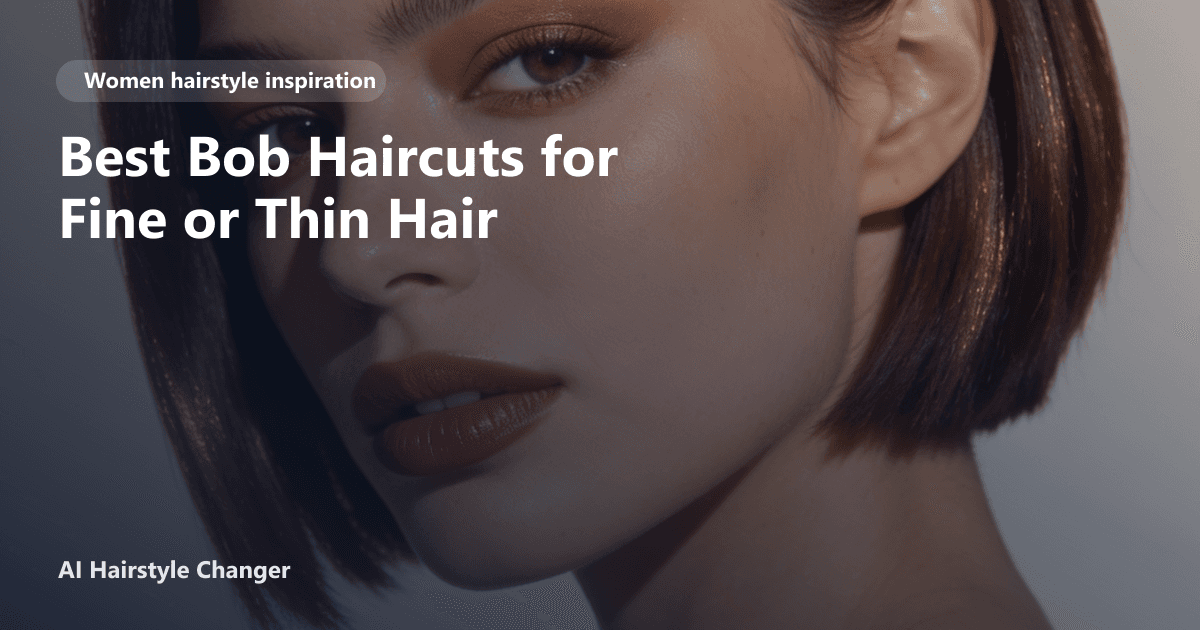
You're standing in front of the mirror, sectioning your hair back, trying to imagine a bob. If you have fine or thin hair, the hesitation is real - will it lie flat against your head? Will it expose sparse areas at the crown? A bob can either create the illusion of twice the hair you have or magnify every volume struggle. The difference comes down to strategic cutting, not luck.
Why Fine Hair Demands a Different Bob Strategy
Fine hair has less diameter per strand, which means it lacks natural body and can't support heavy layering without looking wispy. Thin hair, whether naturally sparse or thinning over time, shows scalp more readily when cut too short or layered incorrectly. The classic bob blueprint - blunt, one-length, chin-grazing - works because it builds a solid weight line. That weight line is your best friend: it makes ends appear dense and creates a visual foundation that suggests thickness.
The biggest mistake? Asking for "lots of layers to add volume." Short, choppy layers on fine hair remove bulk where you need it most. Instead, the right bob preserves weight at the perimeter while subtly manipulating shape and texture to fake fullness. Think architecture, not fluff.
The Best Bob Variations for Fine Hair
Blunt Bob (Chin to Collarbone)
A blunt bob cut straight across at chin or collarbone length gives fine hair a solid, heavy edge. This density at the bottom balances the overall silhouette and prevents the "stringy ends" effect. Ask for zero layering and a crisp line. This style works especially well if you have a longer neck and oval or heart-shaped face - it draws attention to bone structure while the blunt ends create a curtain of hair that looks thicker than it is.
Tradeoff: Blunt bobs require precision trimming every 6-8 weeks to maintain that clean line. If you're low-maintenance, this cut will grow out bluntly and lose shape quickly.
A-Line Bob (Shorter Back, Longer Front)
The A-line bob, where the back sits at the nape and the front angles down toward your collarbones, gives fine hair natural movement without sacrificing bulk. The angle creates a stacked effect at the back, which builds volume through shape rather than layering. The longer front pieces frame the face and provide styling versatility - tuck behind ears for a sleek look or wear forward for softness.
Best for: Square or round faces that need elongation. The diagonal line pulls the eye downward, creating a slimming effect.
What to request: "A-line bob, shortest point at the nape, no interior layers, keep weight at the perimeter."
Long Layered Bob (Minimal, Long Layers Only)
If you want some movement, opt for a long bob (lob) with only two or three very long layers. These layers should start no higher than the chin - any higher and you risk losing density at the crown. The key is keeping layers invisible; they should blend so seamlessly that the hair still looks one-length when worn straight.
Styling requirement: This cut demands a round brush and blow-dry technique. You'll need to lift roots and smooth layers together to maintain the illusion of thickness. Air drying will reveal the layer pattern and make hair look piece-y.
Inverted/Stacked Bob (Graduated Back)
The inverted bob uses graduated layers at the back - meaning each section is cut slightly shorter than the one beneath it - to build a rounded, voluminous shape. This creates natural lift at the crown without visible layering on the surface. The front remains longer and blunt, preserving weight where it's most visible.
Maintenance note: The stacked back grows out quickly and can start to look triangular if you go longer than 6 weeks between trims. It's also harder to pull into a ponytail, which can be frustrating if you're used to throwing your hair up.
Textured Bob with Fringe (Point-Cut Ends)
For a modern, slightly messy look, a textured bob uses point-cutting - where the stylist snips into the ends at an angle - to create soft, separated edges. This technique removes minimal weight while adding visual texture. Pair it with a wispy fringe that's cut with a razor, not scissors, to avoid blunt, heavy bangs that can overwhelm fine hair.
Who it suits: This style works for most face shapes but especially flatters those with high foreheads or longer faces, as the fringe shortens the appearance of the face.
What to Tell Your Stylist (Exact Salon Language)
Bring photos, but also speak their language. Instead of "I want volume," say:
- "I need to preserve as much weight and density as possible."
- "No thinning shears or texturizing on the interior - just the ends if needed."
- "I want a strong perimeter line to make my hair look thicker."
- "Can we use point-cutting instead of slide-cutting for texture?"
- "I'm concerned about my scalp showing through at the crown - can we keep length there?"
If your stylist immediately suggests "lots of short layers," consider it a red flag. The best cut for fine hair is often the simplest one. For more on matching bobs to face shapes, see our Bob Haircut Guide: Types, Face Shapes, and Maintenance.
Maintenance and Styling Tradeoffs
Time Investment: Most volume-building bobs require 10-15 minutes of styling. A blunt bob needs a flat iron or round brush to keep the line sharp. An inverted bob needs root lift at the back. Textured bobs need a texturizing spray or dry shampoo at the roots.
Product Load: Fine hair gets weighed down easily. Use lightweight mousse at the roots before blow-drying and a volumizing powder at the crown. Avoid heavy creams or serums on the roots. A dry shampoo applied to clean hair can add grip and body that lasts all day.
Color Impact: Single-process color can make fine hair feel slightly thicker by swelling the cuticle. Highlights, especially fine, babylight highlights, can add dimension but over-bleaching damages the cuticle and makes hair more prone to breakage. If you're thinning, keep highlights minimal and focus on root shadow techniques that create depth at the scalp.
Trim Frequency: Plan on salon visits every 6-8 weeks. Fine hair shows split ends faster, and a bob's shape depends on a clean line. If you stretch it to 12 weeks, the style will collapse and look unkempt.
When a Bob Won't Work for Fine Hair
Be honest about your limits. If your hair is extremely thin - meaning you can see scalp through your hair even at longer lengths - a very short bob might expose more than you're comfortable with. In that case, a lob (long bob) that hits below the collarbone gives you more coverage while still delivering the bob aesthetic.
If you have a very round face and refuse to style your hair daily, a blunt chin-length bob can emphasize width. The A-line or inverted shape would serve you better, but it requires styling commitment.
If you're in the middle of major shedding due to health issues, wait. Any shorter cut will make density changes more obvious as it grows out. Let your hair stabilize first.
FAQ
Will a bob make my fine hair look thinner?
Only if it's cut with too many short layers or over-texturized. A blunt or A-line bob with a strong perimeter actually makes fine hair look denser because it creates a solid visual line. The key is keeping weight at the bottom and avoiding interior layering that separates strands.
How short can I go with fine hair?
For most fine-haired clients, the sweet spot is between the chin and collarbone. Shorter than chin-length can expose too much scalp at the crown and nape. If you want to try a shorter length, test it first with AI Hairstyle Changer - upload your photo and see how a chin-length blunt bob looks on your specific hair density and face shape.
Should I get bangs with my bob if I have fine hair?
Wispy, curtain, or side-swept bangs can work well because they don't require dense hair to look full. Avoid blunt, heavy bangs - they need significant thickness to avoid looking sparse. Razor-cut or point-cut fringe gives a softer, more forgiving finish. For inspiration on bang pairings, check Long Bob With Curtain Bangs: Best Combinations to Try.
Can I pull off a bob if my hair is both fine and curly?
Yes, but the rules shift. Curly fine hair benefits from layers because curls create their own volume. Ask for a layered bob that respects your curl pattern - dry cut, not wet. The layers should be cut into the curl, not through it, to avoid frizz. A diffuser and lightweight curl cream become non-negotiable styling tools.
Takeaway
The right bob for fine hair isn't about hiding what you have - it's about cutting strategically to amplify it. Choose a style that preserves weight, builds shape through architecture rather than layering, and matches your willingness to style it. Before you book, visualize the cut on your face and hair density. Upload your selfie to AI Hairstyle Changer and test blunt ends, angled shapes, and fringe options in real time. Seeing the result first removes the guesswork and gives you confidence walking into the salon. For more short-hair ideas, explore our Best Bob Hairstyles for Short Hair guide.