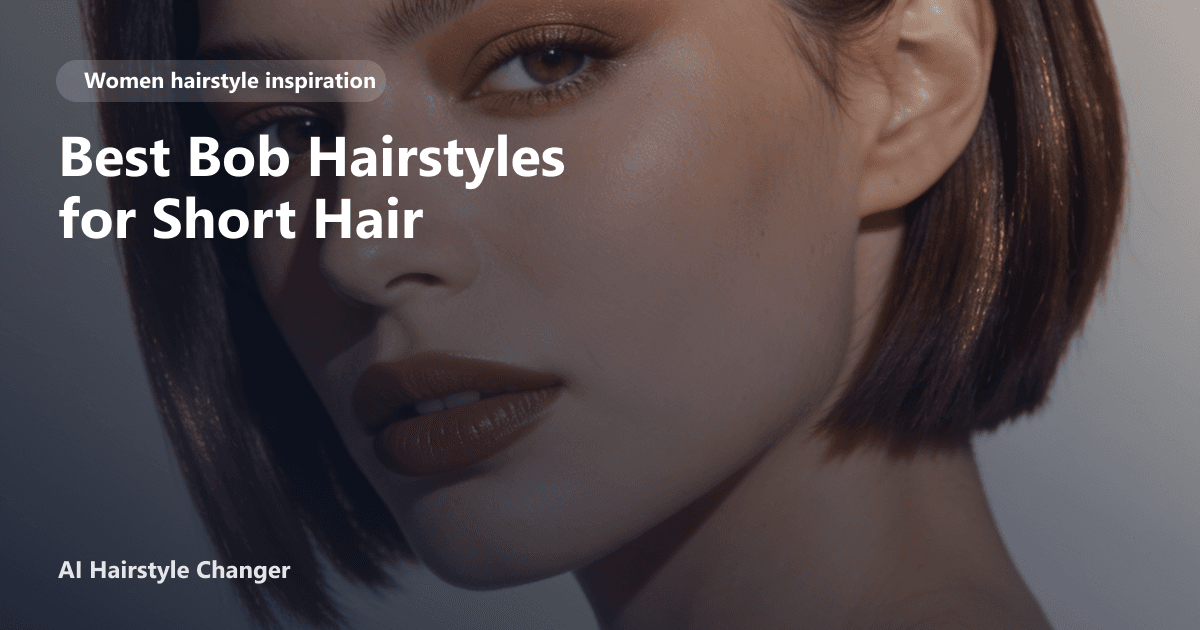
Why the Bob Haircut Still Rules Short Hair
The bob haircut remains the gold standard for short hair because it delivers instant polish without sacrificing personality. Whether you're after sharp geometry or soft movement, a well-chosen bob frames your features and simplifies your morning routine. But the real challenge isn't falling for the style-it's picking the right variation before you sit in the stylist's chair. With dozens of interpretations, from razor-edged to softly layered, seeing the cut on yourself first removes the guesswork and helps you walk into your appointment with confidence.
Best Bob Hairstyles for Short Hair Right Now
Classic Blunt Bob
The blunt bob sits at jaw level with a clean, even perimeter. This style creates density and makes thin hair appear thicker. It works best on straight to slightly wavy textures and suits oval, heart, and square face shapes. Ask your stylist for zero layers and a precise cut that hits right at your chin or jawline. Style with a flat iron for sleekness or add a slight bend with a round brush for subtle movement.
Textured Bob with Layers
If you want volume and movement, a textured bob with internal layers delivers. This version removes weight while keeping the outer line intact, perfect for fine or medium hair that needs a boost. The layers start higher in the back and taper toward the front, creating natural lift at the roots. This cut flatters round and oval faces by adding vertical interest. Use a texturizing spray and scrunch for an effortless finish.
Asymmetrical Bob
One side longer than the other, the asymmetrical bob adds edge and draws the eye diagonally across your face. This creates a slimming effect and works particularly well for square or heart-shaped faces. The contrast can be subtle (one inch difference) or dramatic (chin-length on one side, shoulder-length on the other). Style with a side part to emphasize the angle and keep the shorter side tucked behind your ear.
Curly Bob
Curly hair thrives in a bob when cut with the right technique. A curly bob typically falls between chin and shoulder length, with layers cut dry to respect your natural curl pattern. This prevents the dreaded triangle shape and enhances definition. The key is leaving enough weight at the ends to avoid frizz while removing bulk internally. Diffuse with a curl cream for bouncy, controlled shape that flatters diamond and oval face shapes.
Stacked Inverted Bob
The stacked bob features shorter layers in the back that gradually lengthen toward the front. This creates a dramatic silhouette and works wonders for thick hair that needs weight removal. The stacked nape adds height and structure, making it ideal for round faces that benefit from elongation. The front pieces can be angled to chin or collarbone length. Blow-dry with a round brush to emphasize the curve and volume at the crown.
Wavy Bob with Bangs
Combine a collarbone-grazing wavy bob with soft bangs for a romantic, low-maintenance look. The waves add texture while bangs draw attention to your eyes. This style suits most face shapes when the bang length is adjusted-wispy for round faces, curtain for square faces, and blunt for oval faces. For more bang inspiration, see our guide on Long Bob With Curtain Bangs: Best Combinations to Try. Air-dry with a salt spray or use a curling wand for loose, beachy waves.
How to Match a Bob to Your Face Shape and Hair Texture
Choosing the right bob haircut depends on two factors: your face shape and your natural hair texture.
For face shapes:
- Oval: Nearly any bob works. Experiment with length and texture.
- Round: Opt for longer bobs (lob) with height at the crown and side-swept bangs.
- Square: Soften strong jawlines with textured ends, waves, or asymmetrical cuts.
- Heart: Balance a wider forehead with chin-length bobs or side-parted styles.
- Diamond: Try bobs with volume at the chin or collarbone to complement cheekbones.
For hair textures:
- Fine hair: Blunt cuts and minimal layering create the illusion of thickness. See more options in our guide on Best Bob Haircuts for Fine or Thin Hair.
- Thick hair: Layered or stacked bobs remove bulk and add shape.
- Curly hair: Dry cutting and strategic layering prevent pyramid shapes.
- Wavy hair: Textured bobs enhance natural movement without frizz.
For a complete breakdown, check our Bob Haircut Guide: Types, Face Shapes, and Maintenance.
See Your Bob Before You Commit
The biggest risk with a bob haircut is the shock of seeing it on yourself for the first time after the cut. You can eliminate that risk by visualizing the style beforehand. AI Hairstyle Changer lets you upload a simple selfie and see how different bob variations-blunt, textured, asymmetrical-look on your actual face shape and hair texture. Test multiple lengths, experiment with bangs, and build a shortlist of reference photos that match your vision. When you arrive at the salon with a clear visual, your stylist knows exactly what you want, and you know exactly what to expect.
This approach is especially helpful if you're transitioning from long hair or trying a dramatic angle. Instead of relying on celebrity photos that don't match your features, you get a personalized preview that builds confidence and reduces haircut regret.
Quick Styling and Maintenance Tips
- Daily care: Use a heat protectant before hot tools. Bobs show damage faster than long hair.
- Product choice: Lightweight mousse for volume, pomade for piece-y texture, serum for sleekness.
- Trim schedule: Book appointments every 6-8 weeks to maintain the shape.
- Bedhead fix: A quick spritz of water and restyle with fingers or a mini flat iron.
- Bangs maintenance: Trim every 2-3 weeks or learn to sweep them to the side as they grow.
FAQ
How short should I go for my first bob?
Start with a longer bob that grazes your collarbone. This gives you the feel of short hair while keeping some length to tuck behind your ears. You can always go shorter at your next appointment. Use a virtual try-on tool to compare chin-length versus collarbone-length on your face before deciding.
Will a bob make my face look fatter?
Not if you choose the right variation. Round faces benefit from longer, angled bobs with volume at the crown. Avoid blunt chin-length bobs that stop at the widest part of your face. An asymmetrical or textured bob creates diagonal lines that slim your profile.
Can I pull off a bob with curly hair?
Absolutely. The key is finding a stylist who cuts curly hair dry and understands your curl pattern. A curly bob should have internal layers to prevent bulk but keep weight at the ends. Visualize the result first with an AI hairstyle preview to ensure the length and shape match your expectations.
How do I style a bob on busy mornings?
A bob is one of the fastest styles to manage. Apply a leave-in conditioner, rough-dry with your fingers, and use a flat iron or curling wand on just the front pieces. Textured bobs look intentional even when air-dried. Most bobs take less than 10 minutes to style.
Ready to Find Your Perfect Bob?
The best bob haircut is the one that fits your face, hair texture, and lifestyle-not the one that looks great on someone else. Take the guesswork out of your next salon visit by seeing each style on yourself first. Upload your photo to AI Hairstyle Changer, experiment with different bob variations, and create a visual shortlist to share with your stylist. When you know exactly how you'll look walking out, you can sit back and enjoy the transformation.