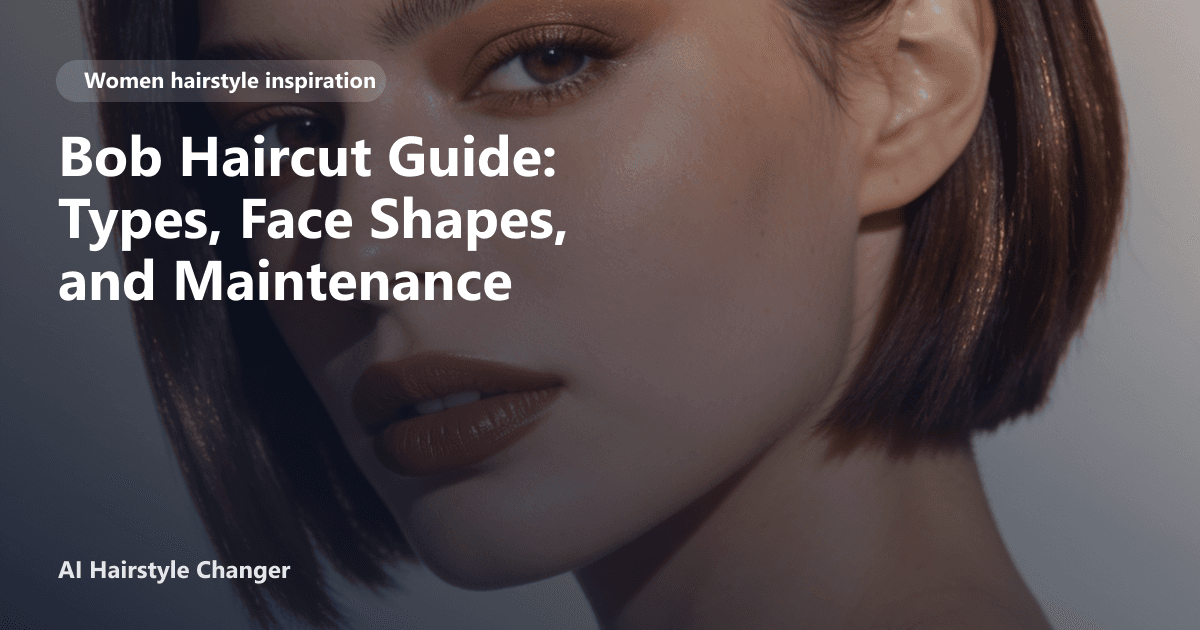
Why the Bob Haircut Still Rules
The bob haircut delivers instant polish with minimal effort. This chin-to-shoulder length style frames your face, works with your natural texture, and transitions seamlessly from desk to dinner. But with dozens of variations, how do you pick the right one before committing to the chop?
That's where modern tools change the game. Upload a selfie to AI Hairstyle Changer and see exactly how a blunt bob, textured lob, or asymmetrical cut looks on your face shape-no salon appointment required.
What Defines a Bob Haircut
A true bob falls between the jawline and collarbone. The hallmark is a clear perimeter with weight concentrated at the ends, creating that signature swing. Unlike layered cuts that remove bulk throughout, bobs maintain density at the perimeter while allowing for interior movement.
The cut's versatility explains its century-long popularity. It can be sharp and architectural or soft and shaggy. It flatters twenty-somethings and sixty-somethings equally. Most importantly, it grows out gracefully-unlike pixies or undercuts that require constant maintenance.
Bob Haircut Types: The Complete Family Tree
| Type | Length | Key Features | Best For |
|---|---|---|---|
| Classic Blunt Bob | Chin-length | Sharp, even ends; zero layers | Straight hair, oval faces |
| Textured Bob | Jaw-to-shoulder | Point cutting, movement | Fine hair, adding volume |
| A-Line Bob | Shorter back, longer front | Angled silhouette | Round faces, creating length |
| Inverted/Stacked Bob | Nape-length back | Stacked layers at crown | Thick hair, removing bulk |
| Long Bob (Lob) | Collarbone | Softer perimeter | All face shapes, easy grow-out |
| Asymmetrical Bob | Uneven lengths | One side longer | Edgy style, strong jawlines |
| Curly Bob | Varies by curl | Dry cut, shape-preserving | Natural curls, definition |
Matching Your Face Shape to the Perfect Bob
Round Faces
Goal: Add angles and length. Choose A-line or asymmetrical bobs that create diagonal lines. Avoid blunt chin-length cuts that emphasize width. A lob with side-swept bangs works beautifully.
Square Faces
Goal: Soften strong jawlines. Textured bobs with soft edges diffuse angularity. Try a long bob with wispy layers around the face. Steer clear of severe blunt cuts that mirror your jawline.
Oval Faces
Goal: Lucky you-most bobs work. Experiment with classic blunt bobs for drama or textured lobs for movement. This is the ideal face shape to test bold variations.
Heart-Shaped Faces
Goal: Balance wider forehead and narrower chin. Chin-length bobs with volume at the jawline create equilibrium. Side parts and curtain bangs (see our guide on /long-bob - with-curtain-bangs-best-combinations-to-try) draw attention downward.
Long Faces
Goal: Create width. Blunt bobs that hit at the chin or cheekbone break up vertical lines. Avoid overly long lobs that drag the face down. Texture and waves add horizontal volume.
Choosing Based on Hair Texture
Fine or Thin Hair: The right bob adds instant body. A blunt perimeter creates the illusion of thickness. Textured bobs with point cutting prevent wispiness. For detailed recommendations, see our guide to /best-bob-haircuts-for-fine - or-thin-hair.
Thick Hair: Inverted and stacked bobs remove bulk while keeping length. Interior layering prevents the pyramid effect. Razor cutting can soften dense ends.
Curly Hair: Dry cutting is non-negotiable. A curly bob must be shaped on dry, styled hair to see true length and spring. Layers should be minimal to maintain the perimeter.
Very Short Starting Length: Growing out a pixie? A short bob is your transitional best friend. Learn more in our /best-bob-hairstyles-for-short-hair guide.
Maintenance Reality Check
Salon Visits: Plan for trims every 6-8 weeks to maintain the shape. Blunt bobs show regrowth fastest; lobs offer more forgiveness.
Daily Styling: Most bobs require 5-15 minutes. Blunt bobs need a quick flat iron pass. Textured bobs air-dry beautifully with the right product. Invest in a quality round brush and heat protectant.
Product Essentials:
- Volumizing mousse for fine hair
- Smoothing cream for frizz-prone hair
- Texturizing spray for lived-in looks
- Dry shampoo for second-day revival
Growing Out Phase: Bobs transition gracefully into lobs, then into shoulder-length cuts. The awkward stage is minimal compared to other short styles.
See Your Bob Before You Commit
The biggest bob regret? Choosing a style that clashes with your features or lifestyle. AI Hairstyle Changer eliminates guesswork. Upload one selfie and generate photorealistic previews of every bob variation-from blunt to asymmetrical. Save your favorites, create a salon reference sheet, and walk into your appointment with confidence.
Test drive that A-line bob you've been eyeing or compare how a textured lob stacks up against a classic blunt cut. The tool accounts for your face shape, hair texture, and even skin tone, making recommendations personalized rather than generic.
FAQ
How do I know if a bob haircut will suit me without actually cutting my hair?
Face shape analysis helps, but nothing beats seeing the cut on your actual face. Use AI Hairstyle Changer to upload your photo and try multiple bob styles instantly. Pay attention to where the cut hits your jawline and how it balances your features.
What's the real difference between a bob and a lob?
A lob (long bob) falls at or below the collarbone, while a traditional bob stays above the shoulders. Lobs offer more styling versatility and a softer grow-out, making them ideal for first-timers nervous about going too short.
How often do I really need to trim a bob to keep it looking good?
Every 6-8 weeks for blunt or precision cuts. Textured bobs and lobs can stretch to 10 weeks. The sharper the line, the more frequent the maintenance.
Can I pull off a bob with naturally curly hair?
Absolutely, but technique matters. Seek a stylist who cuts curly hair dry. A curly bob should be shaped to your curl pattern, not wet-length. The result is bouncy, defined, and avoids the triangular silhouette.
Your Next Step
A bob haircut offers timeless style, but the right variation makes all the difference. Consider your face shape, hair texture, and maintenance tolerance. Most importantly, visualize the result before you sit in the stylist's chair. Explore AI Hairstyle Changer to experiment with more clarity, build your shortlist, and arrive at your appointment ready for a transformation you'll love.