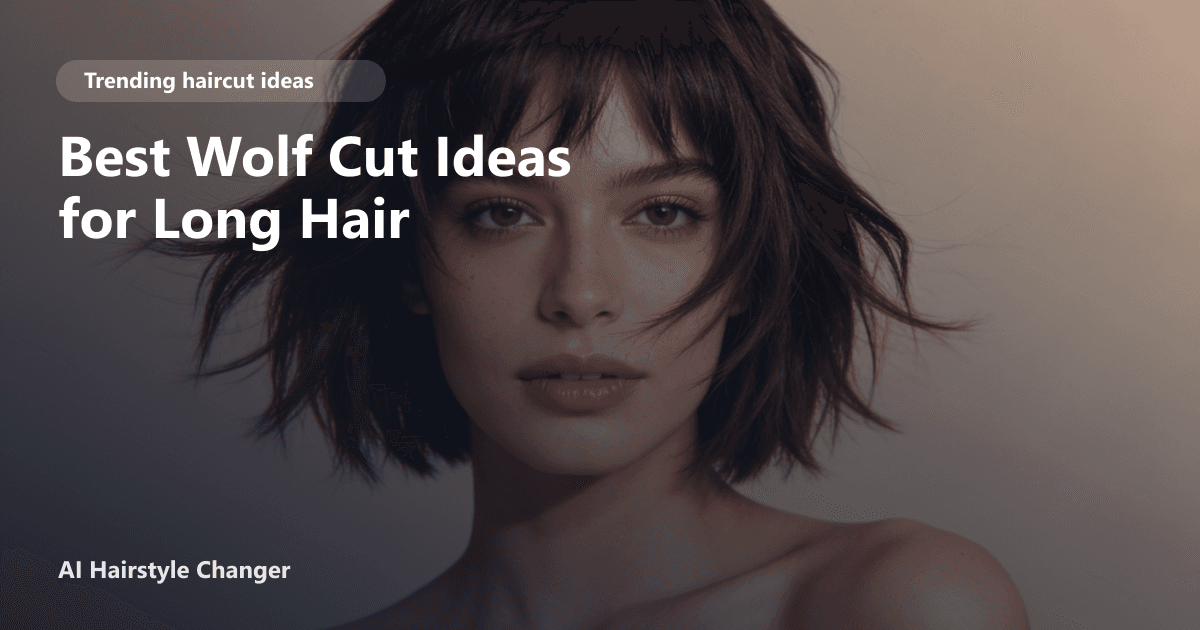
Why the Wolf Cut Works So Well on Long Hair
The wolf cut has become the go-to style for anyone wanting edge without sacrificing length. This hybrid cut combines the choppy layers of a shag with the tapered silhouette of a mullet, creating volume exactly where you want it. For long hair, this means dramatic movement up top while keeping the versatility of length below.
If you're debating whether to take the plunge, you're not alone. Most people spend weeks scrolling inspiration photos, wondering if the cut will suit their face shape or hair texture. That's why visualizing the style beforehand has become such a game-changer for confident salon decisions.
What Defines a Wolf Cut on Long Hair
A wolf cut on long hair isn't just random layers-it's a strategic graduation that removes weight while preserving length. The signature silhouette comes from:
- Crown layers cut 4-6 inches shorter than your overall length
- Graduated blending that creates a seamless flow from short to long
- Texturized ends for that piece-y, lived-in finish
- Optional bangs that integrate with the shortest layers
This structure gives you the volume of a shorter cut without losing the ability to pull your hair back or style it in a ponytail.
Top Wolf Cut Variations for Long Hair
Classic Wolf Cut
The original version delivers maximum drama. Crown layers start high and short, creating a noticeable contrast with your length. This works best on thick hair that can handle significant weight removal. Ask your stylist for a "heavy disconnect" at the crown that gradually blends into your ends.
Soft Wolf Cut
Perfect for fine hair or first-timers, this variation uses longer, more subtle layers. The crown might only be 2-3 inches shorter than your overall length, creating gentle movement rather than stark contrast. The result is office-friendly while still giving you that coveted texture.
Wolf Cut with Curtain Bangs
This combination dominates social media for good reason. Curtain bangs soften the wolf cut's edginess while highlighting your cheekbones. The bangs start shorter in the center and feather out to blend perfectly with the shortest crown layers. It's the most flattering entry point for most face shapes.
Textured Wolf Cut with Choppy Ends
For those who love a rock-and-roll aesthetic, ask for point-cutting at the ends. This technique creates a piece-y, almost spiky finish that moves beautifully. It's ideal for thick, straight hair that tends to look heavy when left blunt.
Face-Framing Wolf Cut
This variation concentrates the shortest layers around your face while keeping the back more solid. It's the easiest version to grow out and the least intimidating for stylists new to the trend. You get the wolf cut vibe without committing to heavy layering throughout.
Matching Your Wolf Cut to Face Shape
Round faces: Choose longer curtain bangs that hit below the cheekbones. Keep crown volume moderate to avoid adding width.
Oval faces: Most variations work beautifully. The classic wolf cut with its full crown volume is especially striking on oval shapes.
Square faces: Soften strong jawlines with wispy, textured bangs and layers that hit at chin length. Avoid blunt, heavy bangs.
Heart-shaped faces: Balance a wider forehead by adding volume around the chin and jaw. Skip ultra-short crown layers that create a top-heavy effect.
How Wolf Cuts Compare to Similar Styles
| Feature | Wolf Cut | Butterfly Cut | Shag |
|---|---|---|---|
| Layer structure | Graduated short-to-long | Two distinct lengths | Even layers throughout |
| Length kept | Most length maintained | All length kept | Can be any length |
| Overall vibe | Edgy, modern | Soft, romantic | Retro, classic |
| Best for | Root volume boost | Face-framing | All-over texture |
The butterfly cut uses two clear layer sections for a softer, winged effect. Learn more about this alternative in our Butterfly Cut Hair: The Layered Cut That Keeps Length guide.
Styling Your Wolf Cut at Home
The wolf cut's magic lies in its low-maintenance nature. For best results:
- Apply texturizing spray to damp roots and scrunch
- Use salt spray on mid-lengths for separation
- Air dry while fluffing the crown layers with your fingers
- For polish, run a flat iron through random pieces for intentional messiness
- Diffusing enhances natural texture for curly or wavy hair
The cut truly shines on second and third-day hair when natural oils add piece-y definition.
Communicating With Your Stylist
Reference photos help, but technical language ensures accuracy. Tell your stylist:
- "I want crown layers that start here" (physically point)
- "Keep my length but remove weight through layering"
- "I prefer [dramatic/subtle] contrast between top and bottom"
- "Please point-cut the ends for texture"
Even better, show them a visual of the exact variation on YOUR face. This eliminates the guesswork that leads to salon disappointment.
Visualize Your Wolf Cut Before You Book
Instead of crossing your fingers in the salon chair, upload a selfie to AI Hairstyle Changer and see precisely how each wolf cut variation looks on you. Test the classic version against the soft version. Experiment with curtain bangs or face-framing layers. Build a shortlist of your favorite angles and references that actually feature your face.
This five-minute step transforms your salon consultation. You'll walk in knowing exactly what you want, and your stylist will have a clear visual target. No more explaining with hand gestures or hoping they understand your vision. Many users say this simple preview eliminated their pre-haircut anxiety entirely.
The tool also lets you compare wolf cuts against similar styles like the butterfly cut or shag, helping you make the final decision with total confidence.
FAQ
Will a wolf cut make my long hair look thinner?
When done correctly, the opposite happens. Strategic layering removes bulk while maintaining visual density. The movement and texture actually make hair appear fuller. For fine hair, request longer layers and minimal point-cutting to preserve thickness.
How often should I trim a wolf cut?
Schedule trims every 8-10 weeks. The short crown layers grow out quickly and can lose their distinctive shape. Regular maintenance keeps the graduated silhouette crisp. Between appointments, texturizing products can refresh the style.
Can I get a wolf cut with curly hair?
Absolutely. Curls enhance the wolf cut's natural volume and create a stunning silhouette. The key is finding a stylist who understands curly hair shrinkage and cuts accordingly. For detailed guidance, see our Wolf Cut for Curly Hair: Layers Without Losing Shape article.
What's the difference between a wolf cut and butterfly cut?
Both are layered cuts for long hair, but the wolf cut has a more dramatic, graduated silhouette with very short crown layers. The butterfly cut uses two distinct layer lengths for a softer, winged effect. Read our complete Wolf Cut Guide: Who It Suits and How to Style It for deeper comparison.
Ready to Try Your Wolf Cut?
A wolf cut on long hair delivers the perfect balance of edgy texture and practical length. The key to loving your result is choosing the right variation for your features and walking into the salon with a clear vision. Before you book that appointment, spend five minutes with AI Hairstyle Changer to see your favorite wolf cut ideas on your actual face. It's the simplest way to shortlist styles, reduce haircut regret, and ensure your stylist understands exactly what you want. Your future self-looking back at those mirror selfies-will thank you.