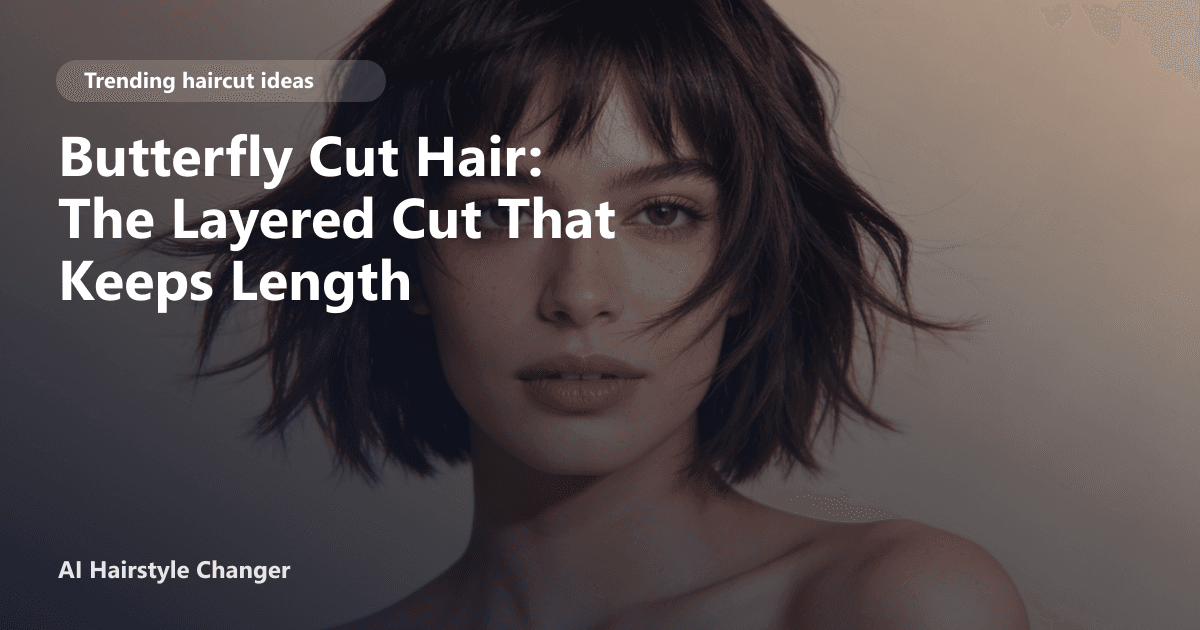
If you want the movement and volume of a layered haircut without sacrificing your hard-earned length, the butterfly cut might be your answer. This trending style has taken over social media feeds for good reason-it delivers that coveted 90s supermodel bounce while keeping your hair long enough for ponytails and braids. But before you book that salon appointment, it helps to know exactly what you're asking for and how to communicate it clearly to your stylist. Even better, you can preview the look on yourself first to avoid any post-cut regret.
What Is a Butterfly Cut?
The butterfly cut is a heavily layered haircut defined by short, face-framing layers on top and longer layers underneath. The shortest pieces typically hit around your chin or cheekbones-about two to three inches long-while the bottom layers remain at your desired length, often well past the shoulders. This creates a silhouette that resembles butterfly wings, with the short layers lifting and fluttering around your face while the longer pieces cascade down your back.
Unlike traditional long layers that blend gradually from top to bottom, the butterfly cut uses a more dramatic disconnect between the short and long sections. The result is instant volume at the crown and face-framing movement that makes fine hair appear thicker and thick hair feel lighter. The style draws inspiration from 90s and early 2000s layered cuts but has been refined for modern tastes with softer edges and more intentional shaping.
How the Butterfly Cut Differs from Wolf Cuts and Shags
The butterfly cut often gets grouped with other trendy layered styles like the wolf cut and shag, but each has a distinct personality. Understanding the difference helps you ask for exactly what you want.
Butterfly Cut vs. Wolf Cut The wolf cut is edgier and more rock-and-roll, with a mullet-inspired shape that's shorter in the back and longer in the front. It features heavy layering throughout with a disconnected, almost choppy texture. The butterfly cut, by contrast, keeps length all around and focuses the shortest layers specifically around the face. If you're curious about the wolf cut's suitability for different hair types, our Wolf Cut Guide: Who It Suits and How to Style It breaks down the details. For long-haired clients specifically, see Best Wolf Cut Ideas for Long Hair.
Butterfly Cut vs. Shag The shag haircut uses all-over layers from crown to ends, creating a textured, piece-y look with lots of movement. It often includes bangs and works best with a deliberately messy, bedhead style. The butterfly cut is more structured and polished, with a clear distinction between the short face-framing pieces and the longer base layers.
| Feature | Butterfly Cut | Wolf Cut | Shag Cut |
|---|---|---|---|
| Layer Pattern | Short face-framing only, long underneath | Heavy layers throughout, disconnected | All-over layers from crown to ends |
| Length Kept | Yes, maintains overall length | Often shorter in back | Varies, can be shorter overall |
| Vibe | Polished, 90s supermodel | Edgy, rock-and-roll | Textured, effortless |
| Best For | Adding volume while keeping length | Bold style statements | Natural wave and texture |
Who Should Get a Butterfly Cut?
Face Shapes The butterfly cut flatters most face shapes, but the technique adjusts slightly for each:
- Oval faces: The ideal canvas-any variation works well.
- Heart-shaped faces: The short layers soften a wider forehead and draw attention to the eyes.
- Round faces: Ask for longer face-framing pieces (closer to three inches) that start below the chin to avoid adding width at the cheeks.
- Square faces: Soft, wispy layers around the jawline help soften strong angles.
Hair Types and Textures Medium to thick hair types see the most dramatic benefit from a butterfly cut. The layering removes bulk and creates movement without thinning out the ends too much. Fine hair gains volume and the illusion of thickness from the lifted crown layers.
For curly-haired clients, the butterfly cut requires a skilled hand to maintain your natural shape while adding that signature face frame. The layering technique differs significantly from the wolf cut approach for curls, which you can explore in our guide on Wolf Cut for Curly Hair: Layers Without Losing Shape. With curly hair, your stylist should cut the short layers when your hair is dry and in its natural state to prevent unwanted shrinkage.
Lifestyle Considerations This cut works well if you style your hair at least occasionally. The face-framing layers look best with a quick blow-dry or some texturizing product. If you wash-and-go without any styling, the shorter pieces might fall flat or look piece-y in a way you didn't intend. The trade-off is that when you do style it, the results are impactful with minimal effort.
How to Style a Butterfly Cut at Home
The beauty of the butterfly cut lies in its versatility. You can go polished or effortless depending on your mood.
For Volume and Polish After washing, apply a volumizing mousse to damp hair at the roots. Use a round brush to blow-dry the short face-framing layers away from your face, rolling the brush under to create a slight curl at the ends. For the longer layers, blow-dry with a paddle brush or let them air-dry. Finish with a light-hold hairspray to keep the face-framing pieces in place.
For Effortless Texture On damp hair, scrunch in a texturizing spray or sea salt spray. Let your hair air-dry, then use your fingers to separate and lift the short layers around your face. A small amount of lightweight pomade on the ends of the face-framing pieces adds definition without stiffness.
Second-Day Refresh The butterfly cut revives beautifully on day two. Spray dry shampoo at the roots, focusing on the crown where you want lift. Use a flat iron or curling wand to quickly redefine the face-framing layers if they've gone limp. A quick flip of your head upside down and scrunching the longer layers restores volume throughout.
Butterfly Cut Variations to Consider
The Long Butterfly Cut This is the classic version, with the longest layers hitting mid-back or longer. It maximizes the drama of the contrast between short and long pieces. If you have hair past your bra strap, this version showcases your length while delivering the style's signature movement.
Medium-Length Butterfly Cut For hair that falls between your shoulders and bra strap, the medium-length butterfly cut offers a balanced silhouette. The short layers typically start around the chin, creating a flattering frame that works well for professional settings while still feeling current.
Butterfly Cut with Bangs Adding curtain bangs or wispy fringe integrates seamlessly with the short face-framing layers. The bangs blend into the two-inch layers around your face, creating a continuous, fluttery effect. This variation works especially well for heart-shaped and oval faces.
Butterfly Cut for Wavy Hair Natural waves enhance the butterfly cut's texture. The shorter layers create bounce and definition around your face, while the longer layers maintain your wave pattern down the back. Ask your stylist to cut when your hair is dry and styled as you normally wear it to see the true length of each layer.
What to Tell Your Stylist
Clear communication prevents disappointment. Use this exact language when booking and during your consultation:
- "I want a butterfly cut with short face-framing layers about two to three inches long."
- "Please keep the length underneath-I don't want to lose any overall length."
- "I want a clear disconnect between the short layers around my face and the longer layers underneath."
- "Can you show me where the shortest layers will hit when dry?"
Bring at least three reference photos showing different angles. Photos of the style on hair similar to yours in texture and thickness are most helpful. If you've used an AI Hairstyle Changer preview, bring those generated images too-stylists appreciate seeing exactly what you have in mind.
Try On a Butterfly Cut Before Your Appointment
The biggest risk with any dramatic layered cut is the surprise factor. What looks amazing on someone with your face shape might feel wrong once it's on you. That's where an AI hairstyle changer becomes a practical tool rather than just a fun app.
With AI Hairstyle Changer, you upload a simple selfie and see a realistic preview of the butterfly cut on your actual face shape, hair texture, and current length. The tool accounts for your unique features-how the short layers will frame your jawline, whether the volume will suit your hair density, and if the overall silhouette balances your proportions.
You can generate multiple versions-long butterfly cut, medium-length, with bangs - and shortlist your favorites to show your stylist. This eliminates guesswork and gives you confidence in your decision. Instead of hoping a celebrity's cut translates to your hair, you see it on yourself first.
The process takes less than a minute. Upload your photo, select the butterfly cut style, and review the result. If it doesn't feel right, you haven't committed to anything. If you love it, you walk into your appointment with a clear vision and reference image that actually looks like you.
FAQ
How much maintenance does a butterfly cut require?
The butterfly cut needs a trim every 8-10 weeks to maintain the shape of the short face-framing layers. If you let it grow out, those pieces will eventually blend into the longer layers and you'll lose the signature silhouette. Daily styling is minimal-a quick blow-dry or texturizing product takes less than five minutes - but the cut does look best with some effort. If you prefer a true wash-and-go style, a shag might be lower maintenance.
Is a butterfly cut the same as a wolf cut?
No, though both use heavy layering. The wolf cut has a mullet-inspired shape with shorter layers in the back and a more disconnected, edgy texture throughout. The butterfly cut keeps length all around and concentrates the shortest layers only around the face. For a deeper comparison, see our Wolf Cut Guide: Who It Suits and How to Style It.
Can I get a butterfly cut if I have curly hair?
Yes, but the cutting technique matters more for curly textures. Your stylist should cut the short face-framing layers when your hair is dry and in its natural curl pattern to prevent the layers from shrinking up too much once dry. The result adds volume and shape without creating a triangular silhouette. This approach differs from how you'd handle a wolf cut on curls, which we cover in Wolf Cut for Curly Hair: Layers Without Losing Shape.
How do I grow out a butterfly cut gracefully?
The grow-out phase is actually one of the butterfly cut's strengths. As the short layers lengthen, they blend into the longer layers and create a natural, face-framing effect. To ease the transition, ask your stylist to gradually soften the disconnect between layers during trims. You can also pivot to a more traditional long-layered cut once the shortest pieces reach your collarbone.
The Bottom Line
The butterfly cut offers the best of both worlds: dramatic volume and face-framing layers without sacrificing length. It's a versatile, photogenic style that works for most hair types when cut correctly. The key to satisfaction lies in clear communication with your stylist and realistic expectations about how the cut will look on you specifically.
Before you commit to the scissors, take advantage of tools that let you preview the result. Seeing the butterfly cut on your own photo removes the uncertainty and helps you enter your appointment with confidence. When you're ready to experiment, try on the butterfly cut with AI Hairstyle Changer and see if this layered look is your next signature style.