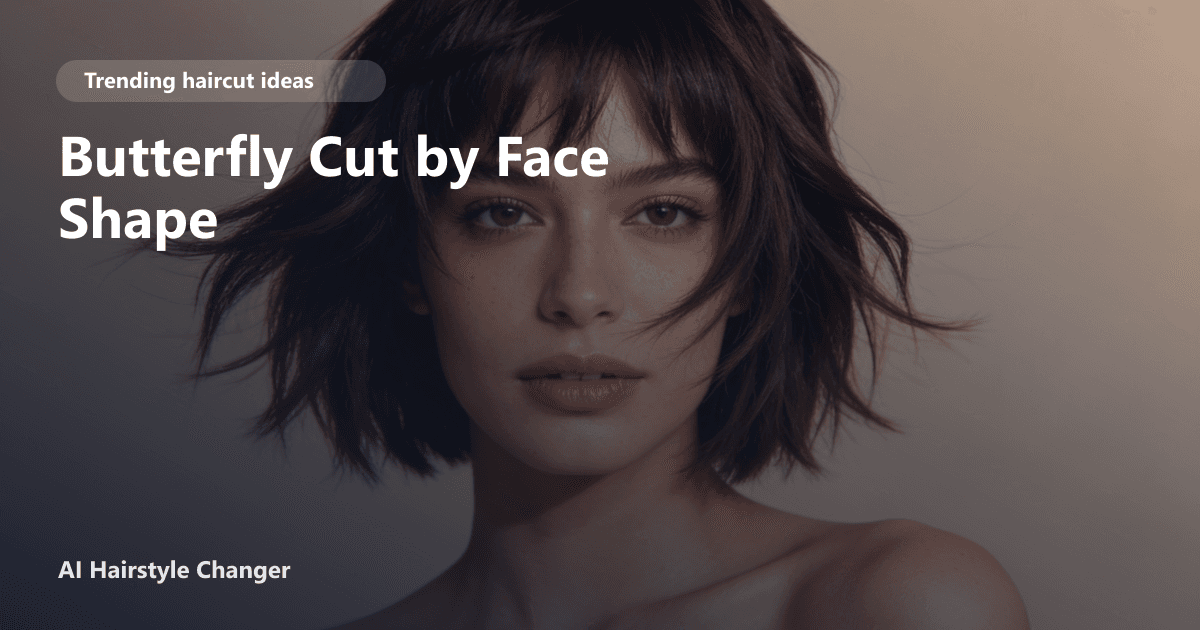
Every haircut decision comes with a risk: Will this style actually suit my face shape, or will I leave the salon wishing I'd chosen differently? The butterfly cut - a layered, voluminous look that's everywhere right now - offers versatility, but the way it frames your face can make all the difference. Before you commit, it pays to see how the butterfly cut adapts to round, oval, square, and heart-shaped faces. Here's how to find your best match, what to ask for at the salon, and how to preview the look on yourself with AI Hairstyle Changer before you snip.
Why the Butterfly Cut Works for So Many Face Shapes
The butterfly cut's signature: long, graduated layers that start around the cheekbones and cascade down, creating movement and softness. This cut is designed to add shape and volume, making it a favorite for anyone craving a fresh, modern look that grows out gracefully. But the placement of those layers - and whether you add curtain bangs, a face-framing fringe, or keep it all one length - can dramatically change the effect on your features.
Unlike the classic shag or wolf cut, which can be choppier or edgier, the butterfly cut is all about blending. Its adaptability is why it's trending alongside styles like the wolf cut and the layered shag. But that flexibility also means there's a lot of room for interpretation - and potential for regret if the wrong layering or length is chosen for your face shape.
Butterfly Cut for Round Faces: Adding Angles and Length
If your face is widest at the cheeks with a rounded jawline, the butterfly cut can be a game-changer. The goal: create the illusion of length and subtle angles.
- Layering: Ask your stylist for layers that start just below the chin. Avoid too much volume at the cheeks, which can make your face appear rounder.
- Fringe direction: Long curtain bangs that sweep outwards elongate the face. Skip blunt or short bangs.
- Length: Keeping the overall length below the shoulders helps balance proportions.
- Volume placement: Focus on volume at the crown and ends, not at the sides.
A well-placed butterfly cut on a round face draws the eye downward, slimming and elongating your silhouette. Use AI Hairstyle Changer to try on variations with different bang lengths and layer placements to see what flatters you most before you book your appointment.
Butterfly Cut for Oval Faces: Maximum Versatility
Oval faces are often considered the most versatile for haircuts, and the butterfly cut is no exception. With balanced proportions and gently curved lines, you can experiment with almost any variation.
- Layering: Layers can start anywhere from the cheekbones to the collarbone. For a dramatic effect, ask for face-framing layers that highlight your cheekbones.
- Fringe direction: Curtain bangs, wispy fringe, or no bangs at all - oval faces can pull off each option.
- Length: Both medium and long butterfly cuts work well, depending on your hair texture and lifestyle.
- Volume placement: Play with volume at the crown for a retro vibe, or keep it sleek for a modern look.
If you're not sure which version to choose, use AI Hairstyle Changer to test out subtle versus bold layering, different bang styles, and varying lengths. You'll get a sense of what feels most like you - before you commit.
Butterfly Cut for Square Faces: Softening Strong Angles
Square faces feature a broad forehead, strong jawline, and straight sides. The butterfly cut can soften these angles and add movement, but it's all about strategic layering.
- Layering: Start layers at or just below the jawline to break up sharp lines. Avoid blunt ends; opt for feathered, blended layers.
- Fringe direction: Side-swept or curtain bangs help soften the forehead and jaw. Skip heavy, straight-across bangs.
- Length: Medium to long lengths work best, as short layers can emphasize squareness.
- Volume placement: Keep volume around the crown and ends, not at the jaw.
Show your stylist reference photos with soft, blended layers and ask for a cut that moves naturally. AI Hairstyle Changer lets you preview how different layering and bang options will balance out your features.
Butterfly Cut for Heart-Shaped Faces: Balancing the Forehead and Chin
Heart-shaped faces have a wider forehead and a narrower, sometimes pointed chin. The butterfly cut can bring harmony by adding fullness where it's needed most.
- Layering: Start layers around the collarbone or just below the chin. This draws attention downward and adds body near the jaw.
- Fringe direction: Curtain bangs or soft, side-swept fringe can minimize the width of the forehead.
- Length: Medium to long lengths add balance. Avoid layers that start too high up, which can exaggerate the forehead.
- Volume placement: Focus on volume at the ends and around the jaw, not at the crown.
Try on different butterfly cut variations using AI Hairstyle Changer to see which layering and fringe combination best balances your features. Bring your favorite look as a reference to your stylist.
Butterfly Cut Variations: Personalizing Your Look
The butterfly cut isn't one-size-fits-all. Here are four popular variations to consider, each with its own vibe and maintenance needs:
1. Classic Butterfly Cut: Long, blended layers with curtain bangs. Works for most face shapes and is easy to style with a round brush or blow dryer. 2. Butterfly Cut with Shaggy Layers: Adds more texture and volume, taking inspiration from the shag and wolf cut. Great for those who want an edgier look. 3. Butterfly Cut for Curly Hair: Layering is adjusted for curls, with longer face-framing pieces to prevent poofiness. See Wolf Cut for Curly Hair: Layers Without Losing Shape for more curl-specific tips. 4. Short Butterfly Cut: Layers start higher up, with the overall length hitting at the shoulders. This version is lower maintenance but can be less forgiving for certain face shapes - always try it on first.
No matter which variation you choose, bring clear reference photos and be specific about where you want layers to start, how much volume you want, and whether you prefer a soft or bold fringe.
What to Ask Your Stylist (and What to Avoid)
A successful butterfly cut comes down to clear communication. Here's what to discuss at your appointment:
- Face shape goals: Explain if you want to elongate, soften, or balance your features.
- Layer starting point: Be precise - "layers starting at the cheekbones" is different from "layers at the collarbone."
- Fringe preference: Decide on curtain bangs, side-swept, or no bangs. Bring try-on photos if possible.
- Maintenance: Ask about styling time, recommended tools, and how often you'll need trims.
- What to avoid: Avoid blunt layers if you want movement, or short layers if you're worried about volume in the wrong places.
Previewing your ideal look with AI Hairstyle Changer helps you walk in with confidence and a clear vision - no more vague requests or post-cut surprises.
Maintenance and Styling Tips
The butterfly cut's layered structure means it can require more styling than a blunt cut, especially if you want to keep the shape fresh:
- Use a round brush and blow dryer to lift layers and create volume.
- For natural texture, scrunch in a lightweight mousse or curl cream.
- Trim every 8 - 12 weeks to maintain shape and prevent split ends.
- Dry shampoo can help add volume at the crown between washes.
Ask your stylist for product recommendations based on your hair type. If you're deciding between the butterfly cut and a more textured style, check out Best Wolf Cut Ideas for Long Hair for inspiration.
How to Try On the Butterfly Cut Before You Commit
The best way to avoid haircut regret is to see the style on yourself first. AI Hairstyle Changer lets you upload a selfie and preview butterfly cut variations tailored to your face shape. Adjust the length, layering, and fringe in real time, then save your favorites as salon references.
This try-on step is especially useful if you're torn between a butterfly cut, a wolf cut, or a modern shag. You can compare all three, see how they interact with your features, and make a confident, informed decision before you sit in the chair.
FAQ
How do I know if the butterfly cut will suit my face shape?
The butterfly cut is highly adaptable, but the key is customizing the starting point of layers and choosing the right fringe. Use a virtual try-on tool like AI Hairstyle Changer to see how subtle changes impact your look.
Can I get a butterfly cut with curly or textured hair?
Absolutely. The cut can be tailored for curls by starting layers lower and focusing on blended, face-framing pieces. For more on curly adaptations, visit Wolf Cut for Curly Hair: Layers Without Losing Shape.
What's the difference between a butterfly cut and a wolf cut?
The butterfly cut features longer, softer layers and more blending, while the wolf cut is choppier and edgier. Both can be tried on virtually to compare their effect on your face shape - see Wolf Cut Guide: Who It Suits and How to Style It for more details.
How do I explain the butterfly cut to my stylist?
Bring clear reference photos and specify where you want layers to start, your preferred fringe, and your styling routine. Virtual try-on images from AI Hairstyle Changer can help make your vision clear.
Takeaway: See the Butterfly Cut on Yourself Before You Cut
The right butterfly cut can transform your look, but it's all about the details - layer placement, fringe style, and how it works with your face shape. Before you make the chop, preview your options with AI Hairstyle Changer and walk into your next salon appointment with confidence.