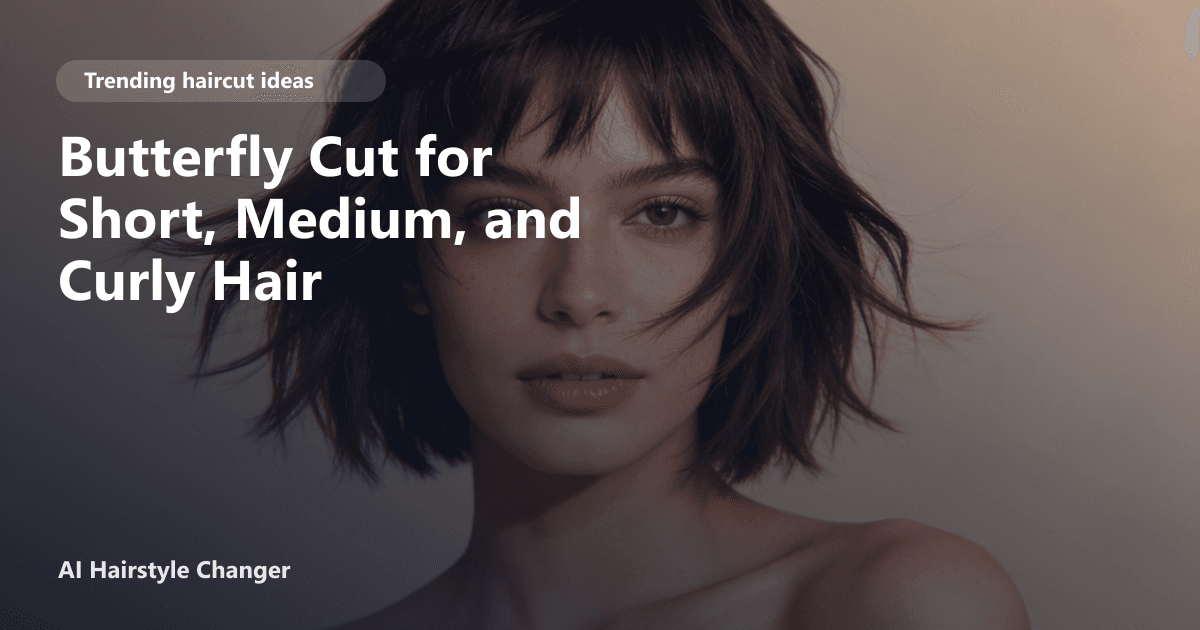
Butterfly Cut for Short, Medium, and Curly Hair becomes a useful topic only when it helps you make a real haircut decision. The right version has to solve proportion, texture, density, and maintenance at the same time instead of simply looking strong in a reference image.
This page matters most for curly hair where shrinkage, layering, and dry-shape balance matter more than the trend name. AI Hairstyle Changer is useful here because you can compare those tradeoffs on your own selfie before the appointment, which makes the salon conversation more concrete and less dependent on vague inspiration.
What decision this page should help you make
The first question is not whether butterfly cut for short, medium, and curly hair is trending. The real question is which version of the idea changes your outline in a way you will still like after the salon finish softens.
Use the topic to decide where you want length, width, lift, or texture to sit. That is the part that changes whether the haircut feels flattering or slightly wrong once you are back in everyday lighting.
Who this tends to suit best
This direction usually works best for curly hair where shrinkage, layering, and dry-shape balance matter more than the trend name. Even then, the shape still has to line up with how much movement, polish, or softness you actually want around the face.
When the reference photo looks strong but your own proportions are telling a different story, trust the proportions. A haircut that solves the real structural problem will outperform a trendier option that only looks impressive on someone else.
The best variations to preview first
Do not preview only one perfect reference. Compare a few controlled versions so the tradeoff becomes obvious before the appointment.
- Softer face-framing version if you want movement without losing overall length.
- Shorter crown version if the goal is more lift and obvious shape.
- Heavier perimeter version if you want less feathering at the ends.
- Texture-led version if you want the cut to work with waves or curls instead of fighting them.
What to ask for at the salon or barbershop
Naming the haircut family is not enough. The brief gets better when you explain where you want the visual weight, how much texture you can maintain, and what kind of grow-out you can live with.
The stylist or barber can react much more accurately when you describe the finish, the outline, and the maintenance cadence instead of relying on a trend label alone.
- Ask where the shape should sit once the curl dries, not only when it is stretched or blown out.
- Discuss how much shrinkage to allow around the fringe, cheekbones, and neckline.
- Be clear about whether you want volume at the crown, the sides, or only through the ends.
- Bring one reference for the front and one for the side profile so the outline stays intentional.
Styling, upkeep, and grow-out
Curly shapes often live or die on shrinkage, not just the wet cut line.
The cut has to look balanced without diffuser-perfect styling, otherwise the shape falls apart between wash days.
Check whether the silhouette still works when curls tighten, frizz expands slightly, or the crown dries flatter than expected.
What the preview should confirm before you book
The preview should answer a narrow set of questions: where the width lands, whether the outline sharpens or softens the face, and whether the haircut still feels believable on your own texture.
If the front view looks good but the side profile feels wrong, that is still useful information. The winning version needs to hold together from more than one angle because that is how the haircut will be seen in real life.
- Compare the front view and overall outline before picking a winner.
- Keep the option that still works when the styling is less perfect.
- Use the preview to remove one weak direction before the appointment, not to collect endless inspiration.
When the idea usually disappoints
Curly versions fail when the layer placement ignores shrinkage or when the cut is judged only wet and stretched instead of at its natural spring pattern.
That is why the preview should be judged on an average-day version of you, not only on the best possible salon blowout or barbershop finish.
Use AI try-on before you commit
AI Hairstyle Changer is most useful when you are deciding between two or three close options. Instead of asking whether a haircut is trendy, you can ask whether it improves your own proportions and whether the finish feels wearable for your routine.
Start with AI Hairstyle Changer: Try New Looks Before You Cut, keep the source photo neutral, and compare the versions that solve different problems rather than only the ones that share the same trend label.
- Use a clean, front-facing selfie with the hairline visible and minimal filtering.
- Compare two or three close versions instead of jumping straight to the most dramatic option.
- Keep the version that looks believable from the front and from the overall outline, not only in one angle.
Read next
FAQ
Is butterfly cut for short, medium, and curly hair a good idea if I want something low maintenance?
It can be, but only when the length placement, weight distribution, and styling demands fit your real routine instead of the ideal reference photo.
What matters more than trend photos when choosing butterfly cut for short, medium, and curly hair?
Face shape, density, natural texture, and maintenance tolerance matter more because they decide whether the cut still looks right after the first week.
Should I try the look virtually before asking for it in the salon?
Yes. A try-on preview is useful because it helps you compare shape, width, and length placement on your own face before making the change.
The fastest way to move from inspiration to a usable decision is to preview the haircut on your own photo, then bring the strongest option into the appointment. AI Hairstyle Changer: Try New Looks Before You Cut is the cleanest place to do that inside AI Hairstyle Changer.