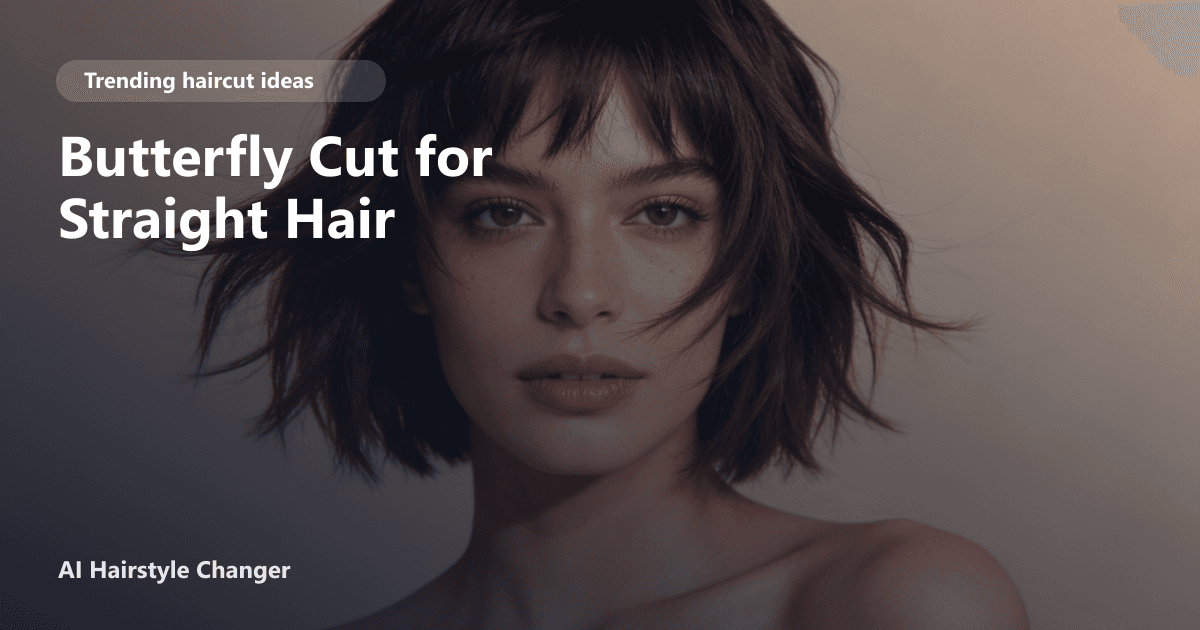
Are you debating a major change for your straight hair, but worried about taking the plunge? The butterfly cut is everywhere right now - yet it's hard to know if those feathery, face-framing layers will actually flatter you, or just fall flat. If you've ever left the salon wishing you could have previewed the outcome first, you're not alone. This guide breaks down exactly how the butterfly cut works for straight hair, which variations suit different face shapes and lifestyles, and how you can try it on virtually before you commit.
Why the Butterfly Cut Works for Straight Hair
The butterfly cut is defined by its cascading, blended layers that create both movement and volume - without sacrificing length. On straight hair, this style delivers a soft, airy effect that can transform limp locks into something dynamic and face-framing. The cut's signature: shorter layers around the face that mimic curtain bangs, with longer, flowing layers beneath. This creates a "butterfly wing" illusion, giving straight hair a lift that's often hard to achieve without waves or curls.
Unlike blunt cuts that can make straight hair look heavy or flat, the butterfly cut adds structure and dimension. It's especially effective if you want to keep your length but crave a noticeable change. With the right approach, it can even make fine or thin hair appear fuller - though the wrong layering can have the opposite effect. The key is customizing the cut to your hair's density, face shape, and styling habits.
Four Butterfly Cut Directions for Straight Hair
There's no one-size-fits-all butterfly cut. Here are four distinct directions to consider, each with its own vibe and maintenance needs:
- Classic Butterfly Layers: The original look features face-framing layers starting at the cheekbones or jaw, blending into longer layers throughout the length. This works well for medium to long straight hair and flatters oval, round, and heart-shaped faces.
- Subtle Butterfly for Fine Hair: For those with fine, straight hair, ask your stylist for softer, less dramatic layering. The shortest layers should start below the chin, avoiding too much volume loss at the crown. This keeps the hair looking full but still airy.
- Butterfly Cut with Curtain Fringe: Adding a curtain fringe to the butterfly cut creates a 70s-inspired effect, softening strong jawlines and elongating round faces. The fringe should blend seamlessly into the shortest layers for a cohesive look.
- Long Butterfly with Shag Influence: For a more lived-in, tousled vibe, combine butterfly layers with subtle shaggy ends. This works for those who want extra movement and are comfortable with a bit of daily styling. It's also a great way to transition from a wolf cut or a classic shag.
What to Ask for at the Salon
A successful butterfly cut starts with a clear conversation. Bring reference photos (or better yet, a virtual try-on result from AI Hairstyle Changer) and describe exactly where you want the shortest layers to fall. Key points to cover:
- Layer Placement: Specify if you want the shortest layers at the cheekbones, jawline, or below the chin. For a dramatic effect, go higher; for a subtle change, stay lower.
- Length Retention: Emphasize that you want to keep most of your length. The butterfly cut is about layers, not losing inches.
- Fringe Preferences: Decide if you want curtain bangs, a full fringe, or no fringe at all. Curtain bangs blend best with butterfly layers on straight hair.
- Styling Routine: Be honest about how much time you'll spend styling. If you rarely use a blow dryer or round brush, ask for layers that work with air-drying.
Maintenance and Upkeep: What to Expect
The butterfly cut is low-maintenance in terms of shape - it grows out gracefully and doesn't require constant trims. However, straight hair can lose its airy effect if the layers get too long or heavy. Plan for a refresh every 8-12 weeks to keep the movement and volume intact.
Styling is flexible. Blow drying with a round brush or using large rollers will amplify the layers and create that signature "winged" shape. For a more casual look, air-drying with a lightweight volumizing spray can work, especially if your hair isn't ultra-fine. If you're used to wash-and-go, ask your stylist for softer, blended layers that won't need daily heat styling.
Keep in mind: Over-layering can make fine straight hair look thin or stringy. If your hair is very dense, you may need more aggressive texturizing to avoid bulk at the ends.
When the Butterfly Cut Isn't the Best Fit
While the butterfly cut is versatile, it doesn't suit everyone equally. Here's when you might want to reconsider:
- Ultra-Fine or Very Thin Hair: Too many layers can make hair appear sparse. Opt for longer, blended layers and avoid aggressive texturizing.
- Super Short Hair: The butterfly effect relies on length. If your hair is above the shoulders, you may get a better result with a classic shag or a modified wolf cut. See Wolf Cut Guide: Who It Suits and How to Style It for more options.
- Minimal Styling Commitment: If you never style your hair and dislike any volume at the crown, the butterfly cut's signature shape may fall flat. Consider a softer, more subtle version, or try a long-layered cut instead.
Butterfly Cut vs. Wolf Cut vs. Shag: How They Compare
The butterfly cut, wolf cut, and shag all belong to the same trend family of layered, movement-focused styles, but each has unique traits:
| Style | Key Features | Best For | Upkeep Level |
|---|---|---|---|
| Butterfly Cut | Soft, face-framing layers, volume at crown, long length | Straight to wavy hair, those wanting length | Moderate |
| Wolf Cut | Choppy, disconnected layers, mullet influence | Thick or textured hair, edgy look | Moderate to high |
| Shag | All-over layers, messy texture, often with bangs | All hair types, especially fine hair needing volume | Moderate |
The butterfly cut is the softest and most versatile of the three for straight hair, while the wolf cut delivers a bolder, more rebellious edge (see Best Wolf Cut Ideas for Long Hair). The shag is the go-to for those who want maximum texture and a retro vibe. For curly hair, see Wolf Cut for Curly Hair: Layers Without Losing Shape.
Real-Life Examples: Butterfly Cut Inspiration for Straight Hair
- Mid-Back Length with Cheekbone Layers: A classic butterfly cut with layers starting at the cheekbones, ideal for elongating round faces. Works best with a blowout or large-barrel curling iron for movement.
- Collarbone Length with Curtain Fringe: For those ready to lose some length, a shorter butterfly cut paired with a curtain fringe creates a chic, modern look. This version is easy to style and grows out well.
- Ultra-Long with Minimal Layers: If you're attached to your length, ask for only a few face-framing layers and subtle long layers at the back. This adds shape without sacrificing fullness.
- Butterfly Shag Hybrid: For a trend-forward look, blend butterfly layers with a shag's choppy ends and brow-grazing fringe. This requires more styling but delivers serious volume and attitude.
Try Before You Cut: The AI Hairstyle Changer Advantage
Committing to a new cut can be nerve-wracking, especially with layered styles that dramatically change your silhouette. AI Hairstyle Changer lets you upload a selfie and preview the butterfly cut (or any trend style) on your own straight hair. You can experiment with different layer placements, fringe options, and lengths - then save your favorites to show your stylist. This reduces the risk of haircut regret and helps you communicate exactly what you want.
Many users find that seeing the butterfly cut on themselves - rather than on a model - makes the decision much easier. You can also compare the butterfly cut to wolf and shag variations, ensuring you choose the direction that fits your face shape and styling routine best.
FAQ
How do I know if the butterfly cut will suit my straight hair?
The butterfly cut works best if you have medium to long straight hair and want movement without losing length. If your hair is very fine, opt for softer, less aggressive layers. Trying the look virtually with AI Hairstyle Changer can help you visualize the result before committing.
What's the difference between a butterfly cut and a wolf cut on straight hair?
The butterfly cut features soft, blended layers for a voluminous but polished effect, while the wolf cut uses choppier, more disconnected layers for a bold, edgy look. The wolf cut often involves more texturizing and a mullet-inspired silhouette. For more on the wolf cut, see Wolf Cut Guide: Who It Suits and How to Style It.
How often should I trim a butterfly cut on straight hair?
Plan to trim every 8-12 weeks to maintain the shape and prevent layers from growing out unevenly. If you prefer a low-maintenance routine, ask your stylist for longer, blended layers that grow out softly.
Can I try the butterfly cut virtually before my salon visit?
Yes! With AI Hairstyle Changer, you can upload a selfie and preview the butterfly cut, wolf cut, or shag on your own straight hair. This helps you make a confident choice and gives your stylist a clear visual reference.
Takeaway: Preview Your Next Look Before You Commit
Choosing a new layered style like the butterfly cut can be transformative for straight hair - but it's a decision that deserves confidence. Use AI Hairstyle Changer to try on the butterfly cut, wolf cut, or shag virtually, compare your options, and walk into your next salon appointment knowing exactly what you want. Ready to see your future hair? Try new looks before you cut.