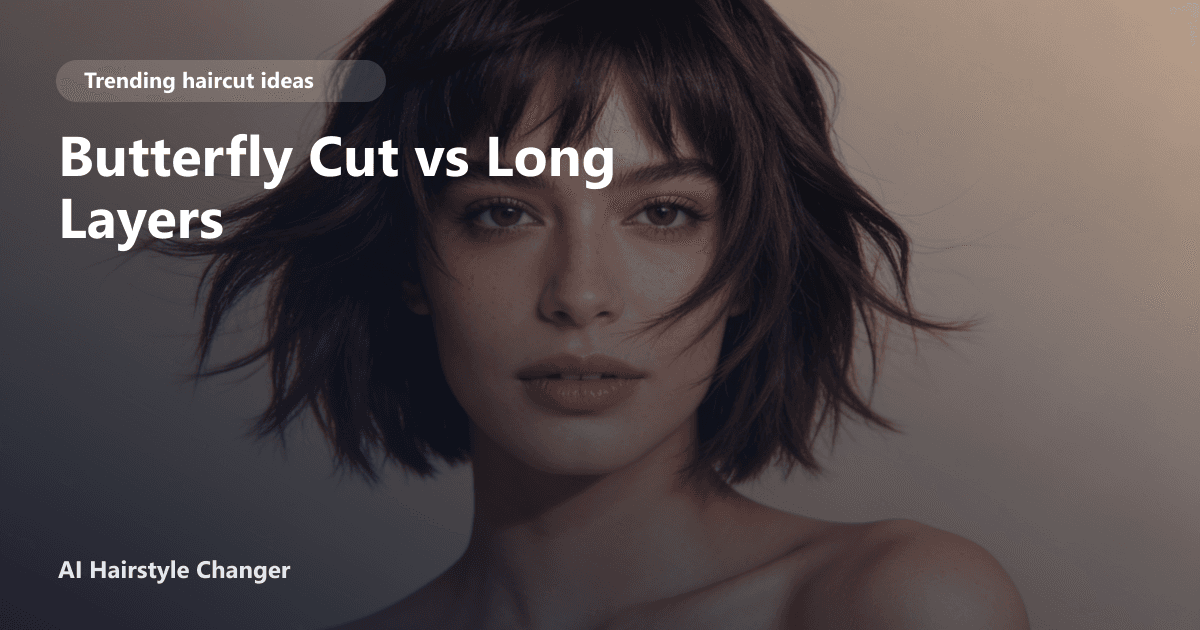
Choosing your next haircut can feel like a high-stakes decision, especially if you're torn between two trending, layered styles: the butterfly cut and long layers. Maybe you've spent hours scrolling inspiration photos, trying to picture how each look would frame your face, add movement, or fit your lifestyle. The last thing anyone wants is to walk out of the salon with haircut regret. That's why understanding the real differences - and previewing them with tools like AI Hairstyle Changer - can make all the difference.
Butterfly Cut vs Long Layers: Core Differences
Both the butterfly cut and long layers are designed to add dimension and movement to longer hair, but they achieve it in distinct ways. The butterfly cut is all about dramatic, face-framing layers that mimic the fluttering wings of a butterfly, often with shorter pieces around the face and longer, flowing lengths at the back. Long layers, by contrast, keep things subtler: layers are typically less pronounced, with the main goal of reducing weight and adding soft movement without major changes to your silhouette.
Here's a quick breakdown:
| Feature | Butterfly Cut | Long Layers |
|---|---|---|
| Layer Placement | Short, voluminous around face | Subtle, blended throughout |
| Volume | High at crown, airy ends | Even, natural movement |
| Styling | 70s blowout, curtain fringe | Sleek, beachy, or wavy |
| Upkeep | Moderate, needs styling | Low, grows out seamlessly |
| Who It Suits | Medium to thick hair, oval/heart faces | Most hair types, versatile |
The Butterfly Cut: Who It Flatters and How to Nail It
The butterfly cut is ideal for anyone craving a major shape change without sacrificing length. Its signature is the bold, short layers that start at the cheekbones or jawline, blending into much longer lengths. This creates the illusion of two haircuts in one - short, bouncy pieces up front and flowing length at the back.
Who it works for:
- Medium to thick hair (fine hair may struggle to hold the volume)
- Oval, heart, or square face shapes
- Anyone who loves a 70s-inspired, feathered look
What to ask for at the salon:
- Short, face-framing layers starting at cheekbone or jaw
- Longer layers at the back, with minimal thinning on the ends
- Optional curtain bangs or a soft fringe for extra movement
Styling and upkeep:
- Blow-drying with a round brush or using hot rollers enhances the shape
- Use volumizing mousse or spray at the roots
- Expect to style most days for best results
- Trims every 8-10 weeks keep layers fresh
If you're unsure how dramatic to go, AI Hairstyle Changer lets you preview different butterfly cut variations - subtle or bold - so you can show your stylist exactly what you want.
Long Layers: Effortless Movement, Minimal Fuss
Long layers are a classic for a reason. They're perfect if you want to keep your length but crave more movement and less bulk. The layers are usually cut starting below the chin and are blended softly down the length, avoiding harsh lines or choppy texture.
Who it works for:
- Straight, wavy, or curly hair
- Almost any face shape (layers can be tailored to flatter)
- Anyone who prefers low-maintenance styling
What to ask for at the salon:
- Long, blended layers starting below the chin or collarbone
- No harsh steps or overly short pieces
- Optional face-framing pieces for softness
Styling and upkeep:
- Air-dry for natural movement, or use a large curling iron for waves
- Minimal product needed - just a smoothing serum or light mousse
- Grows out gracefully, so trims can be spaced 10-12 weeks apart
If you want to see how subtle or pronounced your layers could look, AI Hairstyle Changer can help you test-drive different versions before you commit.
Butterfly Cut Variations: Customizing for Your Texture
Not all butterfly cuts are created equal. Your hair texture and density play a huge role in how the layers fall and how much volume you'll get.
- For thick, straight hair: Go for more pronounced, chunky layers to avoid a heavy, blocky look. Ask your stylist to texturize the ends for movement.
- For wavy hair: Softer, graduated layers will enhance your natural texture. Avoid over-layering, which can make hair look thin at the ends.
- For curly hair: Butterfly cuts can work, but the shortest layers should start below the cheekbone to avoid excessive volume at the crown. For more on curly options, see Wolf Cut for Curly Hair: Layers Without Losing Shape.
- With curtain bangs: Pair with a butterfly cut for the ultimate 70s vibe, but keep the fringe long enough to blend with your shortest layers.
Trying these variations virtually with AI Hairstyle Changer can help you decide what length and layering suits your unique hair.
Long Layer Variations: Personalizing for Your Style
Long layers are endlessly adaptable. Here are four popular directions:
- Face-framing layers: Add shorter pieces around the face for a soft, flattering effect. Great for round or heart-shaped faces.
- U-shaped back: The back is cut in a gentle U, with the longest hair at the center. This adds shape and prevents a flat, straight-across look.
- Subtle layers: Minimal layers for those who want movement but fear losing thickness.
- Blended shag layers: For a modern twist, ask for shaggier, more textured layers that stop short of a full shag or wolf cut. See Wolf Cut Guide: Who It Suits and How to Style It for more inspiration.
If you're not sure which version matches your vibe, upload your selfie to AI Hairstyle Changer and try on different long-layered looks before your appointment.
When Each Style Fails: Pitfalls to Avoid
No haircut is one-size-fits-all. Here's when each style can miss the mark:
Butterfly cut fails when:
- Hair is too fine or thin - layers can look wispy instead of voluminous
- You don't want to style daily - this cut needs shaping to look its best
- The shortest layers are cut too high, making hair look dated or overly voluminous
Long layers fail when:
- Layers are too subtle, making no visible difference
- Over-layering leads to thin, straggly ends
- Not tailored to your face shape, resulting in a lack of framing
A realistic preview with AI Hairstyle Changer helps you avoid these mistakes by showing how each style will fall on your actual hair and face.
Maintenance and Upkeep: What to Expect
Butterfly Cut:
- Requires more frequent styling for volume and shape
- Trims every 8-10 weeks to keep layers crisp
- Best with volumizing products and a round brush
Long Layers:
- Low-maintenance, air-dries well
- Trims every 10-12 weeks
- Works with most styling routines, from air-drying to heat tools
If you're looking for a style that grows out gracefully, long layers are the safer bet. If you're ready to commit to styling and crave a dramatic change, the butterfly cut delivers.
Related Styles: Wolf Cut and Shag Comparisons
If you're drawn to layered, textured looks, you might also consider the wolf cut or modern shag. These styles amp up the texture and edge:
- Wolf cut: A hybrid of shag and mullet, with choppy layers and lots of volume at the crown. See Best Wolf Cut Ideas for Long Hair for inspiration.
- Shag: Messier, more rock-and-roll, with layers throughout and optional fringe. Great for adding volume and movement to any length.
If you're curious about how these compare to the butterfly cut or long layers, AI Hairstyle Changer lets you try them all virtually for a side-by-side comparison.
FAQ
How do I know if a butterfly cut or long layers will suit my face shape?
Butterfly cuts work best with oval, heart, or square faces, thanks to their bold, face-framing layers. Long layers are more versatile and can be tailored to flatter any face shape. Trying both virtually helps you see which frames your features best.
Can I combine a butterfly cut with long layers?
Yes, many stylists blend elements of both. You can ask for pronounced face-framing layers like the butterfly cut, with softer, blended long layers at the back for a customized look.
Which style is better for low-maintenance routines?
Long layers require less daily styling and grow out more gracefully. The butterfly cut needs more upkeep to maintain volume and shape.
How can I show my stylist exactly what I want?
Bringing reference photos is key, but using AI Hairstyle Changer to create a preview of your chosen style on your own face gives your stylist the clearest direction.
Takeaway: Try Before You Cut
Deciding between a butterfly cut and long layers doesn't have to be a gamble. With tools like AI Hairstyle Changer, you can preview both styles on your own selfie, shortlist your favorites, and walk into your next salon appointment with total confidence. Don't leave your new look to chance - see it, love it, then make it real.