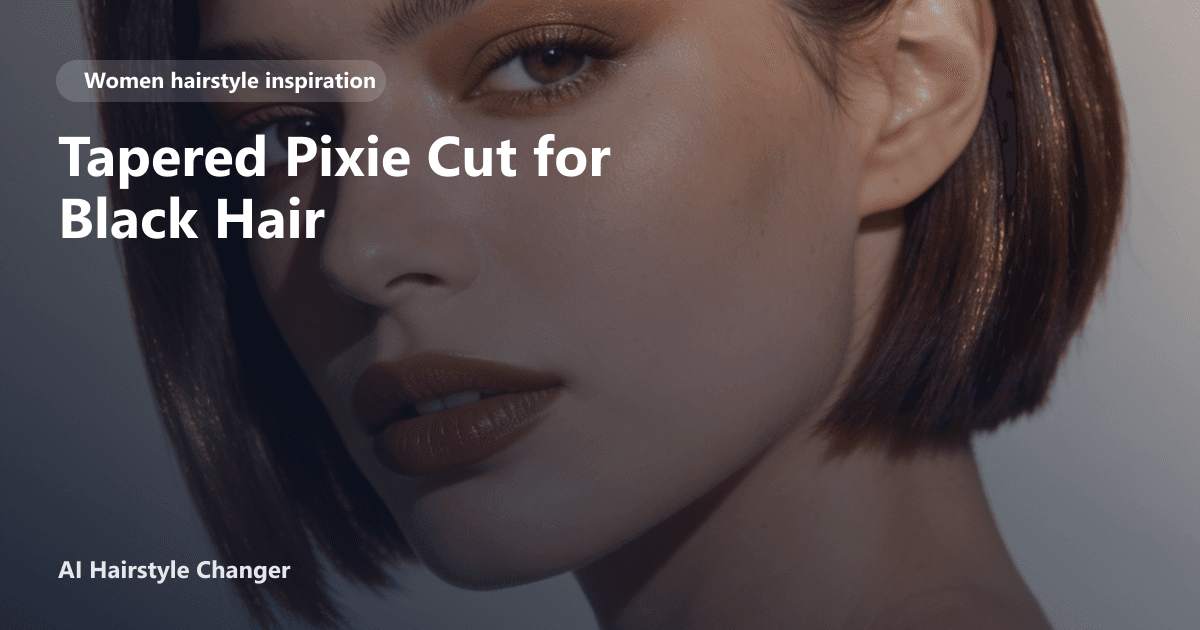
You're scrolling through photos of tapered pixie cuts on Black hair, saving every sharp edge and perfectly coiled crown, but you keep asking yourself: will this actually look right on my hair texture? Will my stylist understand the shape I want? And how much work is this really every morning?
A tapered pixie is one of the most striking short cuts for Black women, but the difference between a cut you love and one you hide under a wig for three months comes down to specifics - your curl pattern, density, face shape, and the exact language you use at the salon. This guide covers what to ask for, who this cut flatters, and how to maintain it without living at the barbershop.
What Makes a Tapered Pixie Different from Other Short Cuts
A tapered pixie isn't just a short cut. It's a graduated shape where the sides and back are clipped close - sometimes faded, sometimes undercut - while the top and crown maintain length and volume. For Black hair, this creates a dramatic silhouette that showcases texture while keeping maintenance manageable.
Key differences from similar styles:
- Versus a regular pixie: Standard pixies often have uniform short layers all over. A tapered pixie deliberately keeps length on top while the perimeter is faded.
- Versus a fade: Fades are typically clipper cuts that graduate down to skin. A tapered pixie uses that technique but pairs it with longer, styled hair on top.
- Versus a teeny weeny afro (TWA): TWAs are usually one even length all around. A tapered pixie manipulates that shape by removing bulk from the sides and nape.
The result is a style that frames the face, elongates the neck, and gives you styling options - twist-outs, finger coils, wash-and-go definition - without the weight of a full head of hair.
Face Shapes and Hair Textures That Work Best
Not every short cut flatters every face, and a tapered pixie is no exception. The good news: it's more versatile than you think.
Face shapes that shine:
- Oval and diamond: These shapes handle the close sides easily. The top volume balances proportions without adding width.
- Heart-shaped: The tapered nape and sides prevent a top-heavy look, while the crown length softens a pointed chin.
- Square: A tapered pixie with rounded edges at the crown and soft sideburns can offset a strong jawline.
- Round: Proceed with caution. You'll need significant height on top and a deeper side part to create length. Avoid too much volume at the sides.
Hair textures and densities:
- Type 4a - 4c: Coily textures give natural lift and shape. The taper removes bulk that can make short cuts appear triangular.
- Type 3c: The defined curls on top create a polished, sculpted look. You may need more frequent trims to maintain the taper.
- High density: Tapering is ideal for removing weight. Your stylist can thin without sacrificing the overall shape.
- Low density: Ask for a higher taper (longer on sides) and avoid taking the crown too short. You need enough length to create the illusion of fullness.
If you're unsure how your face shape or texture will translate, use an AI hairstyle changer to preview the proportions. Upload a clear selfie and test different taper lengths and top volumes - this shows you exactly where the fade should start and how much crown length you need.
How to Ask Your Stylist for the Right Taper
Vague instructions lead to vague results. "I want a tapered pixie" isn't enough. Bring reference photos, but also know the terminology.
Specific language to use:
- Taper height: Specify where you want the shortest point to begin. "Start the taper at the top of my ear" or "Keep it low, fading from my occipital bone."
- Clipper guard numbers: Ask for a #1 or #2 guard at the nape if you want it close. For a softer look, request a #3 or #4.
- Crown length: State inches or finger-widths. "Leave two inches on top" or "I want enough length for a two-strand twist."
- Perimeter shape: "Round the edges at my temples" or "Keep the sideburns sharp and angled."
- Nape preference: "Tapered nape" versus "blocked nape" changes the neckline completely.
Red flags at the salon: If your stylist reaches for the clippers before discussing the top length, pause the conversation. The top is the focal point; the taper supports it. Also, if they suggest relaxing your natural texture "to make it easier," that's a sign they may not be comfortable shaping natural hair.
Bring at least three photos: one showing the exact taper height, one showing the crown length and texture, and one showing the perimeter shape from the back. This eliminates guesswork.
The Real Maintenance Schedule
A tapered pixie is low-manipulation, not low-maintenance. The shape demands precision.
Touch-up timeline:
- Clipper fade: Every 2 - 3 weeks to keep the taper crisp. If you stretch it to 4 weeks, the shape starts to collapse.
- Crown trim: Every 4 - 6 weeks to remove split ends and maintain the silhouette.
- Full reshape: Every 6 - 8 weeks. This is when your stylist redefines the entire cut, not just the perimeter.
At-home routine:
- Cleansing: Co-wash 1 - 2 times per week. Full shampoo every 7 - 10 days to prevent product buildup.
- Moisturizing: Light leave-in conditioner daily. Heavy creams weigh down short hair and blur the taper line.
- Styling: Finger-coil or twist the top section while damp. Use a soft-hold gel to define without crunch.
- Night care: Satin bonnet or scarf. Cotton pillowcases create frizz that's hard to tame on short hair.
Budget reality: Plan for $40 - $80 per salon visit, depending on your city. With biweekly taper touch-ups, that's $80 - $160 per month. If that's too frequent, ask for a longer taper that grows out more gracefully.
Styling Versatility: Making It Your Own
A tapered pixie doesn't lock you into one look. The top length is your playground.
Everyday options:
- wash-and-go: Apply curl cream to damp hair, shake, and let air-dry. The taper keeps the shape tidy.
- Twist-out: Two-strand twists on the crown create definition. Untwist for volume and texture.
- Finger coils: Define each coil for a polished, sculpted appearance. Lasts 3 - 5 days.
- Sleek side part: Use edge control and a boar-bristle brush to lay the top down for a more formal look.
Product recommendations:
- Lightweight leave-in: Kinky-Curly Knot Today or Camille Rose Curl Love.
- Defining gel: Eco Styler Olive Oil Gel (use sparingly) or Uncle Funky's Daughter Curly Magic.
- Edge control: Hicks Edges or Ebin New York 24 Hour Edge Tamer for sleek perimeter lines.
Accessorizing: Headbands, decorative combs, and statement earrings become focal points. The short sides draw attention to your face, so makeup and jewelry pop more than with longer styles.
When a Tapered Pixie Goes Wrong
Even a great cut can fail if the details are off. Here's what trips people up.
The taper starts too low: If the fade begins below your ear, the top looks heavy and the cut ages you. The taper should start at or above the ear for a modern lift.
Crown is too short: Taking the top too close removes styling options. You'll be stuck with one look and may feel exposed if the shape doesn't flatter your head contour.
Wrong clipper technique: A hard line where the taper meets the longer hair creates a visible shelf. The transition should be seamless, which requires clipper-over-comb or scissor-over-comb blending.
Ignoring growth patterns: If you have a strong cowlick at the crown, your stylist must cut with it, not against it. Otherwise, that section sticks up unpredictably.
Over-styling: Too much product or heat training the top can lead to breakage on short hair, where damage is more visible.
If you're nervous about these pitfalls, test the look digitally first. An AI hairstyle changer lets you adjust the taper height and crown length in real time, so you can spot potential issues before the clippers touch your hair.
FAQ
How do I know if my hair is too thin for a tapered pixie?
Low density isn't a dealbreaker, but you need enough length on top to create volume. Ask your stylist to leave at least two inches and avoid thinning shears. If you can see scalp easily when your hair is pulled into a puff, consider a style with more coverage, like the options in our Pixie Cut for Thin Hair guide.
Can I transition from relaxed hair to a natural tapered pixie?
Yes, but timing matters. Wait until you have at least two inches of new growth. The stylist will cut off the relaxed ends and shape the natural texture. During the grow-out phase, you may need more frequent trims to keep the line between textures from looking ragged.
How long does it take to grow out a tapered pixie?
Expect 6 - 12 months to reach a short bob length, depending on your growth rate. The awkward stage hits around month 3 - 4 when the sides are too long to be a pixie but too short to tuck. Plan for shape-up trims every 4 weeks during grow-out to avoid a mullet effect. For a smoother transition, see our Bob Haircut Guide for interim styles.
Will a tapered pixie work if I have a large forehead or high hairline?
Absolutely. The key is the fringe area. Ask for a longer, textured bang that softens the hairline. Side-swept or asymmetrical fringe draws attention away from the forehead and creates balance. Avoid styles that pull the top straight back, as that accentuates a high hairline.
Final Takeaway
A tapered pixie cut for Black hair delivers bold style and easy mornings - if you get the details right. Match the taper height to your face shape, keep the crown long enough for styling, and book touch-ups before the shape collapses. Most importantly, see the cut on you before you commit. Use an AI hairstyle changer to test taper placements, crown volumes, and edge shapes with your actual face and hair texture. When you walk into the salon with a clear preview and precise language, you leave with a cut that feels like you - not a guess that grows out in two weeks.
Ready to try it on? Upload your photo and experiment with tapered pixie variations to find your exact match before booking your appointment.