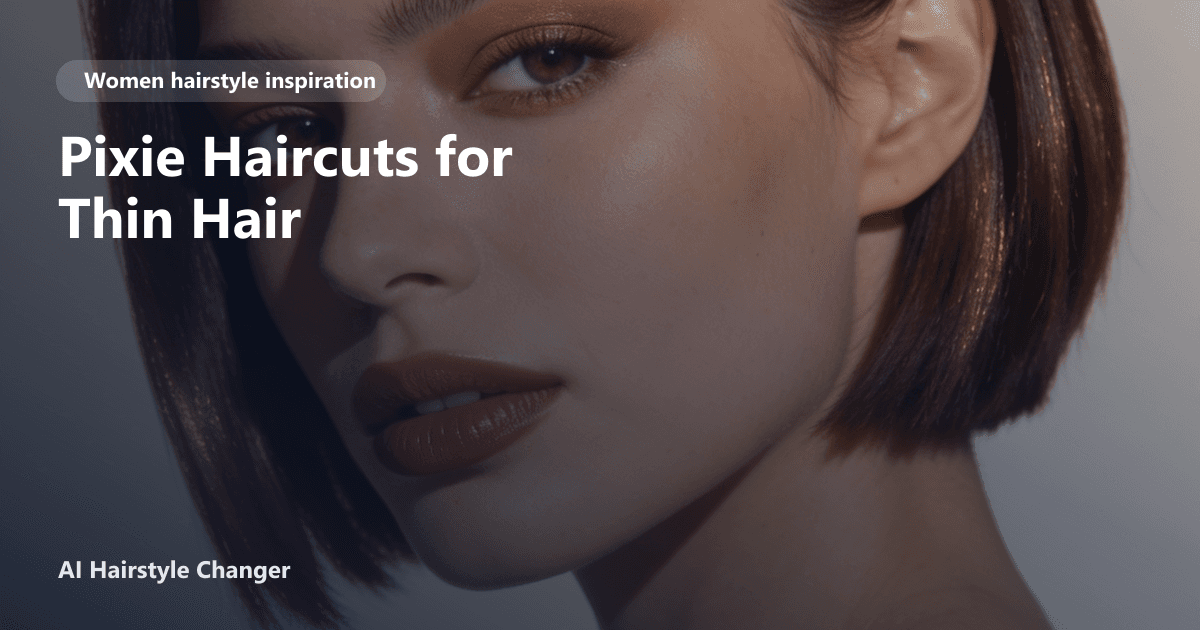
If you have thin hair and are considering a pixie cut, you're likely weighing two competing hopes: Will it make my hair look fuller and modern, or will it reveal every sparse patch and cowlick? The right pixie can absolutely transform fine hair, but not every short cut is created equal. This guide breaks down the most flattering pixie haircuts for thin hair, how to talk to your stylist, and how AI Hairstyle Changer can help you preview the look before you commit.
Why Pixie Cuts Work for Thin Hair
A well-executed pixie cut can add volume, movement, and edge to thin hair. By removing weight and bulk, short cuts allow the natural texture of fine hair to shine. Strategic layering and shape can create the illusion of density, making your hair appear thicker than it really is. However, the difference between a flattering, full-looking pixie and a limp, flat style often comes down to cut details and styling techniques.
The Textured Layered Pixie: Volume Where You Need It
The most popular pixie for thin hair is the textured, layered version. This cut uses choppy layers throughout the crown and sides, which encourages lift and movement. The stylist will usually keep the top slightly longer (2 - 3 inches) to allow for tousled styling, while the sides and back are tapered close to the head.
Who it suits:
- Most face shapes, especially oval, heart, and square
- Anyone wanting easy volume without heavy styling products
Salon conversation tips:
- Ask for soft, feathered layers at the crown
- Request a razor or point-cutting technique for texture
- Specify you want to avoid blunt edges, which can make thin hair look flat
Upkeep:
- Trim every 4 - 6 weeks to maintain shape
- Use a lightweight volumizing mousse or powder
When it fails:
- If layers are too short, hair may stick up or look sparse
- Over-thinning can exaggerate fine texture
The Side-Swept Pixie: Softness and Shape
A side-swept pixie features a longer fringe that drapes diagonally across the forehead. This style creates movement and draws the eye away from any thinning at the hairline or temples. The sides and back are kept neat, but not too tight, to maintain softness.
Who it suits:
- Round, square, and heart-shaped faces
- Those who want to keep some styling versatility
Salon conversation tips:
- Ask for a long, side-swept fringe (3 - 4 inches)
- Request subtle graduation at the nape for a feminine finish
- Avoid heavy, straight-across bangs, which can look sparse on thin hair
Upkeep:
- Blow-dry fringe with a round brush for lift
- Light texturizing spray helps maintain shape
When it fails:
- If the fringe is too thin, it may separate and reveal scalp
- Too much length can weigh down fine hair
The Undercut Pixie: Modern Edge for Thin Hair
For those craving a bold, fashion-forward look, the undercut pixie offers contrast and drama. The sides and back are clipped very short or even buzzed, while the top remains longer and textured. This difference in length creates the illusion of more volume on top, a trick especially effective for fine hair.
Who it suits:
- Oval and heart-shaped faces
- Confident personalities and those open to regular trims
Salon conversation tips:
- Specify how short you want the undercut (clippers #2 - #4 guard)
- Ask for disconnected length on top (2 - 4 inches)
- Request textured ends for movement
Upkeep:
- Undercut needs a touch-up every 3 - 4 weeks
- Styling cream or pomade defines texture
When it fails:
- If the top is left too long, it can look limp
- Harsh lines may not suit softer face shapes
The Classic Tapered Pixie: Subtle and Elegant
The classic tapered pixie is a timeless choice, offering a neat silhouette with gentle graduation from the nape up to the crown. This cut avoids extreme contrasts and is ideal for those who want a polished, low-maintenance look that still adds fullness.
Who it suits:
- Oval, heart, and long face shapes
- Anyone wanting a professional, easy-care style
Salon conversation tips:
- Ask for a softly tapered nape and sides
- Request light layering at the crown for volume
- Avoid heavy thinning, which can make hair look stringy
Upkeep:
- Trim every 5 - 7 weeks
- Minimal styling required - just a touch of mousse or root lift spray
When it fails:
- Overly blunt or heavy sides can drag down fine hair
- Too much graduation can expose scalp at the crown
How to Talk to Your Stylist About Pixie Cuts for Thin Hair
Arriving at the salon with a clear vision and reference photos is the best way to get the cut you want. Consider these talking points:
- Bring photos showing the exact length, layering, and fringe you prefer
- Be honest about your styling habits and how much time you want to spend each morning
- Discuss your hair's natural growth patterns, cowlicks, and any thinning spots
- Ask about maintenance: How often will you need trims? What products will help?
Previewing styles with AI Hairstyle Changer can help you shortlist your favorites and give your stylist a clear, personalized reference. This reduces the risk of haircut regret and ensures you leave with a look you love.
Pixie Cut Variations for Different Hair Types and Face Shapes
Not all pixies are one-size-fits-all. Your hair's texture, density, and your face shape all play a role in finding the most flattering cut. For more tailored advice, see our Pixie Cut Guide: Best Pixie Styles by Face Shape and Hair Type.
- For very fine, straight hair: Opt for choppy, uneven layers to create movement and volume.
- For thin, wavy hair: A tousled pixie with soft layers enhances natural wave and disguises sparse areas.
- For thin, coily or textured hair: Consider a Tapered Pixie Cut for Black Hair for shape and definition.
- For those considering a bob: If you're not ready for a full pixie, a short bob can also add fullness - see our Best Bob Haircuts for Fine or Thin Hair.
Common Mistakes to Avoid With Thin Hair Pixies
Even the best intentions can go awry if you or your stylist miss key details. Here's what to watch for:
- Over-thinning: Too much texturizing can make fine hair look wispy instead of full.
- Blunt edges: Heavy, blunt lines can emphasize flatness and expose scalp.
- Ignoring growth patterns: Cowlicks and whorls need to be accounted for in the cut.
- Neglecting styling: A great cut needs lightweight products for lift and hold - avoid heavy waxes or gels.
Previewing multiple pixie options with AI Hairstyle Changer helps you spot which details work best for your hair type and face shape. You can compare side-swept, tousled, and classic pixies side-by-side before your appointment.
How AI Hairstyle Changer Makes Choosing a Pixie Cut Easier
The anxiety of committing to a dramatic short cut is real - especially if you have thin hair and worry about losing volume. AI Hairstyle Changer lets you upload a selfie and virtually try on dozens of pixie variations, from textured and tousled to sleek and tapered. You can:
- See how different lengths, layers, and fringes look on your own face
- Experiment with color changes and highlights to boost dimension
- Save your top picks and show them to your stylist for a more productive consultation
This try-on experience helps you avoid regret and ensures your new pixie feels like the right fit from day one.
FAQ
Will a pixie cut make my thin hair look even thinner?
Not if you choose the right cut. Strategic layering, volume at the crown, and avoiding heavy thinning shears are key. Previewing styles with AI Hairstyle Changer can help you spot options that add fullness rather than flattening your hair.
How often will I need to trim a pixie cut for thin hair?
Most pixie cuts for thin hair need a trim every 4 - 6 weeks to maintain shape and prevent the style from looking overgrown or limp.
What products should I use to style a pixie cut on thin hair?
Lightweight volumizing mousse, root lift spray, and dry texturizing powder work best. Avoid heavy waxes or oils, which can weigh down fine strands.
Can I grow out a pixie cut if I don't like it?
Yes, but the grow-out phase can be awkward. Ask your stylist about transitional cuts and use AI Hairstyle Changer to preview in-between lengths and styles to make the process smoother.
Takeaway: Preview, Decide, and Love Your New Pixie
Choosing a pixie cut for thin hair doesn't have to be a gamble. With the right cut, styling approach, and a clear visual reference, you can achieve fullness, shape, and confidence. Before your next salon visit, use AI Hairstyle Changer to try on different pixie styles and walk in knowing exactly what you want.