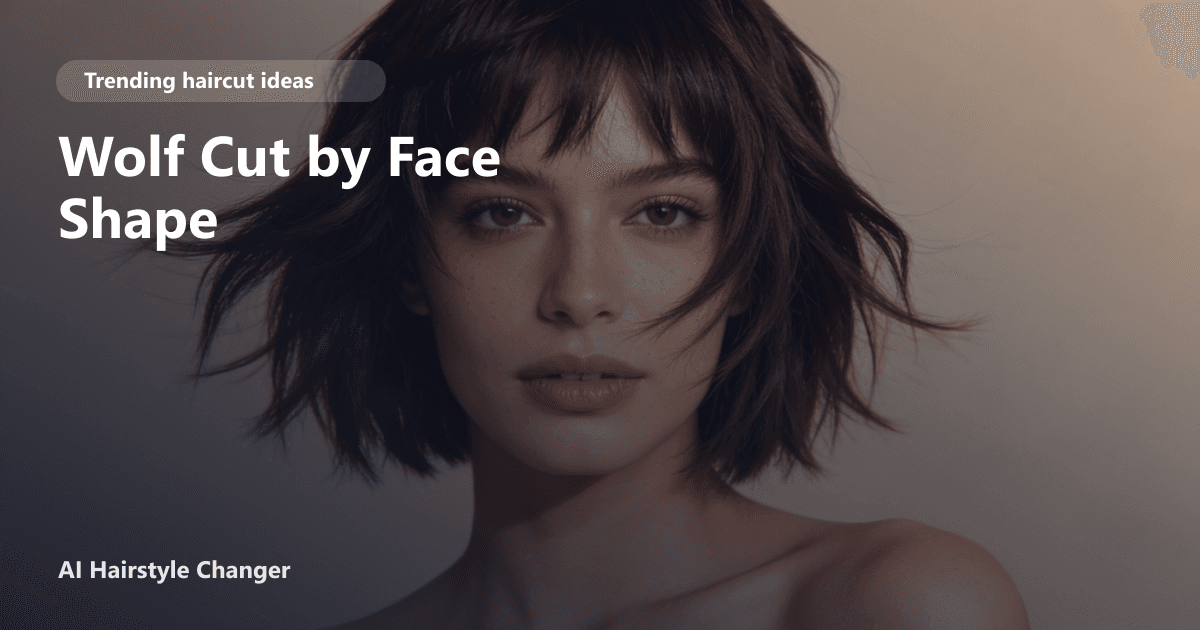
Are you stuck between the wolf cut, butterfly cut, or a classic shag before your next haircut appointment? Choosing a trend-forward, layered style is exciting - but the wrong match for your face shape can leave you with months of regret. The good news: you don't have to guess. With the rise of virtual try-on tools like AI Hairstyle Changer, you can preview these styles on your own features before you commit. Here's how to pick the most flattering wolf cut variation for your face shape, what to ask for at the salon, and how to avoid common mistakes.
Why Face Shape Matters for the Wolf Cut Family
Wolf, butterfly, and shag cuts share a love of layers, movement, and a little rebellious edge. But face shape changes everything about how these styles look on you. The right version can highlight your cheekbones, soften a strong jaw, or add balance where you want it most. The wrong one can overwhelm delicate features or make your face look wider or longer than you'd like.
Before you book your appointment, grab a mirror and identify your face shape: oval, round, square, heart, or long. Each shape has strengths and challenges when it comes to layered cuts. Let's break down how to tailor the wolf cut family to flatter you best.
Wolf Cut for Oval Faces: Maximum Versatility
Oval faces are balanced, with a softly rounded chin and forehead that are about the same width. This shape is the most versatile for wolf, butterfly, and shag cuts - you can go bold or subtle.
- Wolf Cut: Try a classic wolf cut with choppy, textured layers starting at the cheekbones and curtain bangs that sweep softly to each side. This creates volume without overwhelming your proportions.
- Butterfly Cut: Layered face-framing pieces and longer lengths work beautifully. Ask your stylist for gentle, cascading layers and a soft, parted fringe. The butterfly cut's movement adds dimension without elongating your face.
- Shag: Both short and long shags flatter oval faces. Opt for airy, piecey bangs and layers that start at the brow or cheekbone. Keep ends wispy rather than blunt.
Maintenance is easy: regular trims every 8-10 weeks keep layers fresh. If you're not sure which direction to go, use AI Hairstyle Changer to preview subtle versus dramatic layering and different bang styles.
Wolf Cut for Round Faces: Add Angles and Volume Up Top
Round faces are widest at the cheeks, with a soft jawline and minimal angles. The goal is to add height and structure, not width.
- Wolf Cut: Go for volume at the crown and longer, face-framing layers that fall below the chin. Avoid heavy, straight-across bangs, which can make the face look shorter. Ask for soft, side-swept bangs or a curtain fringe.
- Butterfly Cut: Focus on layers that start below the jawline and sweep outwards, creating a vertical line. Keep the top layers light and avoid too much bulk at the sides.
- Shag: A modern shag with a deep side part and longer layers works well. Tuck shorter pieces behind the ear to elongate your face. Steer clear of too many short, bouncy layers near the cheeks.
When you try these cuts virtually, pay attention to where the volume sits. AI Hairstyle Changer can help you see how different bang placements and layer lengths change your face's proportions.
Wolf Cut for Square Faces: Soften and Balance Strong Angles
Square faces have a broad forehead and jawline of similar width, with a pronounced, angular jaw. The right wolf cut variation can soften edges and add movement.
- Wolf Cut: Choose longer, feathered layers that start at the jawline or below. Soft, curtain bangs or wispy, side-swept fringe help break up a strong forehead and jaw.
- Butterfly Cut: Go for a version with face-framing layers and a deep, off-center part. Avoid blunt or micro bangs, which can accentuate squareness.
- Shag: A layered shag with tousled, uneven ends and a soft fringe can round out sharp angles. Ask for texture at the ends, not bulk.
Maintenance tip: these styles look best with a little undone texture. Avoid heavy styling products that weigh layers down. If you're unsure about bang length, preview options with AI Hairstyle Changer to find the most flattering fringe.
Wolf Cut for Heart-Shaped Faces: Balance Width and Draw Attention Downward
Heart-shaped faces have a wider forehead, prominent cheekbones, and a narrow chin. The goal is to balance the top half and add softness near the jaw.
- Wolf Cut: Opt for a version with longer, face-framing layers and a curtain or bottleneck bang. Keep the fringe soft and wispy, not blunt.
- Butterfly Cut: Ask for layers that start below the cheekbone and flow outward, adding width at the jaw. Avoid heavy top volume, which can exaggerate the forehead.
- Shag: A mid-length shag with a textured, parted fringe and layers that hug the jawline works beautifully. Don't go too short on top.
Pro tip: Use AI Hairstyle Changer to test different bang shapes and lengths. Notice how softer, longer bangs can slim the forehead and balance your features.
Wolf Cut for Long Faces: Create Width and Break Up Length
Long faces are characterized by a higher forehead and overall length that's greater than the width. The aim is to create the illusion of width and minimize elongation.
- Wolf Cut: Go for blunt or curtain bangs that hit at the brow, with layers starting at the cheeks and lots of volume at the sides. Avoid styles that are too flat or long without layers.
- Butterfly Cut: Choose a version with heavy, cascading layers and a full fringe. Keep the overall length above the chest to avoid dragging the face downward.
- Shag: A full, choppy shag with a brow-grazing fringe and thick side layers is ideal. Avoid super-long, one-length cuts.
When previewing styles in AI Hairstyle Changer, focus on how the bangs and side layers shorten the face visually. Try multiple bang shapes to see which creates the best balance.
Wolf, Butterfly, and Shag: How to Ask for the Right Variation
Knowing what to request at the salon is key. Here's a quick table to help you communicate your vision:
| Face Shape | Best Bangs | Layer Placement | Volume Focus | What to Avoid |
|---|---|---|---|---|
| Oval | Curtain, wispy | Cheekbone/jawline | Even, airy | Overly blunt ends |
| Round | Side-swept, curtain | Below chin, vertical | Crown, top | Heavy cheek layers |
| Square | Curtain, wispy | Jawline, below | Ends, texture | Blunt/micro bangs |
| Heart | Curtain, bottleneck | Below cheekbone, jaw | Jaw, ends | Heavy top volume |
| Long | Curtain, blunt | Cheeks, sides | Sides, fringe | Flat, extra-long lengths |
For more in-depth styling and maintenance tips, check out the Wolf Cut Guide: Who It Suits and How to Style It.
Maintenance, Upkeep, and When the Wolf Cut Fails
Layered cuts like the wolf, butterfly, and shag are lower maintenance than blunt bobs or ultra-precise styles, but they do require regular trims to keep the shape alive. Plan on visiting the salon every 8-10 weeks. If you have curly hair, ask for dry cutting and check out Wolf Cut for Curly Hair: Layers Without Losing Shape for texture-specific advice.
When does the wolf cut family fail? If you choose a variation with too much volume in the wrong area for your face shape, you risk making your features look unbalanced. Overly short layers can also make fine hair appear thinner. Always bring reference photos and, if possible, use AI Hairstyle Changer to show your stylist exactly what you want.
Try Before You Cut: The Virtual Advantage
Seeing a style on a celebrity or in a Pinterest photo is one thing - seeing it on your own face is another. AI Hairstyle Changer lets you upload your selfie and preview wolf, butterfly, and shag cuts tailored to your face shape, hair length, and texture. You can save your favorites, compare side by side, and even bring the images to your stylist for a more confident consultation.
This virtual try-on approach reduces haircut regret and helps you communicate your vision clearly. It's especially useful if you're torn between subtle and dramatic layers, or if you want to experiment with different bang shapes without the commitment.
For more inspiration, browse Best Wolf Cut Ideas for Long Hair to see how the style adapts to different lengths and textures.
FAQ
How do I know which wolf cut variation suits my face shape?
The most flattering wolf cut depends on your face's proportions and where you want to add or reduce volume. Use the guidelines above and preview options with AI Hairstyle Changer to see what works best for you.
Can I try a wolf cut if I have curly or wavy hair?
Absolutely. The wolf cut works well with curls and waves when layers are cut to enhance your natural texture. For tips, see Wolf Cut for Curly Hair: Layers Without Losing Shape.
What should I bring to my salon appointment?
Bring clear reference photos - ideally of yourself wearing the style using AI Hairstyle Changer. Be ready to discuss your face shape, desired length, and maintenance preferences with your stylist.
How much upkeep does a wolf cut require?
Expect trims every 8-10 weeks to keep layers fresh. Styling can be as simple as air-drying with a texturizing spray or adding soft waves with a curling wand.
Takeaway: Preview Your Next Cut with Confidence
Choosing a wolf, butterfly, or shag cut by face shape is the key to a flattering, modern look. Don't leave it to chance - see how each style suits you before you commit. Visit AI Hairstyle Changer Try New Looks before You Cut to try on the trend and walk into your next salon appointment with total confidence.