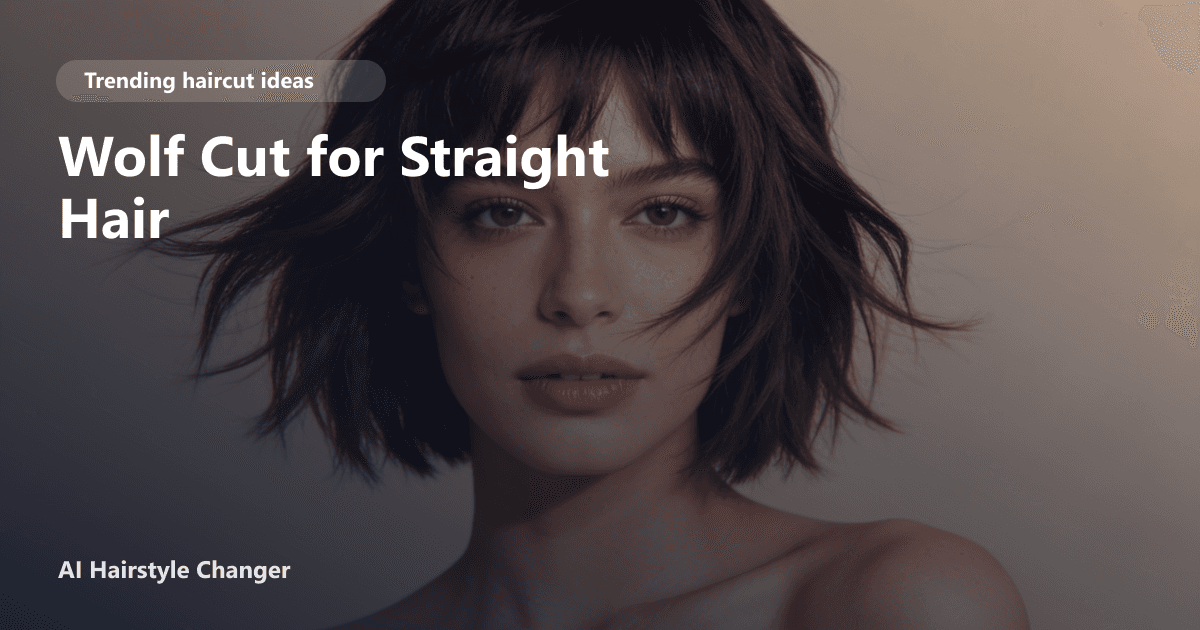
Are you staring at inspiration photos, torn between the wolf cut, butterfly cut, or a classic shag - wondering if any will actually work on your straight hair? The fear of leaving the salon with a style that falls flat or doesn't suit your face shape is real. Straight hair can show off layers beautifully, but it can also make choppy cuts look stringy if not done right. Before you commit, let's break down how the wolf cut trend translates for straight hair, which variations work best, and how you can preview the look on yourself with AI Hairstyle Changer to avoid any haircut regret.
Why the Wolf Cut Works for Straight Hair
The wolf cut blends the mullet's bold shape with shaggy, face-framing layers. On straight hair, this style can add movement and volume that's otherwise hard to achieve. Unlike curly or wavy textures, straight hair puts every layer on display - so the cut needs to be precise and intentional.
A well-executed wolf cut on straight hair delivers:
- Soft, wispy layers that create texture without harsh lines
- Flexible styling options, from sleek and polished to tousled and edgy
- A modern, low-maintenance look that grows out gracefully
But the wrong approach can lead to limp, disconnected layers or a style that feels dated. That's why seeing the cut on your own features - before you commit - can make all the difference.
Wolf Cut Variations for Straight Hair
Not every wolf cut is created equal. Here are four distinct directions to consider, each with its own vibe and upkeep needs:
1. Classic Wolf Cut with Wispy Bangs
This version keeps the silhouette soft and wearable. Layers start at cheekbone level and cascade down, blending into longer lengths. Wispy, brow-skimming bangs add movement and frame the face without overwhelming straight hair's natural sleekness.
- Ideal for: Medium to long straight hair, oval or heart-shaped faces
- Salon tip: Ask for seamless layering and feathered ends, not blunt chops
- Maintenance: Trim every 8-10 weeks to keep the shape fresh; minimal daily styling
2. Butterfly Cut Hybrid
The butterfly cut is a close cousin, featuring longer face-framing layers that mimic curtain bangs. On straight hair, it creates a soft, airy effect with less dramatic graduation than the classic wolf cut.
- Ideal for: Those hesitant about short layers or wanting to keep length
- Salon tip: Request longer layers starting below the chin, with subtle volume at the crown
- Maintenance: Easy to style with a round brush or blowout; grows out gracefully
3. Edgy Shag-Wolf Fusion
For those craving more drama, the shag-wolf fusion amps up the texture. Shorter, choppier layers at the crown and sides give a rock-inspired edge, while keeping the perimeter soft.
- Ideal for: Fine, straight hair needing volume; round faces seeking elongation
- Salon tip: Specify chunky layers at the top and softer ends; avoid razor cuts if your hair is prone to frizz
- Maintenance: Requires texturizing spray or mousse to keep volume; trims every 6-8 weeks
4. Long Wolf Cut
If you're not ready to lose length, a long wolf cut offers the trend's signature layers without sacrificing inches. Layers are concentrated around the face and crown, leaving the back and ends flowing.
- Ideal for: Long, straight hair that tends to fall flat
- Salon tip: Blend layers into the length; avoid over-thinning the ends
- Maintenance: Occasional shaping to prevent the cut from looking heavy or weighed down
For more inspiration, see Best Wolf Cut Ideas for Long Hair.
What to Ask for at the Salon
Walking into a salon with a clear vision and the right references can make or break your wolf cut experience. Here's what to discuss with your stylist:
- Layer placement: Where do you want the shortest and longest layers to fall? Cheekbone, chin, collarbone?
- Fringe style: Wispy, curtain, or blunt? Consider how much forehead coverage you want.
- Volume: Do you want extra lift at the crown, or a sleeker, more blended look?
- Maintenance: Be honest about your daily styling habits. Some wolf cut variations require more upkeep than others.
Bring photos that match your hair type and face shape. Better yet, use AI Hairstyle Changer to create a personalized reference image that shows exactly how the cut will look on you.
Styling and Upkeep Tips
Wolf cuts can be surprisingly low-maintenance, but straight hair does require some effort to keep layers visible and prevent the style from falling flat. Here's how to get the most out of your new cut:
- Use a volumizing mousse or root lift spray before blow-drying
- Flip your head upside down while drying for extra lift at the crown
- Define ends with a lightweight texturizing cream or spray
- Avoid heavy oils or creams that can weigh down layers
- Refresh shape every 8-10 weeks
For those with super-fine straight hair, consider a subtle undercut or hidden layers to add fullness without visible bulk.
When the Wolf Cut Fails on Straight Hair
While the wolf cut is versatile, it's not foolproof. Here are scenarios where this style can fall short:
- Extremely fine or thin hair: Too many layers can make hair look stringy
- Very thick, heavy straight hair: Without proper thinning, the cut can look bulky and lose its shape
- Unwillingness to style: If you air-dry and go, some versions may lack definition
If you're unsure, try a softer butterfly cut or a longer shag first. Previewing these looks with AI Hairstyle Changer lets you spot potential pitfalls before you commit.
Wolf Cut vs. Butterfly Cut vs. Shag: Quick Comparison
| Style | Layering Focus | Best For | Styling Effort | Upkeep |
|---|---|---|---|---|
| Wolf Cut | Choppy, face-framing | Volume, edge | Medium | 8-10 weeks |
| Butterfly Cut | Long, blended layers | Softness, length | Low | 10-12 weeks |
| Shag | All-over texture | Movement, versatility | Medium-High | 6-8 weeks |
For a deep dive on each, see Wolf Cut Guide: Who It Suits and How to Style It.
How AI Hairstyle Changer Reduces Haircut Regret
One of the biggest anxieties before a major cut is not knowing if the look will suit your features, hair density, or daily routine. AI Hairstyle Changer takes the guesswork out of the process. Upload a selfie, choose from wolf cut, butterfly cut, or shag styles, and see a realistic preview tailored to your straight hair.
Benefits include:
- Shortlisting your favorite variations to show your stylist
- Testing fringe options and layer placements before you snip
- Visualizing how the cut will grow out over time
This approach empowers you to make confident decisions and communicate clearly at your appointment. It's a game-changer for anyone who's ever left the salon wishing they'd chosen differently.
Adapting the Wolf Cut for Different Face Shapes
Straight hair puts every angle of a wolf cut on display, so face shape matters. Here are quick guidelines:
- Oval faces: Most wolf cut variations work, especially with wispy or curtain bangs
- Round faces: Opt for longer layers and volume at the crown to elongate
- Square faces: Soften strong jawlines with feathered ends and side-swept fringe
- Heart-shaped faces: Balance a wider forehead with curtain bangs and layers below the chin
Previewing these tweaks with AI Hairstyle Changer can help you land on the most flattering version.
Layered Cuts for Straight Hair: What Else to Try
If you're not sold on the wolf cut, consider:
- Long shag: More uniform layering for subtle movement
- Butterfly cut: Soft, blended layers that preserve length
- Curtain bangs with light layering: Minimal change, maximum face-framing
For curly or wavy hair, see Wolf Cut for Curly Hair: Layers Without Losing Shape.
FAQ
How do I know if a wolf cut will look good on my straight hair?
Previewing the cut with AI Hairstyle Changer is the best way to see the style on your own features. In general, straight hair showcases layers well, but the right variation depends on your hair density, face shape, and styling routine.
Will the wolf cut make my straight hair look thinner?
If over-layered, yes. Ask your stylist for blended, not choppy, layers and avoid excessive thinning on fine hair. Previewing different versions virtually can help you find the right balance.
How do I style a wolf cut on straight hair?
Use volumizing products, blow-dry with your head upside down, and finish with a texturizing spray to define layers. Minimal heat styling is needed if the cut is well-shaped.
Can I grow out a wolf cut easily?
Yes, the layers tend to blend as hair grows, making the wolf cut one of the easier trend cuts to transition from. Regular trims help maintain shape during the grow-out phase.
Takeaway: Try Before You Cut
Choosing a wolf cut for straight hair can be transformative when tailored to your features and lifestyle. Whether you lean classic, butterfly, or shag-inspired, previewing your options with AI Hairstyle Changer ensures you walk into your appointment with confidence - and walk out loving your new look. Ready to see yourself with a wolf cut? Head to AI Hairstyle Changer: Try New Looks Before You Cut and experiment with more clarity.