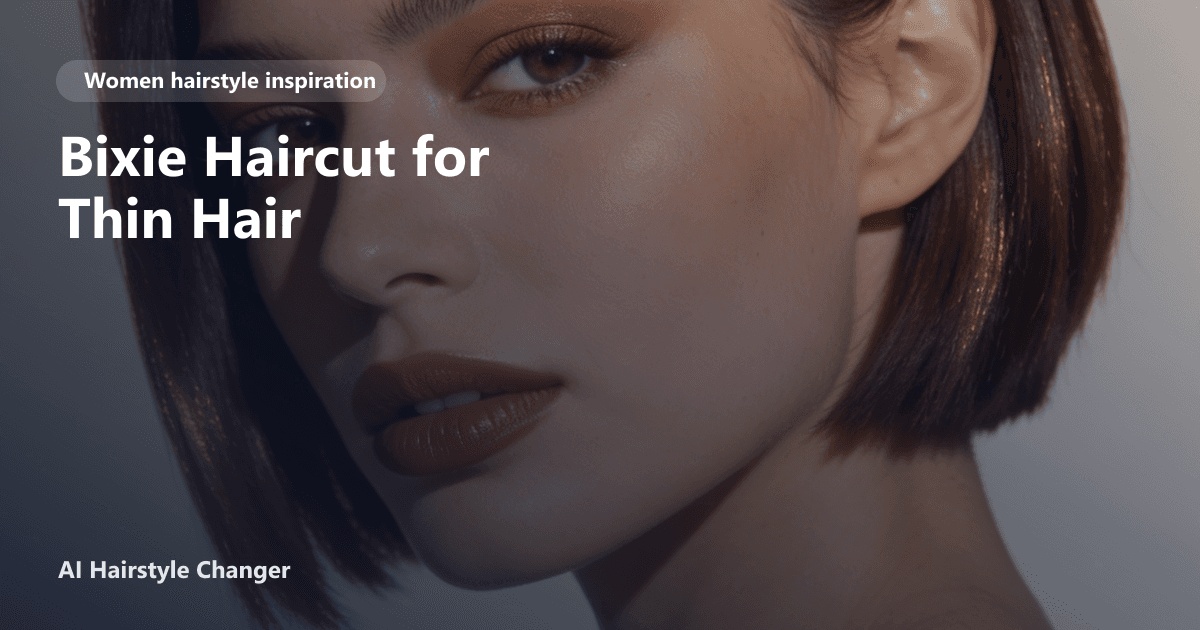
You're ready for a big change but worried about your thin hair falling flat after a dramatic cut. Maybe you've seen the bixie trending - shorter than a bob, longer than a pixie, with airy layers and a soft, modern edge. But will a bixie haircut actually make your hair look fuller? How do you know which version will flatter your face, and what should you ask for at the salon?
The bixie is one of the most versatile short cuts for women with fine or thin hair. It's a hybrid that delivers the lightness and movement of a pixie, but with the face-framing shape and styling flexibility of a bob. The right bixie can add volume, minimize daily styling, and give you a fresh, on-trend look - without the risk of going too short. Here's how to get a bixie that works for your hair type, plus how to test different styles virtually with AI Hairstyle Changer before you commit.
Why the Bixie Works for Thin Hair
Thin hair often struggles with limpness, lack of body, and visible scalp. The bixie addresses these issues by combining:
- Layering: Strategic layers remove weight and create lift at the roots, making hair appear thicker.
- Length Flexibility: The bixie sits between chin and jawline, offering enough length for soft volume but short enough to avoid stringiness.
- Textured Ends: Wispy or feathered ends prevent a bulky, helmet-like look and add movement.
Unlike a classic bob, which can look flat on fine hair, or a super-short pixie, which may expose scalp, the bixie's shape is customized for fullness. This makes it a top choice for anyone who wants a short, low-maintenance style that still feels feminine.
Popular Bixie Haircut Variations for Thin Hair
There's no one-size-fits-all bixie. Here are four standout variations, each suited to different face shapes, styling needs, and personal style:
1. The Soft Layered Bixie
- Who it suits: Oval, heart, and round faces; anyone seeking maximum volume.
- Salon tips: Ask for choppy, blended layers throughout, with length kept between the cheekbone and jaw. Request a soft, side-swept fringe to frame the face and add lift at the crown.
- Upkeep: Regular trims every 6 - 8 weeks keep layers bouncy. Use a lightweight volumizing mousse.
- When to avoid: If you dislike styling with a round brush or root spray, this version may require too much daily effort.
2. The Bixie with Curtain Bangs
- Who it suits: Square or angular faces; those wanting to soften strong features.
- Salon tips: Request curtain bangs that blend into the sides, with the overall length grazing the jawline. Layers should be subtle, focusing on movement at the front.
- Upkeep: Curtain bangs need frequent trims for shape, but the rest of the cut is forgiving.
- When to avoid: If your hair is very fine at the hairline, curtain bangs may look sparse.
3. The Textured Shaggy Bixie
- Who it suits: Women who love a tousled, undone look; great for wavy or slightly curly thin hair.
- Salon tips: Ask for lots of point-cutting and razored ends for a piecey, lived-in finish. Keep the back slightly shorter and the sides longer.
- Upkeep: Air-dry with texturizing spray for effortless styling. Less maintenance than a blunt cut.
- When to avoid: If you want a sleek, polished look or have very straight, limp hair, this version can look messy.
4. The Sleek Bixie Bob
- Who it suits: Those who prefer a refined, classic shape; especially flattering for fine, straight hair.
- Salon tips: Request a blunt perimeter with minimal layers, keeping the front pieces longer for face-framing. Add a micro side part for lift.
- Upkeep: Requires flat-ironing or smoothing cream to maintain shine and shape.
- When to avoid: If your hair is prone to frizz or you dislike heat styling.
For more inspiration, see our Pixie Cut Guide: Best Pixie Styles by Face Shape and Hair Type and Best Bob Haircuts for Fine or Thin Hair.
How to Talk to Your Stylist About a Bixie for Thin Hair
A great salon result starts with a clear conversation. Here's how to get the most out of your appointment:
- Bring visual references: Save photos of bixie cuts you love, ideally with hair texture similar to yours. Use AI Hairstyle Changer to try on different bixie variations and show your stylist your favorites.
- Describe your volume goals: Be specific about where you want lift (crown, sides, fringe) and where you want to avoid bulk.
- Discuss maintenance: Ask how often you'll need trims, and what daily styling will look like for your chosen version.
- Mention problem areas: If you have cowlicks, thinning at the temples, or a tricky hairline, point these out so your stylist can customize the cut.
Using a virtual try-on tool like AI Hairstyle Changer can help you avoid miscommunication and ensure you leave the salon with a cut that suits your hair and lifestyle.
Styling and Maintenance Tips for Thin Hair with a Bixie
Short cuts can be low-maintenance, but thin hair benefits from a few targeted tricks:
- Root lift: Use a volumizing spray or mousse at the roots before blow-drying. Flip your head upside down to maximize body.
- Texturizing products: Lightweight sprays or powders add grip and separation without weighing hair down.
- Heat tools: A small round brush can create lift at the crown; a flat iron can smooth ends for a polished look.
- Regular trims: Thin hair loses shape quickly. Book trims every 6 - 8 weeks to keep the cut fresh.
If you're new to short hair, check out our Pixie Cut for Thin Hair guide for more styling ideas and product recommendations.
Bixie vs. Pixie vs. Bob: Which Short Cut Is Right for Thin Hair?
The bixie sits perfectly between the classic pixie and the bob. Here's how they compare for thin hair:
| Cut | Length | Volume Potential | Styling Flexibility | Best For |
|---|---|---|---|---|
| Pixie | Ear to cheek | High at crown | Edgy, bold | Confident, low-maintenance |
| Bixie | Cheek to jaw | Balanced, airy | Soft, versatile | Most face shapes |
| Bob | Jaw to chin | Can be flat | Sleek, classic | Straight, fine hair |
The bixie's blend of short and long elements means you get more styling options than a pixie, but less risk of flatness than a bob. If you're unsure, use AI Hairstyle Changer to preview all three shapes side-by-side on your own face.
When the Bixie Fails - and What to Avoid
While the bixie is forgiving, there are a few common pitfalls for thin hair:
- Over-texturizing: Too much razoring or thinning shears can make the ends look scraggly.
- Heavy, blunt lines: A boxy shape or thick fringe can weigh down fine hair and highlight thin spots.
- Ignoring face shape: The wrong length or fringe placement can exaggerate roundness or angularity.
Always ask your stylist for a customized approach, and don't be afraid to use virtual try-on tools to experiment with different lengths and fringe options before you commit.
Using AI Hairstyle Changer to Preview Your Bixie
AI Hairstyle Changer lets you upload a selfie and instantly see how dozens of bixie and pixie styles look on your own face. This is a game-changer for anyone nervous about a major chop, especially if you've had haircut regret in the past.
- Shortlist your favorites: Try on soft layered, curtain bang, shaggy, and sleek bixie cuts. Save the ones you love for your next salon visit.
- Compare shapes: See how a bixie stacks up against a pixie or bob for your unique features.
- Reduce regret: Get a realistic preview so you can walk into your appointment with confidence.
Ready to try? Visit AI Hairstyle Changer: Try New Looks Before You Cut to start experimenting now.
FAQ
How do I know if a bixie will work for my thin hair?
A bixie works for most thin hair types if it's customized for your face shape and volume needs. Use a virtual try-on tool and bring photos to your stylist for the best results.
How often will I need to trim a bixie cut?
Plan for a trim every 6 - 8 weeks to keep layers fresh and maintain the shape. Thin hair loses structure quickly, so regular upkeep is key.
Can I style a bixie without heat tools?
Yes! Air-drying with a volumizing or texturizing spray works for most bixie variations, especially the shaggy or layered versions. Sleeker styles may require occasional flat ironing.
What if I want to go shorter or longer later?
The bixie is a flexible cut. You can transition to a full pixie or grow it into a bob with minimal awkward phases. Your stylist can help plan your grow-out.
Takeaway: Preview Your Bixie Before You Cut
The bixie is a modern, volume-boosting solution for thin hair - when it's tailored to your features and lifestyle. Don't leave your next haircut to chance. Use AI Hairstyle Changer to try on bixie and pixie styles, shortlist your favorites, and walk into your salon appointment with total confidence. Ready to see yourself with a bixie? Try new looks before you cut.