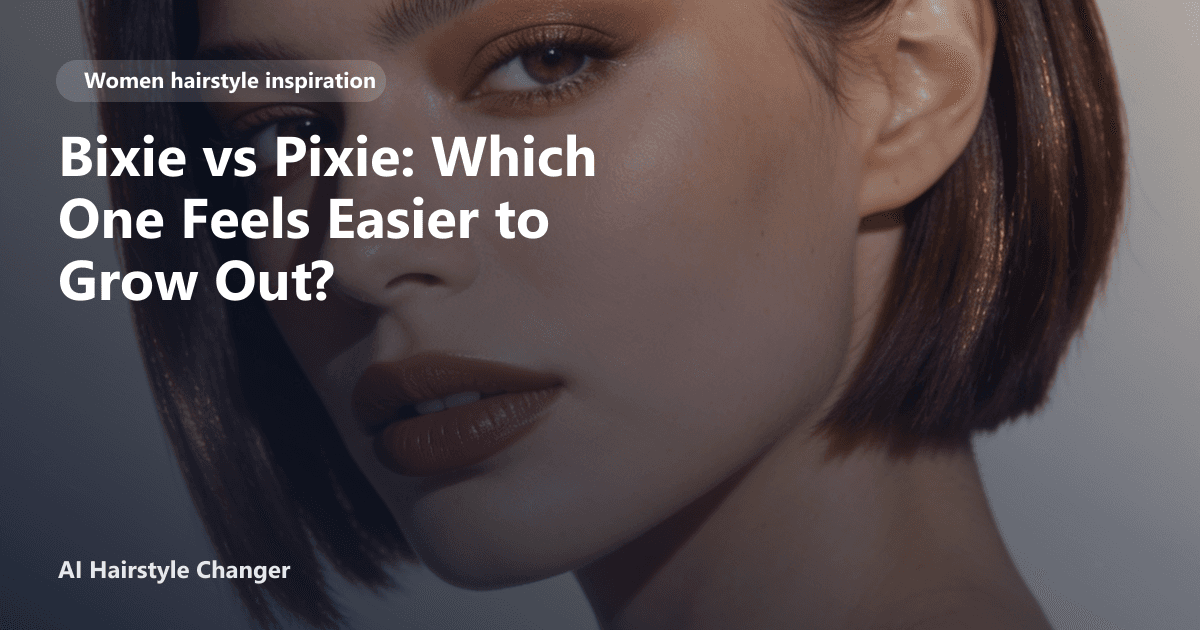
When you're torn between a bixie and a pixie, the decision isn't just about the initial cut - it's about what happens in the months after. Will you be able to grow it out gracefully, or will you hit an awkward stage that makes you run back to the salon? For women considering a dramatic short cut but worried about the grow-out phase, understanding the differences between a bixie and a pixie is key. This guide breaks down how each style grows out, who they suit, and how to preview both looks with the AI Hairstyle Changer before you commit.
The Bixie vs Pixie Dilemma: What's the Real Difference?
The pixie cut is a classic - short, cropped, and often with textured layers or a defined fringe. The bixie, a blend of bob and pixie, offers a little more length, softness, and movement. While both fall into the short cuts family, their grow-out journeys are surprisingly different.
- Pixie Cut: Usually features short sides and back, with slightly longer top layers. The overall length is typically above the ear or jawline.
- Bixie Cut: Sits between a bob and a pixie, with more length at the nape and sides. Layers are softer, and the shape often skims the jaw or cheekbones.
The main question: Which one feels easier to grow out without hitting that dreaded 'in-between' phase?
Grow-Out Grace: How Each Cut Transitions
Pixie Cut Grow-Out
Pixies look sharp and low-maintenance at first, but as hair grows, the shape can quickly lose definition. The back and sides often become bulky, while the top flattens. This can lead to awkward flips, mullet-like shapes, or heavy sideburns.
- What to Ask For: If you want a pixie that grows out well, request longer top layers and soft, feathered edges. Avoid undercuts or super-short sides unless you're ready for frequent trims.
- Maintenance: Expect to visit the salon every 4 - 6 weeks to keep the shape. If you're growing it out, ask your stylist to blend the sides and add texture to avoid harsh lines.
- When It Fails: If your hair is very thick or curly, a classic pixie can become unruly as it grows. Consider a tapered pixie or a longer fringe for more flexibility. For more tailored advice, see the Pixie Cut Guide: Best Pixie Styles by Face Shape and Hair Type.
Bixie Cut Grow-Out
The bixie's added length makes it more forgiving during the grow-out phase. Layers blend into a bob-like shape as they lengthen, and the overall silhouette remains softer and less severe.
- What to Ask For: Request a bixie with face-framing layers and a bit of length at the nape. Ask for internal layering to control volume, especially if your hair is thick.
- Maintenance: You can stretch salon visits to 8 - 10 weeks. As the cut grows, it transitions smoothly into a bob or lob.
- When It Fails: If you have very fine or thin hair, too many layers can make the cut look wispy. For ideas, check Best Bob Haircuts for Fine or Thin Hair.
Four Short Cut Directions to Consider
1. Classic Pixie
- Who It Suits: Oval, heart, and square faces; works well for straight or wavy hair.
- Salon Notes: Ask for short, textured layers and a soft fringe. Keep the nape neat.
- Grow-Out Tip: Request a slightly longer top to give you styling options as it grows.
2. Tapered Pixie
- Who It Suits: Great for thick or textured hair, especially Black hair.
- Salon Notes: Ask for close-cropped sides and back, with longer, shaped top layers. Consider a side-swept fringe.
- Grow-Out Tip: The taper helps avoid bulk, but regular trims are needed to maintain shape. See Tapered Pixie Cut for Black Hair for inspiration.
3. Modern Bixie
- Who It Suits: Most face shapes, especially round or square. Works for straight, wavy, or lightly curly hair.
- Salon Notes: Request longer layers throughout, with the length grazing the jaw. Add soft, face-framing pieces and a wispy fringe if desired.
- Grow-Out Tip: As the cut grows, it becomes a soft bob, minimizing awkward phases.
4. Textured Bixie with Curtain Bangs
- Who It Suits: Anyone wanting a playful, voluminous look. Especially flattering for fine hair needing movement.
- Salon Notes: Ask for choppy layers, curtain bangs, and subtle graduation at the nape.
- Grow-Out Tip: The bangs can be parted or pushed to the side as they lengthen, making transitions easier.
Practical Salon Conversation Starters
When you sit down in the stylist's chair, having the right language helps you get the cut you want - and makes the grow-out less stressful. Here are some practical talking points:
- "I want a cut that grows out into a bob shape, not a mullet."
- "Can you keep the top layers longer so I can style it as it grows?"
- "I'd like soft, blended edges instead of harsh lines at the nape."
- "Can we add a fringe that I can sweep to the side as it grows?"
- "How often will I need trims to keep the shape looking intentional?"
Bring reference photos - either from your own AI Hairstyle Changer try-on session or curated images. This helps your stylist visualize your goal and plan for the grow-out.
Styling and Upkeep: Making the Most of Each Stage
Short cuts are famously easy at first, but as you grow them out, a few styling tricks can help you stay polished:
- Texturizing Sprays: Add lift to roots and keep flat spots at bay.
- Headbands and Clips: Tame awkward layers or growing-out bangs.
- Mini Flat Iron: Smooth out flips or cowlicks as the shape changes.
- Regular Dusting: Ask your stylist for tiny trims around the ears and nape to avoid bulk.
If you're unsure how your hair will behave, use the AI Hairstyle Changer to preview both the initial cut and a few grow-out stages. This can help you spot potential problem areas before you commit.
When to Choose Bixie Over Pixie (and Vice Versa)
- Choose a Bixie if:
- You want a softer, more feminine look that transitions easily into a bob.
- You're nervous about awkward grow-out phases.
- You like some length to tuck behind your ears or style differently.
- Choose a Pixie if:
- You're ready for a bold, low-maintenance look.
- You don't mind regular trims to keep the shape sharp.
- You want to highlight your cheekbones and jawline.
If you're still undecided, try both looks virtually. Upload your selfie to AI Hairstyle Changer to see how a pixie or bixie flatters your features - and even experiment with different lengths, fringes, and partings.
Related Reads for Short Cut Inspiration
- Pixie Cut Guide: Best Pixie Styles by Face Shape and Hair Type
- Pixie Cut for Thin Hair
- Tapered Pixie Cut for Black Hair
- Bob Haircut Guide: Types, Face Shapes, and Maintenance
- Best Bob Haircuts for Fine or Thin Hair
FAQ
How long does it take to grow out a pixie or bixie cut?
On average, hair grows about half an inch per month. A pixie can take 6 - 12 months to reach bob length, while a bixie may transition in 4 - 8 months due to its starting length. Regular trims help keep the shape intentional.
Can I use AI Hairstyle Changer to see the grow-out stages?
Yes. You can preview your selfie with different lengths and styles, helping you anticipate how your cut will look as it grows. This is especially helpful for planning trims or deciding between a bixie and pixie.
Which cut is better for fine or thin hair?
A bixie with minimal layering often gives fine hair more movement and fullness. For pixies, opt for longer top layers and avoid heavy texturizing. See Pixie Cut for Thin Hair for more tips.
What's the best way to avoid awkward grow-out phases?
Start with a cut that has blended layers and some length at the nape. Schedule regular trims to shape the grow-out, and use styling products to manage volume and texture.
Takeaway: Try Before You Cut
Deciding between a bixie and a pixie doesn't have to be a leap of faith. With AI Hairstyle Changer, you can preview both styles, experiment with grow-out stages, and walk into your next salon appointment confident you'll love your look - both now and months from now. Ready to see your future short cut? Try new looks before you cut.