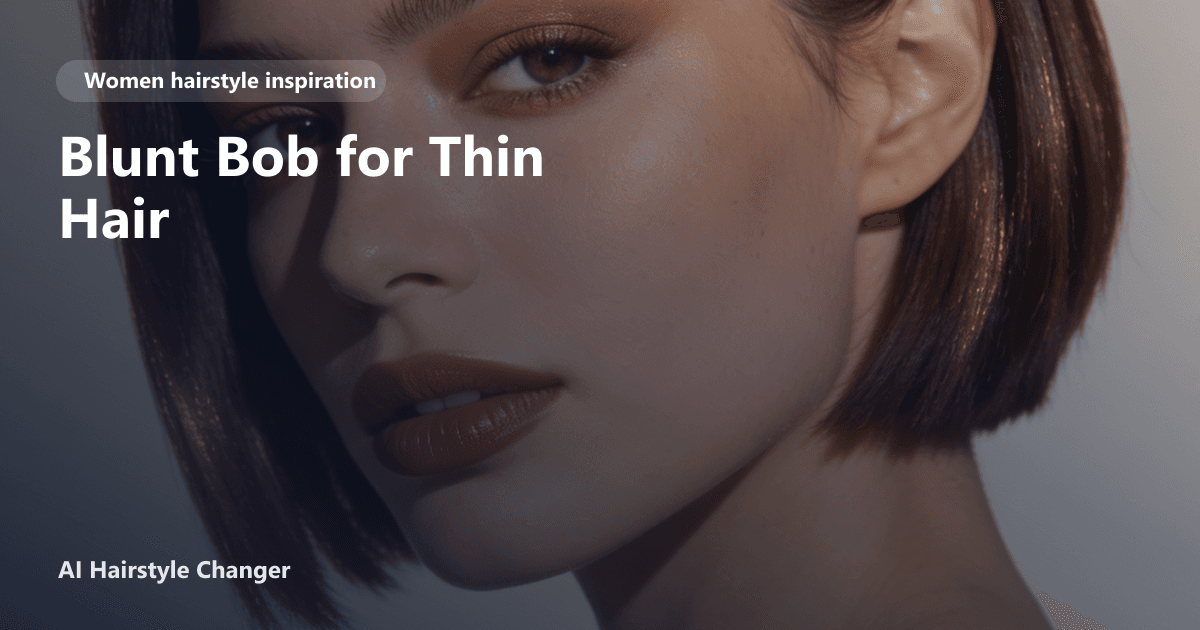
Making a major hair change can feel risky - especially if you have thin or fine hair and want a style that adds volume without endless styling. The blunt bob is a go-to solution for women who crave a fuller, modern look, but not every variation suits thin hair equally. If you're debating whether to try a blunt bob before your next salon appointment, this guide breaks down the real-life options, what to ask for, and how to use AI Hairstyle Changer to preview your look before you commit.
Why the Blunt Bob Flatters Thin Hair
A blunt bob is cut straight across the ends, creating a sharp, uniform edge. For thin hair, this strong baseline gives the illusion of thickness and density - something layers can sometimes undermine. The lack of tapering helps every strand count, making your hair look fuller and more substantial. Unlike feathered or shaggy bobs, a blunt cut avoids wispy ends that can make thin hair appear even finer.
But not all blunt bobs are created equal. The right length, finish, and styling details can make or break the look. Before you book your appointment, it's smart to see how different blunt bob variations work for your hair type and face shape. This is where AI Hairstyle Changer becomes invaluable: you can upload your selfie, try on multiple bob shapes, and shortlist the ones that truly suit your features.
Classic Chin-Length Blunt Bob: The Volume Maximizer
The chin-length blunt bob is the most iconic version. Cut to just skim the jawline, this style creates a crisp, geometric frame that instantly makes thin hair look denser. It works especially well for oval, heart, and square face shapes.
Salon tips:
- Ask for a one-length cut, with no internal layering.
- Request a slight undercut at the nape if you want the ends to tuck in naturally.
- For extra fullness, have your stylist use blunt-point cutting rather than razoring.
Maintenance:
- Trims every 6 to 8 weeks keep the edge sharp.
- Blow-drying with a round brush or using a flat iron polishes the finish.
This blunt bob is low-maintenance but unforgiving of uneven growth, so regular trims are key. If you're unsure how the chin-length will balance your features, use AI Hairstyle Changer to preview it from different angles before you commit.
Blunt Bob with Bangs: Framing and Softening
Adding bangs to a blunt bob can be a game-changer for thin hair. A full, blunt fringe creates the illusion of more hair at the front, while soft curtain bangs can add movement without sacrificing density.
Types of Bangs to Consider:
- Blunt fringe: Best for straight, fine hair. Adds graphic impact and makes hair look thicker at the hairline.
- Curtain bangs: Softer, parted in the middle. Ideal if you want face-framing without heaviness.
- Micro bangs: Edgy and modern, but can expose thinness if your hairline is sparse.
Salon tips:
- Bring a clear reference photo - AI Hairstyle Changer lets you save and share your favorite looks.
- Ask for a dry cut if your hair is very fine, so the stylist can see how it falls naturally.
Bangs require daily styling, especially if your hair tends to separate or get oily. They can also highlight cowlicks or uneven growth, so be realistic about your styling habits.
For more bang inspiration, see our Bob Haircut Guide: Types, Face Shapes, and Maintenance.
Blunt Bob with Subtle Graduation: Soft Volume Without Layers
If you worry that a dead-straight edge might look too severe, a subtly graduated blunt bob offers a softer alternative. Graduation means the bob is slightly shorter at the back and longer at the front, but the perimeter remains blunt - no visible layers.
Who it suits:
- Round or square faces (the longer front pieces elongate the jawline)
- Anyone who wants a bit of movement without sacrificing fullness
Salon tips:
- Ask for graduation of 1 - 2 inches from back to front.
- Avoid internal layers, which can thin out the ends.
- Specify that you want the perimeter blunt, not feathered.
This variation is easy to style: a quick blow-dry or straightener run brings out the clean lines. It's also forgiving as it grows out, making it a good option if you want a lower-maintenance bob.
Blunt Bob for Ultra-Fine or Fragile Hair
If your hair is not just thin but also fragile or prone to breakage, a blunt bob can still work - with a few adjustments. The key is to avoid excessive heat or chemical processing and to keep the length above the shoulders, so the ends don't look stringy.
Practical adjustments:
- Opt for a collarbone or just-above-shoulder length for more versatility.
- Use lightweight volumizing products to avoid weighing hair down.
- Consider a slightly textured edge (micro-point cutting) to prevent the ends from looking too harsh.
Salon conversation:
- Discuss your hair's condition and history.
- Ask about bond-building treatments or trims with scissors designed for fine hair.
Not sure if your hair can handle a blunt cut? Upload your photo to AI Hairstyle Changer and see how different lengths and finishes affect the overall look before making a decision.
Styling and Volume Hacks for Blunt Bobs on Thin Hair
A blunt bob gives instant structure, but the right styling routine can take it from flat to full. Here's how to keep your bob looking its best:
- Use a volumizing mousse at the roots before blow-drying.
- Flip your head upside down while drying for extra lift.
- Avoid heavy oils or creams that can weigh hair down.
- Try a deep side part to create the illusion of more volume on top.
- Use a mini flat iron to bend the ends slightly inward for a polished, face-framing effect.
If you're new to bob maintenance, our Best Bob Haircuts for Fine or Thin Hair article has more tips and product recommendations tailored for your hair type.
When a Blunt Bob Isn't the Right Fit
While the blunt bob is a powerhouse for thin hair, it isn't universally flattering. Here's when to reconsider:
- If your hair is extremely curly or coily, a blunt edge can look boxy or uneven.
- If you dislike regular trims, the crisp line will quickly lose its effect.
- If you want wash-and-go texture, a blunt bob may require more daily styling than a layered cut.
In these cases, a softly layered bob or a textured lob may be a better fit. Explore more options in our Best Bob Hairstyles for Short Hair guide.
Blunt Bob Variations at a Glance
| Variation | Best For | Styling Effort | Volume Effect | Face Shape Suitability |
|---|---|---|---|---|
| Classic Chin-Length | Most thin hair types | Low | High | Oval, heart, square |
| With Blunt Fringe | Fine, straight hair | Moderate | High | Oval, long, heart |
| Subtle Graduation | Thin, straight/wavy | Low | Medium | Round, square |
| Collarbone Blunt Bob | Ultra-fine, fragile | Low | Medium | Oval, round, heart |
FAQ
How do I know if a blunt bob will make my hair look thicker?
A blunt bob works by creating a dense, straight edge that visually multiplies the ends of your hair. If your hair is fine but not overly sparse at the ends, a blunt cut can dramatically boost the appearance of fullness. Previewing the style with AI Hairstyle Changer lets you see the effect on your own hair before you commit.
What should I ask my stylist to avoid a bob that looks too flat?
Ask for a one-length blunt cut with minimal or no internal layering. Request a slight undercut at the nape for natural movement, and discuss volume placement - such as adding a root lift or a side part - for extra body. Bring a clear photo reference, which you can create using AI Hairstyle Changer.
How often does a blunt bob for thin hair need to be trimmed?
To keep the sharp edge and avoid straggly ends, plan on trims every 6 to 8 weeks. This keeps the style looking intentional and helps maintain the fullness that makes a blunt bob so effective for thin hair.
Can I try a blunt bob virtually before my salon appointment?
Yes. AI Hairstyle Changer lets you upload a selfie, try on different blunt bob variations, and save your favorites. This makes it easy to communicate your vision to your stylist and avoid haircut regret.
Takeaway: Try Before You Cut
A blunt bob is one of the most transformative cuts for thin hair, but the right variation and length make all the difference. Before you book your appointment, use AI Hairstyle Changer to preview and shortlist your favorite bob styles. You'll walk into the salon with confidence - and walk out with a look that truly flatters your hair.