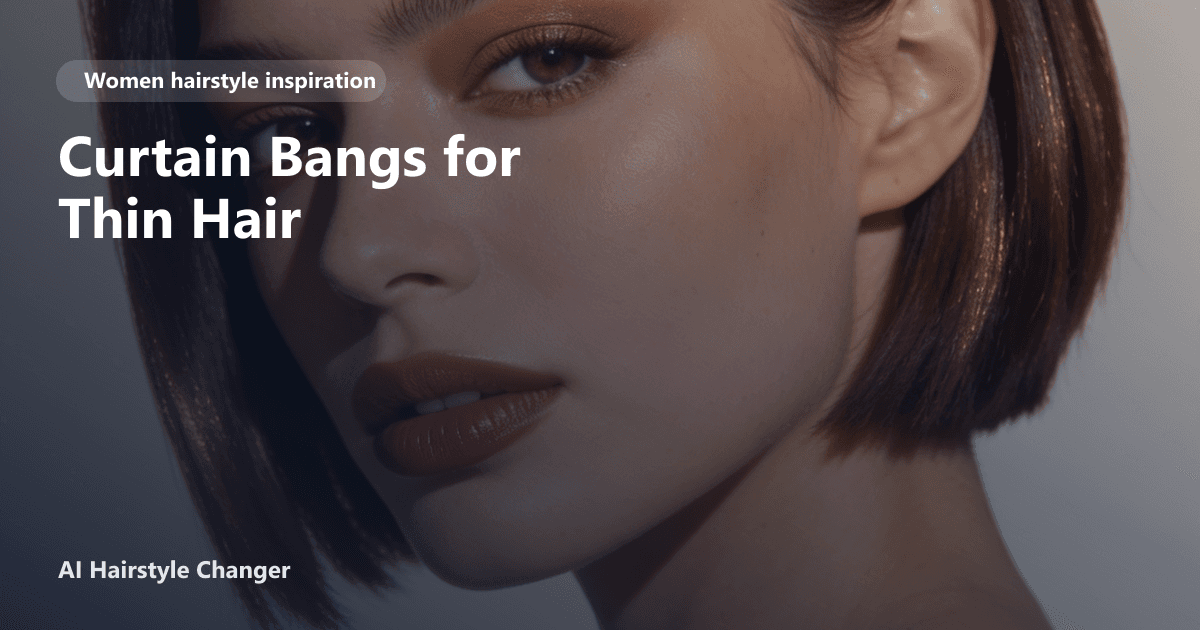
If you've ever hesitated before a haircut, wondering if curtain bangs will flatter your thin hair or just make it look limp, you're not alone. The right fringe can add movement, frame your face, and bring new life to fine hair - but only if you choose the right cut and style for your unique texture and features. Let's break down how curtain bangs work for thin hair, which variations actually deliver volume, and how to preview your new look before you commit.
Why Curtain Bangs Work for Thin Hair
Curtain bangs are a versatile, face-framing fringe that parts down the middle and blends into the rest of your hair. For those with thin or fine hair, the magic is in the soft layering and gentle curve: curtain bangs can create the illusion of fullness around the face without removing too much density from the rest of your hair. Unlike blunt bangs, which can sometimes make thin hair look stringy, curtain bangs are designed to move and blend, making them a forgiving option for anyone worried about flatness or awkward grow-out.
If you're considering this style, it's important to tailor the cut to your hair's natural fall and your preferred level of maintenance. Using an AI hairstyle changer, you can preview how different curtain bang shapes and lengths will interact with your unique hair type, helping you avoid surprises at the salon.
Four Curtain Bang Variations That Add Volume to Thin Hair
Not all curtain bangs are created equal, especially when you want to maximize the appearance of thickness. Here are four proven directions to discuss with your stylist:
1. Wispy, Cheekbone-Grazing Curtain Bangs
This variation works well for thin hair because it keeps the fringe light and airy while still framing the face. The bangs start at the center part, curve softly at the cheekbones, and taper into longer layers. Ask your stylist to use point-cutting or razor techniques for a feathery finish. This shape is ideal if you want movement without sacrificing precious volume from the rest of your hair.
2. Layered Curtain Bangs with Subtle Face-Framing
Adding subtle layers around the bangs and temples can boost volume and create a seamless blend into the sides. This is especially effective for shoulder-length or longer hair, where the layers can add body without looking choppy. To keep the style from falling flat, ask for layers that start just below the eyes and gradually lengthen toward the jawline. For more inspiration, see Curtain Bangs for Long Hair: The Best Ways to Wear Them.
3. Short Curtain Bangs for a Modern Edge
If you prefer a bolder look, short curtain bangs that hit between the brows and lashes can add instant lift. This style draws attention to the eyes and can make thin hair appear fuller at the front. However, it requires regular trims to maintain the shape and avoid awkward grow-out stages. If you're unsure how short to go, use the AI Hairstyle Changer to visualize different lengths before making the cut.
4. Curtain Bangs with Soft, Blended Ends
For those who want a low-maintenance option, curtain bangs with softly blended ends are easy to style and forgiving as they grow out. The ends are gently feathered, so the fringe merges into the rest of your hair without harsh lines. This direction works especially well if you're considering a bob or lob - check out the Best Bob Haircuts for Fine or Thin Hair for more ideas.
How to Talk to Your Stylist About Curtain Bangs
Going into the salon with a clear vision - and the right vocabulary - can make all the difference. Here's what to cover in your consultation:
- Target Length: Decide if you want your bangs to hit at the cheekbones, eyes, or jawline. Bring reference photos or use the AI Hairstyle Changer to show your stylist exactly what you're aiming for.
- Layering: Ask for soft, face-framing layers that blend into your fringe. Avoid heavy, blunt cuts that can make thin hair look sparse.
- Fringe Direction: Specify whether you want a middle part or a slightly off-center split, depending on your face shape and styling preferences.
- Volume Placement: Discuss how much lift you want at the roots and where you'd like the most fullness. Your stylist can use texturizing shears or a razor to build volume without bulk.
- What to Avoid: Stay away from thick, straight-across bangs if your hair is very fine, as these can emphasize thinness. Also, avoid removing too much hair from the sides, which can make the rest of your hair appear even thinner.
Styling Curtain Bangs on Thin Hair: Practical Tips
Once you have the right cut, styling is key to keeping your bangs looking full and fresh. Here are some tips tailored for thin hair:
- Blow Dry for Volume: Use a round brush and direct the airflow upward at the roots to lift the fringe. Finish with a cool shot to set the shape.
- Lightweight Products: Opt for volumizing mousses or root-lifting sprays that won't weigh down your hair. Avoid heavy creams or oils near the bangs.
- Dry Shampoo: A spritz at the roots can add texture and absorb oil, helping your bangs stay bouncy between washes.
- Minimal Heat: Thin hair is prone to breakage, so limit the use of hot tools. If you need extra shape, use a low-heat curling iron or flat iron to gently bend the ends.
When Curtain Bangs Don't Work for Thin Hair
While curtain bangs are flattering on many, there are a few scenarios where they may not deliver the results you want:
- Very Sparse Hairlines: If your hair is extremely thin at the front, even soft curtain bangs may look wispy or uneven.
- Super Short Cuts: On pixie cuts or very short bobs, curtain bangs can be hard to blend without losing overall density. For these styles, see Curtain Bangs for Short Hair: What Actually Works.
- Cowlicks or Strong Growth Patterns: If your hair naturally splits or sticks up at the front, curtain bangs may require extra styling effort or may not sit as intended.
If you're unsure, try on different curtain bang variations virtually with the AI Hairstyle Changer to see what works with your hairline and growth pattern before making a decision.
Curtain Bangs and Different Hair Textures
Curtain bangs aren't just for straight hair. With the right cut, they can add shape and interest to wavy or curly thin hair as well. The key is to work with your natural texture:
- Straight Thin Hair: Go for soft, lightly layered bangs that don't overwhelm your face.
- Wavy Thin Hair: Embrace the natural bend by keeping the bangs slightly longer and encouraging texture with a sea salt spray.
- Curly Thin Hair: Ask for longer, face-framing curtain bangs that blend into your curls. Avoid heavy layering, which can make curls look sparse.
For more tailored advice, see Curtain Bangs for Curly, Wavy, and Straight Hair.
Curtain Bangs vs. Other Bangs for Thin Hair
How do curtain bangs stack up against other fringe options for fine hair? Here's a quick comparison:
| Bang Style | Pros for Thin Hair | Cons for Thin Hair |
|---|---|---|
| Curtain Bangs | Add softness and volume; easy grow-out | Can require daily styling |
| Blunt Bangs | Bold look; hides forehead | Can look stringy; hard to blend |
| Side-Swept Bangs | Easy to style; suits most faces | May not add much volume |
| Micro Bangs | Trendy; draws attention upward | Exposes scalp; high maintenance |
Curtain bangs are generally the most forgiving and versatile for thin hair, especially if you want a style that grows out gracefully and can be adapted to different lengths and textures.
Maintenance and Upkeep: What to Expect
Curtain bangs are lower maintenance than traditional blunt bangs, but they still require some attention to look their best:
- Trims Every 6-8 Weeks: Keep the shape fresh and prevent the bangs from merging completely with the rest of your hair.
- Regular Styling: Most curtain bangs need a quick blow-dry or pass with a round brush to sit correctly, especially on fine hair.
- Product Build-Up: Use a clarifying shampoo occasionally to remove product residue and keep bangs light and fluffy.
If you're worried about upkeep, ask your stylist for a longer, more blended version that will be easier to manage as it grows out.
FAQ
Are curtain bangs a good idea for thin hair?
Yes, curtain bangs can add volume and movement to thin hair, especially when cut with soft layers and blended ends. They're more forgiving than blunt bangs and can be customized to flatter most face shapes.
How do I style curtain bangs so they don't look flat?
Use a round brush and blow dryer to lift the roots, and finish with a lightweight volumizing product. Avoid heavy styling creams or oils near the fringe.
What should I ask my stylist for if I have fine hair?
Request soft, face-framing curtain bangs with subtle layers that blend into the sides. Bring reference photos or use a virtual try-on to show your ideal length and shape.
Can I try curtain bangs virtually before cutting?
Absolutely. The AI Hairstyle Changer lets you upload a selfie and preview a range of curtain bang styles on your own face, helping you make a confident decision before your appointment.
Takeaway: Try On Curtain Bangs Before You Cut
Curtain bangs can transform thin hair, adding volume and a fresh, modern shape - if you choose the right variation and cut for your texture. Before your next salon visit, use the AI Hairstyle Changer to experiment with different curtain bang looks, shortlist your favorites, and walk into your appointment with total confidence.