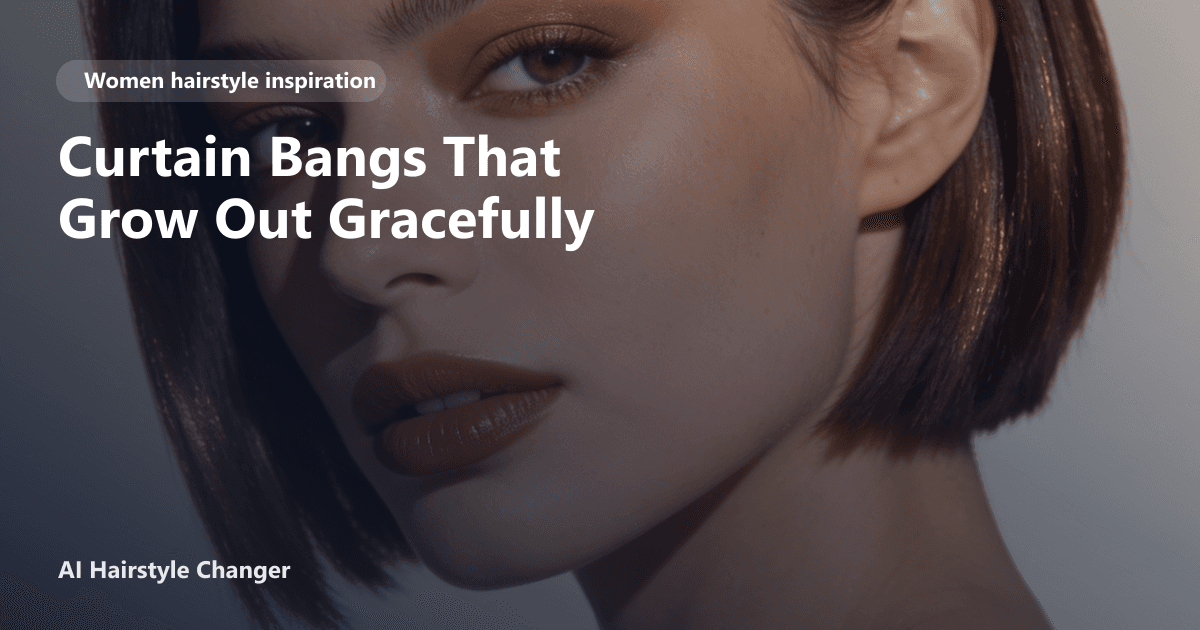
If you're considering curtain bangs but worry about awkward grow-out phases, you're not alone. Many women love the idea of soft, face-framing fringe but want a style that transitions smoothly between salon visits. The right curtain bangs can flatter your features, add movement, and - most importantly - grow out gracefully without demanding constant trims. Here's how to choose a version that works for your hair, face shape, and lifestyle, with real-world examples and tips you can use in your next salon conversation.
Why Choose Curtain Bangs That Grow Out Gracefully?
Curtain bangs are popular for their versatility and the way they soften facial features. But not all curtain bangs are created equal when it comes to maintenance. Some versions require frequent salon visits, while others blend seamlessly into your hair as they grow, minimizing awkward stages. Choosing a style that grows out well saves time, money, and the frustration of uneven lengths.
Trying on different curtain bang styles virtually with AI Hairstyle Changer can help you visualize how each version will look now - and months from now. This makes it easier to commit to a cut you'll love, even as it changes.
Classic Long Curtain Bangs: Effortless Transition
Long curtain bangs are the most forgiving option for anyone worried about grow-out. These bangs typically start at the cheekbones or jawline and blend into the rest of your hair with subtle layers. As they grow, they become face-framing layers that look intentional, not overgrown.
- Who they suit: Most face shapes, especially round, oval, and heart.
- What to ask for: Bangs that start at the cheekbones, with soft layering that connects to the front sections. Avoid blunt, heavy lines.
- Maintenance: Trim every 8 - 12 weeks, but you can stretch this further if you like a longer, shaggier look.
- When it fails: If your hair is very fine or flat, you may need extra volume at the roots to prevent the bangs from looking limp. Ask your stylist about light texturizing or layering for movement.
For more on adapting this look to longer hair, check out Curtain Bangs for Long Hair: The Best Ways to Wear Them.
Wispy Curtain Bangs: Low Commitment, High Impact
Wispy curtain bangs are ideal if you want a subtle change or are nervous about commitment. These bangs use soft, feathered ends and minimal thickness, making them easy to blend into the rest of your hair as they grow.
- Who they suit: Fine to medium hair, those new to bangs, and anyone with a low-maintenance routine.
- What to ask for: Light, airy bangs parted in the center, with ends that taper softly into your layers.
- Maintenance: Minimal - these can grow out for months without looking awkward, as they simply become soft layers around your face.
- When it fails: If you want a dramatic transformation or have very thick hair, wispy bangs might not provide enough definition.
Trying on wispy curtain bangs with AI Hairstyle Changer can help you see if this understated look gives you the face-framing effect you want.
Short Curtain Bangs: Playful, But Tricky to Grow Out
Shorter curtain bangs (ending at or above the eyebrows) are bold and eye-catching, but they require more frequent trims to avoid awkward in-between stages. As they grow, they may hit the eyes or sit at an unflattering length before blending into your layers.
- Who they suit: Oval and heart-shaped faces, those who like a retro or edgy vibe.
- What to ask for: Bangs that hit just below the brow, with a center part and softly feathered edges. Ask for gentle graduation so they blend as they grow.
- Maintenance: Trim every 4 - 6 weeks for best results. If you plan to grow them out, ask your stylist to start blending the edges into your layers at each appointment.
- When it fails: If you dislike frequent trims or want a style that's truly low-maintenance, short curtain bangs may not be your best bet.
For more on adapting curtain bangs to shorter cuts, see Curtain Bangs for Short Hair: What Actually Works.
Curtain Bangs for Different Hair Textures
Your hair's natural texture impacts how curtain bangs look - and how they grow out. Here's how to approach the style based on your hair type:
- Curly hair: Curtain bangs can look gorgeous with curls, but require careful shaping. Ask for longer, face-framing pieces that will spring up when dry. As they grow, they become soft, curly layers.
- Wavy hair: Wavy textures are ideal for curtain bangs. Go for medium-length bangs that can be styled straight or tousled. The grow-out phase is usually seamless.
- Straight hair: Straight hair shows every cut, so ask for soft, blended ends and avoid blunt lines. As the bangs grow, they'll look like intentional layers.
For a deeper dive into how curtain bangs work with your texture, visit Curtain Bangs for Curly, Wavy, and Straight Hair.
Layering and Blending: The Secret to a Smooth Grow-Out
The key to curtain bangs that grow out gracefully is seamless blending into your existing haircut. Ask your stylist to connect the bangs to the front layers, avoiding harsh lines or abrupt changes in length. This technique ensures that as your bangs grow, they become flattering face-framing layers rather than awkward, disconnected pieces.
- Layering tips:
- Start the shortest point at your desired bang length (cheekbone or brow), then angle down toward the jaw or collarbone.
- Use point-cutting or razor techniques for softness and movement.
- Avoid thick, blocky bangs unless you're committed to regular trims.
If you're considering a bob or shorter cut, see how curtain bangs can blend with different lengths in the Bob Haircut Guide: Types, Face Shapes, and Maintenance or explore Best Bob Haircuts for Fine or Thin Hair.
What to Ask Your Stylist (and What to Avoid)
A successful curtain bang starts with clear communication. Here are practical talking points to use at your next appointment:
- Bring visual references: Photos are essential - use AI Hairstyle Changer to shortlist your favorite looks and show your stylist exactly what you want.
- Discuss your hair's natural texture and growth pattern: This helps your stylist tailor the cut to minimize awkward stages.
- Talk about maintenance: Be honest about how often you're willing to return for trims.
- Avoid:
- Asking for blunt, heavy bangs if you want a low-maintenance grow-out.
- Choosing a length that sits directly at the eyes, unless you're prepared for frequent upkeep.
- Ignoring your hair's natural movement - work with it, not against it.
How AI Hairstyle Changer Can Help You Decide
Trying on curtain bangs virtually with AI Hairstyle Changer gives you a realistic preview of how different lengths, thicknesses, and textures will look on you. It's the easiest way to avoid haircut regret - especially if you're unsure how a style will suit your face or how it might grow out. You can experiment with classic, wispy, or short bangs, see how they blend into your current cut, and even visualize the grow-out phase by adjusting the length in the app. Shortlist your favorites and bring them to your stylist for a confident, informed consultation.
FAQ
How often do curtain bangs need to be trimmed?
Most curtain bangs can go 8 - 12 weeks between trims, especially if they're cut long and blended into your layers. Shorter or heavier versions may need a trim every 4 - 6 weeks to maintain their shape.
Can curtain bangs work with any face shape?
Curtain bangs are highly adaptable. The key is tailoring the length and angle to your features. Longer bangs flatter round and square faces, while shorter, feathered versions highlight cheekbones on oval or heart-shaped faces.
How do I style curtain bangs as they grow out?
Use a round brush or flat iron to sweep bangs away from your face, blending them into your layers. As they get longer, part them in the center or slightly off-center for a soft, effortless look.
Are curtain bangs hard to maintain?
They're one of the easiest bang styles to maintain, especially if you choose a long, layered version. Regular trims and blending into your haircut help avoid awkward grow-out phases.
Takeaway: Try Before You Cut
Curtain bangs can be a game-changer for your style - if you choose a version that grows out gracefully. Use AI Hairstyle Changer to test-drive different lengths and shapes, so you know exactly what you want before you sit in the salon chair. Ready to see your new look? Head to AI Hairstyle Changer: Try New Looks Before You Cut and start experimenting today.