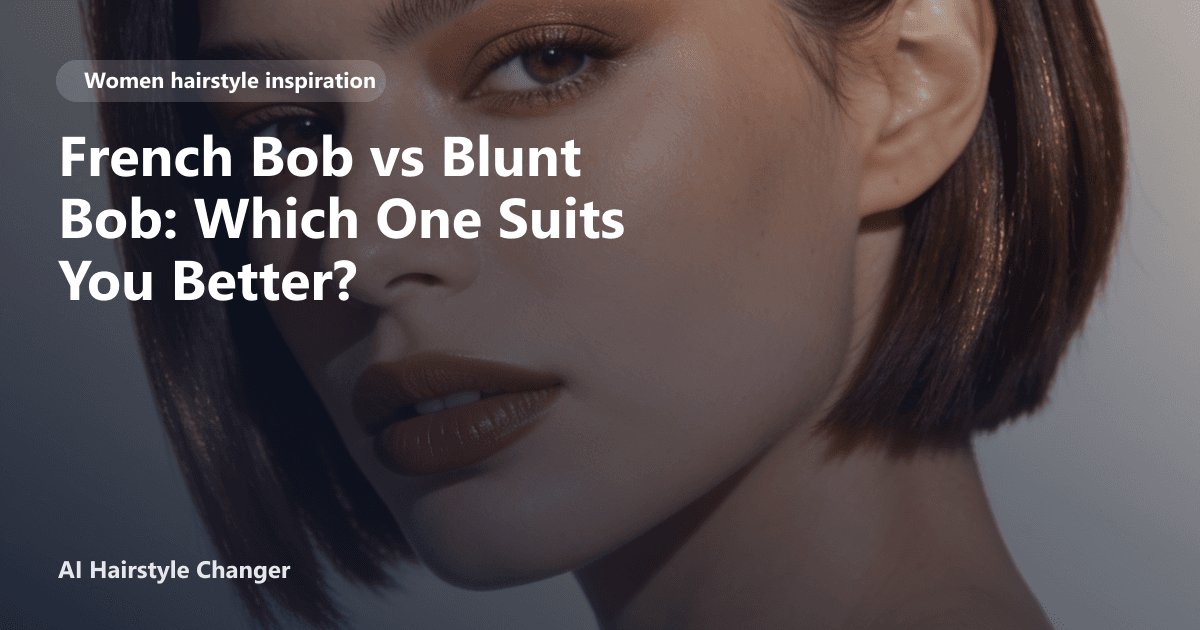
If you're torn between a French bob and a blunt bob, you're not alone. Both are iconic, ultra-stylish cuts - but they deliver very different moods, maintenance routines, and face-framing effects. Maybe you want to look effortlessly Parisian, or maybe you crave sharp, modern lines. The real challenge? Predicting which bob will actually flatter your face, hair texture, and lifestyle before you commit to the chop. Here's how to make the right call - and how to preview both styles with more clarity with AI Hairstyle Changer before your next appointment.
What Sets the French Bob and Blunt Bob Apart?
At first glance, both styles are short, chic, and versatile. But the devil is in the details:
- French Bob: Soft, jaw-length, often with piecey bangs. Think tousled, airy, and a little undone - like you just left a café in Paris.
- Blunt Bob: Sleek, one-length, and typically chin- or jaw-grazing. The ends are cut straight across for a crisp, defined edge.
Understanding these differences is key to choosing a bob that fits your features and your vibe. Let's break down each style in detail.
The French Bob: Effortless Parisian Cool
The French bob is the ultimate in laid-back sophistication. Usually cut at or just below the jawline, it's often paired with wispy or curtain bangs and subtle layering at the ends. The goal is movement and softness, not precision.
- Who it suits: Ideal for heart-shaped, oval, and square faces. The length and texture help soften strong jawlines and highlight cheekbones.
- Best for: Wavy or slightly textured hair, but it's surprisingly adaptable. If your hair is pin-straight, a little salt spray or a quick bend with a flat iron can create the signature French-girl tousle.
- Salon tips: Ask for a jaw-length cut with light, choppy ends - not a blunt line. Bring inspiration photos, and don't forget to discuss fringe options. Side-swept or curtain bangs add to the Parisian effect.
- Upkeep: This cut is forgiving as it grows out, but regular trims (every 6 - 8 weeks) keep the shape fresh. Styling is low-effort - air dry or rough-dry for texture.
Curious how a French bob would look on you? With AI Hairstyle Changer, you can upload your photo and preview a range of French bob variations - bangs, no bangs, tousled or polished - before you book your cut.
The Blunt Bob: Sharp, Modern, and Bold
The blunt bob is all about precision. The hair is cut to a single length, usually at the chin or just below. The result is a bold, geometric silhouette that makes a statement.
- Who it suits: Great for oval, heart, and round faces. The straight edge can add structure to softer features, but may emphasize strong jawlines.
- Best for: Fine to medium hair that's straight or only slightly wavy. Blunt ends can make thin hair look fuller, but very thick or curly hair may need texturizing to avoid a bulky shape.
- Salon tips: Specify the exact length you want (chin, jaw, or collarbone). Ask for minimal layering and a razor-sharp finish. Discuss parting - center or deep side parts both work.
- Upkeep: Needs more frequent trims (every 4 - 6 weeks) to keep the ends crisp. Styling is simple but benefits from a sleek blowout or flat iron for maximum impact.
If you're debating whether a blunt bob will flatter your face or hair type, AI Hairstyle Changer lets you test different lengths and partings virtually - no commitment, no surprises.
Face Shape and Hair Texture: What Really Matters
No bob is truly one-size-fits-all. Here's how face shape and hair texture affect your choice:
- Round Faces: Blunt bobs can elongate the face if worn just below the chin. French bobs with side-swept bangs break up roundness.
- Square Faces: French bobs soften angular jaws with their tousled texture and fringe. Blunt bobs can look severe unless softened with a slight wave.
- Heart-Shaped Faces: Both bobs work, but a French bob with curtain bangs balances a wider forehead.
- Fine or Thin Hair: Blunt bobs create the illusion of thickness. See more tips in Best Bob Haircuts for Fine or Thin Hair.
- Thick or Curly Hair: French bobs are more forgiving, but ask your stylist for internal layering to avoid a pyramid effect.
For a deeper dive into matching bobs to face shapes and hair types, check out the Bob Haircut Guide: Types, Face Shapes, and Maintenance.
French Bob Variations to Try
The French bob is endlessly customizable. Here are four popular directions:
- Classic French Bob: Jaw-length, light layering, and full, eyebrow-grazing bangs. Timeless and universally flattering.
- Textured French Bob: Extra layering at the ends and tousled styling for a lived-in look. Great for natural waves.
- French Bob with Curtain Bangs: Soft, parted fringe that frames the eyes. Adds a modern twist.
- Longer French Bob: Hits just below the jaw, offering a little more versatility for updos and tucking behind the ears.
Each variation can be previewed with AI Hairstyle Changer, so you can see how the length and fringe options play with your features.
Blunt Bob Variations Worth Considering
Not all blunt bobs are created equal. Here are four chic spins:
- Chin-Length Blunt Bob: Ultra-sharp, bold, and modern. Best for straight hair and strong jawlines.
- Blunt Bob with Micro Bangs: Adds edge and draws attention to the eyes.
- Long Blunt Bob (Lob): Hits at the collarbone for a softer, more wearable version. Easier to style and grow out.
- Blunt Bob with Deep Side Part: Creates asymmetry and volume, especially flattering for round or heart-shaped faces.
Want to see which blunt bob fits your vibe? Try different lengths and partings instantly with AI Hairstyle Changer.
What to Ask Your Stylist (and What to Avoid)
Walking into the salon with a clear vision is crucial. Here's how to talk bob haircuts with your stylist:
- Bring visual references. Photos (or AI try-on screenshots) help clarify your expectations.
- Be specific about length. Point to where you want the cut to fall - chin, jaw, or collarbone.
- Discuss layering and fringe. Decide if you want a blunt edge, soft texture, or any type of bangs.
- Talk about your hair's natural texture. Your stylist can recommend adjustments to suit your hair type.
- Avoid vague requests. Terms like "short but not too short" can lead to disappointment. Use concrete examples.
If you're still unsure, previewing styles with AI Hairstyle Changer can help you communicate exactly what you want - and avoid post-cut regrets.
Maintenance and Styling: What's the Commitment?
- French Bob: Low-maintenance, especially if you embrace texture. Air-drying and minimal product are often enough. Trims every 6 - 8 weeks keep the shape.
- Blunt Bob: Requires more frequent trims to maintain that sharp edge. Styling tools like a flat iron or round brush help achieve a polished finish.
Both styles can be adapted for low-maintenance routines, but the blunt bob's precision edge demands a little more upkeep. For more tips on styling and maintenance, see Bob Haircut Guide: Types, Face Shapes, and Maintenance.
When a Bob Fails: Common Pitfalls
- Wrong length: Too short can feel severe, too long loses the bob effect.
- Ignoring hair texture: A blunt bob on thick, curly hair can become bulky. French bobs on pin-straight hair may lack movement.
- Unrealistic expectations: Not every bob will look the same on every face or hair type.
- Lack of styling plan: Know how much time you want to spend each morning.
Previewing styles with AI Hairstyle Changer helps you spot potential issues before the first snip - saving you from a mismatch you'll regret.
Bob Haircut FAQ
How do I know if a French bob or blunt bob will suit my face?
Face shape is key. French bobs soften angles and suit most face shapes, especially with bangs. Blunt bobs add structure but can look severe on square jaws. Use AI Hairstyle Changer to preview both and see which flatters your features.
Can I get a blunt bob if I have fine or thin hair?
Absolutely. Blunt bobs are one of the best cuts for fine hair because the solid edge creates the illusion of fullness. For more on this, visit Best Bob Haircuts for Fine or Thin Hair.
What styling products work best for these bobs?
For French bobs, use texturizing spray or mousse for volume and movement. Blunt bobs benefit from smoothing serums and heat protectants for a sleek finish.
Is it possible to try on both bobs virtually before committing?
Yes! With AI Hairstyle Changer, you can upload your photo and see yourself in a range of French and blunt bob styles - different lengths, bangs, and textures - so you can choose with confidence.
Takeaway: Try Before You Cut
Choosing between a French bob and a blunt bob isn't just about trends - it's about finding a style that works for your face, hair, and lifestyle. By previewing both looks with AI Hairstyle Changer, you can walk into your next salon appointment knowing exactly what you want. Ready to see your next look? Head to AI Hairstyle Changer: Try New Looks Before You Cut and experiment with your perfect bob today.